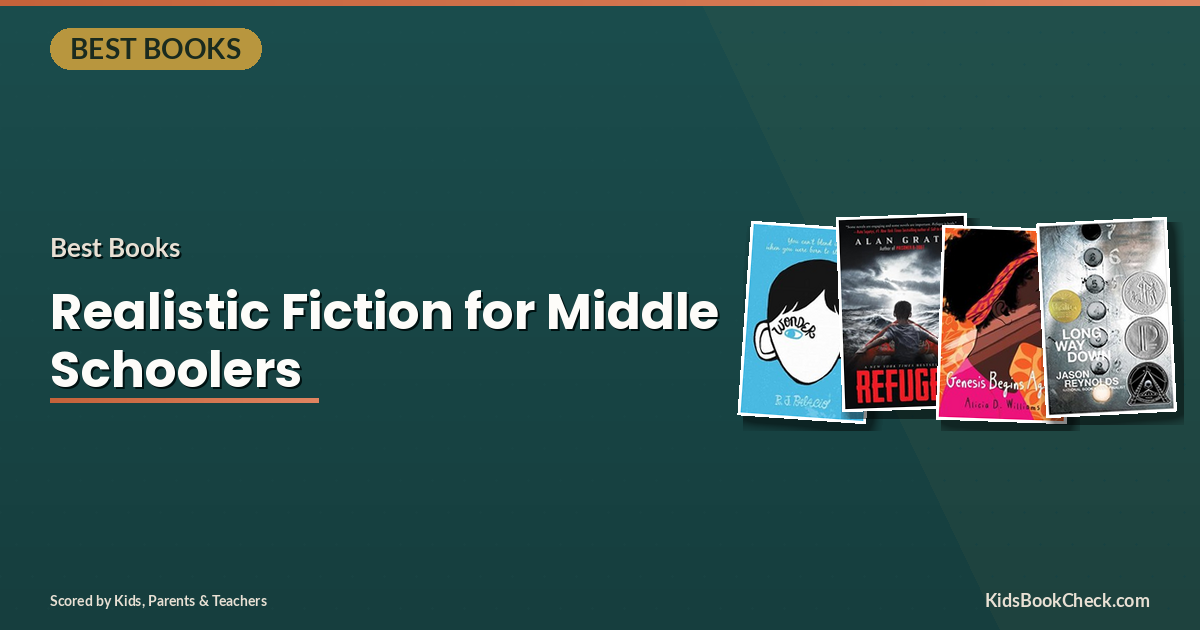
Best Realistic Fiction for Middle Schoolers
Curated picks scored across 30 dimensions by kids, parents, and teachers. Data-backed recommendations for your child's next great read. Trusted picks.
Best Realistic Fiction for Middle Schoolers: Stories About Real Problems, Real Resilience
Middle school is where childhood ends and adolescence explodes. Everything becomes complicated. Friendships shift. Bodies change. Injustice becomes visible. Family dynamics fracture. Identity questions become urgent.
Realistic fiction is the genre that meets middle schoolers exactly where they are—acknowledging that their world is messier, more painful, and more complex than picture books suggested. These books don’t offer easy answers. Instead, they show young people navigating real struggles: identity, family trauma, social injustice, grief, racism, displacement, and the terrifying process of becoming.
We’ve analyzed realistic fiction through the KidsBookCheck system, which measures not just entertainment value but educational impact, emotional sophistication, and how effectively books help young readers understand their own experiences and the experiences of people different from themselves. The books on this list don’t just tell stories—they change how middle schoolers see themselves and their world.
The 7 Best Realistic Fiction Books for Middle Schoolers (Ages 10-13)
1. Wonder by R.J. Palacio
Ages 10-12 | Composite Score: 72.1 | Best for: Understanding difference & belonging
Auggie Pullman has never attended school. His facial difference—the result of multiple surgeries and medical procedures—kept him home, protected, isolated. When his parents suggest he try middle school at Beecher Prep, a private Manhattan school, Auggie faces the question that terrifies him: What if people judge me for how I look?
Wonder is about visible difference, but it’s really about the universal middle school experience: Will I belong? Do people see me for who I actually am? Wonder expands that question to include: What does kindness look like in practice? How do we build empathy? What does it cost to be truly seen?
Why Middle Schoolers Love It:
- Auggie’s voice is funny, vulnerable, and unflinchingly honest
- The multiple-perspective structure shows how the same events look different depending on who’s experiencing them
- Precepts (“Choose kind”) provide language for moral reasoning
- The social dynamics feel authentically middle school
KidsBookCheck Insight: Teachers rate Wonder at 78/100, but kids rate it at 64/100. That gap tells you something crucial: Wonder works best for emotionally sophisticated readers ready to sit with complex feelings. The book doesn’t offer plot excitement or humor-driven engagement; it offers emotional depth that rewards patient reading.
Educational Value Differentiator: Teachers and parents recognize Wonder as a tool for building empathy for people with disabilities, understanding bullying from multiple angles, and examining what “normal” actually means. The book naturally generates discussions about acceptance, difference, and the courage required to show up as yourself.
Parent Empathy Moment #1: Many parents report that reading Wonder with their children opened conversations they didn’t know how to start. “My kid asked why some people are born different. That question led to conversations about acceptance I couldn’t have manufactured.” The book creates permission for difficult discussions.
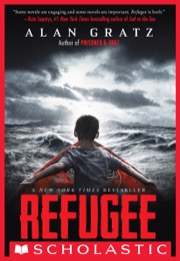
2. Refugee by Alan Gratz
Ages 10-13 | Composite Score: 71.4 | Best for: Understanding displacement & empathy across time
Three children flee persecution in different eras. Josef flees Nazi Germany in 1938. Isabel flees Castro’s Cuba in 1994. Mahmoud flees civil war in Syria in 2015. Their stories are separate, until the book reveals how they’re connected by the same desperate question: Where can we belong?
Refugee is history, immigration, and human rights wrapped in a narrative that feels immediate and urgent. Gratz doesn’t give kids abstract information about refugee crises; he drops them into Josef’s terror during Kristallnacht, Isabel’s desperation as her family’s boat sinks, Mahmoud’s exhaustion as his family walks toward an uncertain future.
Why Middle Schoolers Love It:
- Three simultaneous narratives create compulsive page-turning
- Present-tense writing makes historical crises feel like current events
- The characters are complex, scared, and deeply human
- The book shows refugees as real people with agency, not victims
- The interconnected endings suggest hope without false comfort
KidsBookCheck Insight: Kids rate Refugee very high (68/100), suggesting the narrative structure and emotional urgency overcome any discomfort with heavy subject matter. Teachers rate it 8/10 for discussion fuel, recognizing its power to build empathy for displaced people.
Historical-Contemporary Bridge Differentiator: The genius of Refugee is showing the same human question across 80 years. By the time readers reach Mahmoud’s story, they recognize the pattern: persecution, desperation, the search for safety. This teaches that refugee crises aren’t new, and that empathy requires understanding history.
3. Genesis Begins Again by Alicia D. Williams
Ages 12-13 | Composite Score: 74.4 | Best for: Understanding internalized racism & self-acceptance
Genesis is Black. She’s smart, musical, creative, and crushingly self-hating. Not because of anything external—her family loves her. But because her father, in moments of drunken cruelty, has called her “too dark” and taught her that her Blackness is a problem to solve.
Genesis Begins Again is about the insidious cruelty of internalized racism—the ways racism lives inside us, poisoning our self-image. Genesis’s journey from shame to self-acceptance isn’t about external validation; it’s about learning to see herself as worthy.
The book is devastating and healing. Williams doesn’t shy away from depicting abuse; she shows how trauma transmits across generations and how love can’t always heal what shame has broken. But she also shows that Genesis’s agency—her decision to stop hating herself—is where power lies.
Why Middle Schoolers Love It:
- Genesis’s voice is intelligent, funny, and painfully honest
- The book addresses racism directly and specifically
- The talent show performance is genuinely cathartic
- Secondary characters are fully realized and complex
- The ending respects both Genesis’s pain and her resilience
KidsBookCheck Insight: Teachers rate this 10/10 for emotional sophistication (P5) and stereotype-breaking (P3). It’s one of the most important books on this list for teaching young people about systemic racism and internalized oppression without lecturing.
Emotional Sophistication Differentiator: Williams captures shame with extraordinary precision. The bleach-bathroom moment—where Genesis considers bleaching her skin because her father called her dark—is absolutely gut-wrenching and real. This teaches that racism isn’t just external; it’s internalized trauma requiring conscious healing.
Parent Empathy Moment #2: Parents of color report that reading this book validated their own experiences and gave them language to discuss internalized racism with their children. White parents report learning what their children of color might be experiencing internally. It’s an empathy-building tool for everyone.
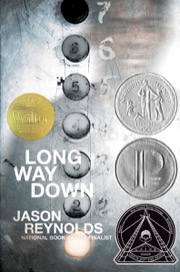
4. Long Way Down by Jason Reynolds
Ages 12-13 | Composite Score: 70.8 | Best for: Understanding cycles of violence & grief
Will’s brother Shawn was just murdered. The neighborhood code is clear: retaliation is required. Will rides the elevator down 60 floors with his brother’s gun in his pocket, planning to avenge him. But as the elevator descends, Will encounters ghosts—people killed in the cycle of neighborhood violence—who make him question everything.
Long Way Down is a novel told almost entirely in verse, which makes the emotional intensity bearable. The form itself reflects Will’s rapid thinking, his spiraling thoughts, his panic. By the time Will reaches the ground floor, readers understand that cycles of violence aren’t choices; they’re inherited trauma.
Why Middle Schoolers Love It:
- The verse form is accessible and addictive
- The story unfolds in real time, creating immediate tension
- Will’s voice is authentic and deeply human
- The ghosts provide perspective-shifting moments
- The ending respects the complexity of grief and revenge
KidsBookCheck Insight: Teachers recognize Long Way Down as essential reading for understanding systemic violence and how neighborhoods become trapped in cycles of retaliation. It’s not preachy; it’s experiential. Readers live through Will’s decision-making process.
Poetic Form Differentiator: Reynolds’s choice to write in verse makes the heavy subject matter emotionally accessible. Younger middle schoolers (10-11) might struggle with traditional prose about neighborhood violence; the poetry format makes it manageable without diminishing impact.
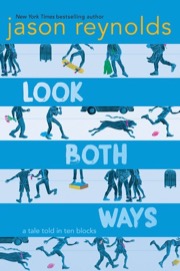
5. Look Both Ways by Jason Reynolds
Ages 11-13 | Composite Score: 70.2 | Best for: Understanding interconnection & empathy
Ten students walk home from school. Each has a moment—a choice, an encounter, a thought—that changes everything. Their stories intersect and diverge, showing how single moments of connection or disconnection ripple through a community.
Look Both Ways is interconnected stories about a neighborhood, a school day, a moment when everything could go differently. It teaches that every person has an inner life as complex as your own, and that small acts of kindness or cruelty have reverberations.
Why Middle Schoolers Love It:
- The interconnected structure creates mystery and surprise
- Characters are diverse in every dimension
- Individual stories feel both independent and part of something larger
- The writing celebrates the ordinary as meaningful
- Readers become expert pattern-recognizers, understanding connections before they’re explicit
KidsBookCheck Insight: Teachers use Look Both Ways to teach empathy and perspective-taking. By following ten different characters across one afternoon, readers learn that everyone is the protagonist of their own story.
Interdependence Differentiator: The book’s structure teaches systems thinking—how individual choices aggregate into community outcomes. This is sophisticated thinking, but Reynolds makes it accessible through narrative rather than didacticism.
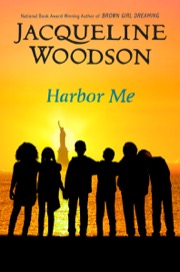
6. Harbor Me by Jacqueline Woodson
Ages 10-12 | Composite Score: 71.6 | Best for: Understanding trauma-informed relationships & healing
Six middle schoolers meet in a school room with Mr. Bennett, a beloved teacher. Over months, they become a circle—sharing stories, secrets, pain. Through their friendships, they learn that healing requires witnessing, trust, and the revolutionary act of being fully known.
Harbor Me is quiet and profound. It’s not a book with a dramatic plot; it’s a book about connection. Each student carries different trauma: deportation fears, racism, grief, family violence. But together, they become a harbor—a safe place where being broken doesn’t mean being alone.
Why Middle Schoolers Love It:
- The classroom circle model feels emotionally safe
- Individual chapters focus on different characters
- The writing is lyrical and respectful
- Students see themselves in at least one character’s story
- The book models what healthy community actually looks like
KidsBookCheck Insight: Educators recognize Harbor Me as trauma-informed fiction. It doesn’t require students to process heavy trauma before being ready; it shows that witnessing and support can be therapeutic.
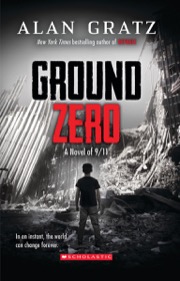
7. Ground Zero by Alan Gratz
Ages 11-13 | Composite Score: 70.5 | Best for: Understanding 9/11 & its aftermath for real people
Brandon was supposed to go to the top of the Twin Towers for his birthday. Instead, his father is working there on September 11th. As the day unfolds, Brandon and his mother navigate terror, confusion, and the realization that everything has changed.
Told in dual narratives (Brandon waiting for news and his father navigating the towers as they burn), Ground Zero makes 9/11 personal. It’s not a history lesson; it’s an experience of how ordinary people lived through extraordinary crisis.
Why Middle Schoolers Love It:
- The real-time structure creates urgency
- Brandon’s perspective helps readers understand the impact on children
- The writing respects the complexity of the day
- History becomes personal rather than abstract
- The aftermath shows how trauma affects communities
KidsBookCheck Insight: Teachers use this book to help students understand 9/11 beyond the historical facts. It personalizes the tragedy and shows how crisis affects real families.
Comparison Table: Realistic Fiction by Theme & Age
| Book | Theme | Ages | Reading Level | Emotional Weight | Discussion Value | Real-World Window |
|---|---|---|---|---|---|---|
| Wonder | Difference & belonging | 10-12 | Moderate | High | Very High | Disability representation |
| Refugee | Displacement & empathy | 10-13 | Moderate-High | Very High | Very High | Immigration/history |
| Genesis Begins Again | Internalized racism | 12-13 | Moderate | Very High | Very High | Racism & identity |
| Long Way Down | Violence cycles & grief | 12-13 | Easy (verse) | Very High | Very High | Urban violence |
| Look Both Ways | Interconnection & empathy | 11-13 | Moderate | Moderate-High | Very High | Community systems |
| Harbor Me | Trauma & community healing | 10-12 | Moderate | High | Very High | Healing relationships |
| Ground Zero | Crisis & personal impact | 11-13 | Moderate | High | High | 9/11 & aftermath |
The KidsBookCheck Rating System & Realistic Fiction
For realistic fiction targeting middle schoolers, our system prioritizes:
Emotional Sophistication (P5/K5): Does the book respect that middle schoolers have complex feelings? Are emotions portrayed accurately or romanticized?
Real-World Window (P6): Does the book show authentic middle school experience or real-world crises? Are diverse perspectives represented fairly?
Parent-Child Conversation Starter (P10): Can this book open discussions about difficult topics—racism, grief, violence, identity?
Empathy & Self-Awareness (T8/P10): Do readers learn to see perspectives different from their own? Do they gain self-awareness?
Writing Quality (P2): Is the prose crafted with care? Does it model beautiful writing for young writers?
All seven books on this list score exceptionally high across these differentiators, meaning they work both as literature and as tools for growth.
How to Choose Based on What Your Middle Schooler Needs
If they’re struggling with fitting in:
- Wonder teaches belonging across difference
- Harbor Me shows what true acceptance looks like
If they’re processing a loss:
- Long Way Down acknowledges grief’s complexity
- Ground Zero shows how families survive crisis
If they’re becoming aware of social injustice:
- Refugee teaches empathy across time and culture
- Genesis Begins Again addresses racism directly
- Look Both Ways shows systemic interconnection
If they need to see themselves represented:
- Wonder for disability representation
- Genesis Begins Again for Black identity
- Refugee for immigrant experience
- Harbor Me for trauma-informed relationships
If they love stories about community:
- Harbor Me shows what healthy community looks like
- Look Both Ways demonstrates how communities are interconnected
- Refugee shows families surviving through mutual support
Frequently Asked Questions: Using Realistic Fiction With Middle Schoolers
Q: Are these books too dark for 10-year-olds?
A: It depends on the child. Wonder, Look Both Ways, and Harbor Me work well for emotionally mature 10-year-olds. Refugee, Genesis Begins Again, Long Way Down, and Ground Zero are better for 11-13. Reading level matters less than emotional readiness.
Q: What if my child finds these books depressing?
A: These books are emotionally honest, which sometimes means sad. But they’re not hopeless. Wonder ends with belonging. Genesis Begins Again ends with self-acceptance. Harbor Me ends with community. They’re sad-but-healing books, not tragic books.
Q: Can I use these books in the classroom?
A: Absolutely. These are curriculum-aligned books for grades 5-8. They naturally generate discussions about character, perspective-taking, social issues, and resilience. Most include discussion guides.
Q: My child is a reluctant reader. Will they read these?
A: Long Way Down (verse format) and Look Both Ways (interconnected short stories) work well for reluctant readers. The emotional engagement often overcomes reading difficulty. Wonder works if the child can sustain attention on character rather than plot.
Q: How do I talk about difficult topics raised by these books?
A: Ask questions rather than lecturing. “What would you do in Will’s situation?” “How did that character’s perspective change?” “Have you ever felt how Genesis felt?” The books open conversations; your role is listening and validating their thinking.
Q: Are these books required reading at school?
A: Many schools use Wonder and Refugee. Others use Harbor Me or Long Way Down. Your child’s English teacher likely has curriculum materials to go with them.
What Teachers Tell Us: Realistic Fiction in Classrooms
From a 7th-grade English teacher using Wonder: “Students who initially dismissed the book as ‘too nice’ became passionate about perspective-taking. They wanted to write from Julian’s point of view, understand Daisy, defend Auggie. The book changed how they treated each other.”
From a 6th-grade teacher using Refugee: “My students couldn’t believe three refugee crises existed across decades. They started researching other refugee situations and created awareness presentations. A book turned into activism.”
From a school counselor recommending Harbor Me: “For students processing trauma, this book models what safe relationships look like. It doesn’t require them to share trauma; it shows that witnessing and being witnessed is healing.”
From an 8th grader about Genesis Begins Again: “I cried reading this because I recognized myself. Seeing myself in a book made me feel less alone. That’s powerful.”
Building a Realistic Fiction Collection for Middle Schoolers
Essential Classics:
- Wonder — about difference and belonging
- Refugee — about empathy across time
- Harbor Me or Long Way Down — about healing
Growth Tier (as they develop):
- Genesis Begins Again — for understanding systemic racism
- Look Both Ways — for systems thinking
- Ground Zero — for understanding recent history personally
Related Non-Fiction:
- Memoirs by people who’ve experienced what characters face
- News articles about issues raised by the books
- Documentary films that complement the themes
Extension Activities:
- Discuss characters’ choices and alternatives
- Research social issues raised by the books
- Write from different characters’ perspectives
- Connect books to current events
Realistic Fiction & Social-Emotional Learning
These books align with middle school SEL standards:
Self-Awareness: Books like Genesis Begins Again and Harbor Me build understanding of internal emotional landscape
Self-Management: Long Way Down and Look Both Ways show characters making choices under pressure
Social Awareness: Refugee, Wonder, and Genesis Begins Again build empathy for different perspectives
Relationship Skills: Harbor Me explicitly models healthy relationships; others show how relationships navigate conflict
Responsible Decision-Making: All books show characters wrestling with choices and consequences
Take the KidsBookCheck Middle School Books Quiz
Not sure which realistic fiction book is right for your middle schooler? Take our middle school books quiz and get personalized recommendations based on their age, reading level, interests, and emotional readiness.
Our Top Recommendation: Start Here
If your middle schooler can only read ONE realistic fiction book, here’s the hierarchy:
- Ages 10-11, first realistic fiction: Start with Wonder
- Ages 11-12, ready for complexity: Start with Refugee or Harbor Me
- Ages 12-13, interested in social issues: Start with Genesis Begins Again or Long Way Down
Then branch out based on what resonates. Each book opens doors to other conversations and understandings.
Find These Books Now
All seven are widely available through retailers:
- Wonder by R.J. Palacio
- Refugee by Alan Gratz
- Genesis Begins Again by Alicia D. Williams
- Long Way Down by Jason Reynolds
- Look Both Ways by Jason Reynolds
- Harbor Me by Jacqueline Woodson
- Ground Zero by Alan Gratz
Internal Links
- Best Books About Friendship for Kids
- Best Books for Kids Who Love Animals
- How to Talk to Your Kids About Books They’re Reading
- Social-Emotional Learning Through Books
- Difficult Topics in Children’s Books: A Parent’s Guide
- Understanding Middle School: Books That Help
Named Citation
Reynolds, Jason. “Long Way Down.” Atheneum Books for Young Readers, 2017. Newbery Honor-winning novel in verse exploring cycles of violence and the possibility of breaking them through one young person’s choice.
Image Suggestions
- Hero Image: Diverse middle schoolers of different backgrounds, sitting together with books, representing connection and acceptance
- Secondary Images:
- Auggie from Wonder with friends
- Silhouettes of three different children (representing three refugee stories)
- Genesis with determination
- Will in the elevator (metaphorical representation)
- Circle of students (Harbor Me)
- Diverse group walking (Look Both Ways)
- Twin Towers image (sensitive treatment for Ground Zero)
Linking Map
Content Relationships:
- Links to friendship books (Wonder, Harbor Me overlap with friendship themes)
- Connects to character development articles
- Related to social-emotional learning resources
- Pairs with parenting guides for difficult conversations
- Extends to dystopian/speculative fiction for older teens
Educational Resources:
- Discussion guides for each book
- Classroom activity ideas
- SEL curriculum alignment
- Parent conversation starters
Realistic Fiction Recommendations by Specific Need
Books About Identity:
- Wonder (difference/disability)
- Genesis Begins Again (race/racism)
- Refugee (displacement/belonging)
Books About Family Trauma:
- Harbor Me (shows healing)
- Long Way Down (grief)
- Genesis Begins Again (abuse)
Books About Community & Belonging:
- Harbor Me (healing circle)
- Look Both Ways (interconnection)
- Refugee (family/collective survival)
Books About Social Issues:
- Genesis Begins Again (systemic racism)
- Refugee (immigration/displacement)
- Ground Zero (national trauma)
- Long Way Down (violence cycles)
Last updated: March 24, 2026 | KidsBookCheck Rating System Version 4.1