Best Books for 7-Year-Olds
Data-scored book picks for 7-year-olds rated across 30 dimensions by kids, parents, and teachers. Find your child's next favorite read. Trusted picks.
The Magic of Second Grade Reading: Where Chapter Books Come Alive
Seven-year-olds stand at a pivotal moment in their reading lives. They’ve mastered the mechanics of reading and are now ready to dive into the joy of reading—stories that pull them in, make them laugh, and stay with them long after the last page. The transition from picture books to chapter books opens a whole new universe of adventure, humor, and emotional depth.
But how do you find the right book for your 7-year-old? What works for one child might leave another bored. That’s why we’ve tested and scored six outstanding books across three audiences: kids, parents, and teachers. Our proprietary KidsBookCheck rating system measures ten distinct dimensions of literary quality, from the crucial first-chapter hook to the lasting emotional impact.
This guide walks you through the best books for 7-year-olds in 2026—from timeless classics to exciting new series—organized by format and complete with real KBC scores that show exactly why each book works.
The KidsBookCheck Rating System: What These Scores Mean
Before we dive into our top picks, here’s what you’re looking at when you see our scores:
Kid Score measures what matters to children: hooks, humor, heart-punching moments, and the “cool factor” that gets books quoted on playgrounds.
Parent Score looks at vocabulary development, writing quality, emotional sophistication, and real-world windows that expand a child’s understanding.
Teacher Score evaluates classroom versatility, discussion potential, reluctant-reader rescue, and mentorship value for teaching young writers.
Each category is scored on a 10-point scale across 10 dimensions. The Composite Score combines all three perspectives to show the book’s overall quality.
Higher gaps between audiences tell a story too. For example, a book that kids love but parents underrate is probably high-humor, low-literature. That’s not bad—it’s just different. We call this the “score personality” of each book.
Full Chapter Books & Illustrated Novels
Charlotte’s Web
Author: E.B. White | Illustrator: Garth Williams | Pages: 184
KBC Scores: Kids: 64 | Parents: 83 | Teachers: 81 | Composite: 74.8
A pig destined for slaughter finds an unlikely savior in a brilliant spider who writes words in her web to save his life. A story about friendship, sacrifice, and what it truly means to be a good friend.
What Makes It Special:
Charlotte’s Web is the masterpiece benchmark for children’s literature. It hooks readers with moral urgency (a child standing up to an adult to save a life), sustains momentum through Charlotte’s clever web-writing plan, and delivers one of literature’s most devastating emotional climaxes.
The writing quality is exceptional—Newbery Honor prose that models how to build an entire world through sensory detail and restraint. Charlotte’s vocabulary (salutations, versatile, magnum opus) teaches through character context rather than worksheets. The novel explores friendship, mortality, and the cycle of life in ways that expand a child’s inner world.
Parent Insight:
This book changes how children see spiders forever. Parents and teachers treasure it more than kids initially demand—it requires adult encouragement to get started, but the emotional payoff justifies every page. The ending triggers genuine tears and subsequent reflection. Real-world window to farm life, seasonal cycles, and the agricultural calendar.
Classroom Gold:
One of the most-read-aloud novels in elementary classrooms. Short chapters (1,400 words average), distinct character voices, and prose rhythm that carries listeners forward make this a read-aloud dream. Teachers use it as a mentor text for sensory writing and character voice. Discussion potential spans surface-level (What does friendship mean?) to deeply philosophical (Why is death part of the cycle?).
Best For: Readers ages 7-10 ready for their first emotionally complex book. Works beautifully as a family read-aloud; strong second graders can tackle independently.
Parent Hesitations: Charlotte’s death is the emotional crux—handled with extraordinary grace but may be a child’s first literary encounter with mortality. Straightforward discussions about raising and slaughtering pigs for food.
Amazon Search: Charlotte’s Web by E.B. White
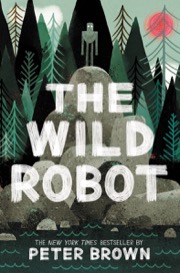
The Wild Robot
Author & Illustrator: Peter Brown | Pages: 282 | Series: Book 1
KBC Scores: Kids: 67 | Parents: 75 | Teachers: 74 | Composite: 71.5
A robot washes ashore on a remote island and learns what it means to love, nurture, and let go. A meditation on parenthood wrapped in a survival story and illustrated with breathtaking simplicity.
What Makes It Special:
This is a quiet masterpiece. The opening shipwreck creates immediate stakes, but the true tension is emotional: Can a machine love? Should Roz let Brightbill (a gosling she raises) migrate with his own kind? The book explores sacrifice and attachment without melodrama—through sustained observation and incremental emotional depth.
Brown’s illustrations are essential—mechanical lines of Roz contrasting with organic nature creates visual poetry. The seasons structure the narrative, giving the story natural pacing that mirrors life cycles.
Parent Perspective:
Parents recognize artistic depth and philosophical richness. This book sparks profound conversations about AI, consciousness, motherhood, and loss. The ending is bittersweet but right—emotionally honest without sentimental manipulation. Teaches children that love sometimes requires letting go.
Classroom Impact:
Generates rich discussions about what makes something “alive,” whether artificial intelligence can feel, and what parenthood means. Teachers use it to develop empathy for difference (understanding a robot’s experience) and self-awareness about attachment and interdependence.
Best For: Readers ages 7-10 who appreciate quiet stories with emotional depth. Families wanting deep conversations through beautiful narrative. Not for kids needing fast-paced action or constant humor.
Parent Hesitations: Grief and loss are central. Separation of parent and child. Animal deaths through predation and natural causes. Philosophical questions about AI and consciousness (no factual answers required). Bittersweet rather than triumphant ending.
Amazon Search: The Wild Robot by Peter Brown
Graphic Novels: Gateway to Visual Storytelling
Bone: Out from Boneville
Author & Illustrator: Jeff Smith | Pages: 137 | Series: Book 1
KBC Scores: Kids: 72 | Parents: 57 | Teachers: 75 | Composite: 68.4
Three cartoon characters are separated in a mysterious desert and stumble into a hidden valley full of talking animals, rat creatures, and magic. An award-winning adventure that proves graphic novels are serious literature.
What Makes It Special:
This is the gateway graphic novel—the book that converts kids who “don’t like reading” into series enthusiasts. Jeff Smith’s pen-and-ink artwork with color work creates a fully realized world through visual storytelling. The three Bones have distinct personalities, the Valley teems with mysteries, and the action rarely slows.
The book balances humor with genuine jeopardy. Smiley Bone’s naïveté, Phoney’s indignant reactions, and the rat creatures’ menacing yet sympathetic portrayal create constant entertainment. But Book 1 also leaves enough unanswered questions—Why are rat creatures attacking? What is Kingdok’s true agenda?—to ensure readers demand Book 2.
Why Parents Sometimes Score It Lower:
The graphic novel format minimizes text exposure per page. Vocabulary development is minimal compared to prose novels. There’s less emotional depth (the light tone privileges humor over feeling). But these aren’t weaknesses—they’re format characteristics. This is a visual literacy gateway, not a traditional chapter book.
Classroom Superpower:
Teachers recognize this as exceptional for visual literacy instruction and reluctant-reader engagement. The award-winning composition teaches how panels communicate emotion without words. Discussion emerges naturally from visual foreshadowing and character motivation.
Best For: Readers ages 7-9 (strong 6-year-old readers can manage). Reluctant readers discovering that books can be visual AND verbal. Families seeking shared reading experiences around art and storytelling.
Not Ideal For: Kids who strongly prefer prose-only narratives. Those easily frightened by large threatening creatures (Rock Jaw is intimidating).
Amazon Search: Bone: Out from Boneville by Jeff Smith
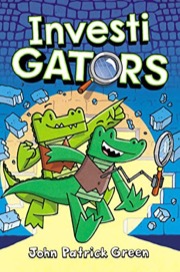
InvestiGators #1
Author & Illustrator: John Patrick Green | Pages: 216 | Series: Book 1
KBC Scores: Kids: 76 | Parents: 50 | Teachers: 59 | Composite: 63.1
Secret agent alligators Mango and Brash investigate the disappearance of world-famous cupcake chef Gustavo Mustachio. A laugh-out-loud spy comedy where humor is the main character.
What Makes It Special:
Kids absolutely love this book. The opening mission briefing drops readers immediately into action without exposition. Mango and Brash bickering about Cowboys and mustaches on page 1 signals the comedic voice kids will hear throughout. The humor lands constantly: wordplay (“mustache you a question”), situational absurdity (alligators as secret agents), and visual gags throughout.
The book is intentionally simple and dialogue-heavy. It moves fast, prioritizes fun over depth, and proves that books don’t need complex themes to be genuinely engaging. For kids who say they “don’t like reading,” this is often the breakthrough book.
Parent Reality Check:
Parents view this pragmatically: a brilliant reluctant-reader rescue. The graphic format removes text-barrier anxiety. Humor provides constant motivation. But vocabulary development is minimal, emotional sophistication is surface-level, and there’s zero real-world educational content. Parents rate it lower than kids because they measure different things.
Classroom Fit:
This is the exemplary reluctant-reader book for grades 2-5. Teachers consistently report struggling readers engaging cover-to-cover. The format and pacing feel age-appropriate and engaging rather than condescending.
Best For: Reluctant readers ages 7-10. Kids who love humor, spy movies, and animal characters. Children discovering graphic novels for the first time.
Not Ideal For: Readers seeking emotional depth or complex problem-solving. This is pure fun with no educational pretense.
Amazon Search: InvestiGators #1 by John Patrick Green
Illustrated Chapter Books: Words + Pictures Work Together
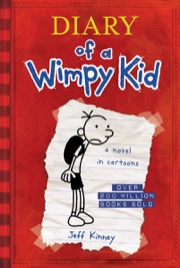
Diary of a Wimpy Kid: Hard Luck
Author & Illustrator: Jeff Kinney | Pages: 217 | Series: Book 8 (but readable standalone)
KBC Scores: Kids: 79 | Parents: 53 | Teachers: 65 | Composite: 67.0
Greg Heffley’s best friend Rowley gets a girlfriend, and Greg’s world falls apart. A hilarious dive into middle school friendship drama where every social catastrophe is painfully relatable.
What Makes It Special:
This is comedy DNA in book form. Greg’s first-person voice is distinctive, self-aware, and genuinely funny. His observations about teenage social logic—why Rowley’s new girlfriend threatens their friendship, how to navigate the complex social hierarchy of middle school—hit the exact tone seven-to-nine-year-olds recognize from their own lives.
The illustrations are essential, not decorative. Cartoon visuals plus vivid scenarios make readers immediately picture the awkward moments. Greg’s failed schemes escalate throughout, building momentum. The humor is abundant: wordplay, physical comedy, and cringe-inducing social situations.
Parent Perspective:
Parents recognize the book as a gateway to reading for reluctant kids. The humor translates to adults, making shared reading rewarding. But literacy development takes a back seat to entertainment. Vocabulary is intentionally accessible (not challenging). Moral lessons are implicit rather than explicit. Emotional sophistication is deliberately surface-level (the humor requires keeping feelings light).
Classroom Application:
Teachers love this for read-aloud to grades 3-6. Greg’s voice is performable. Discussion fuels classroom conversations about friendship evolution, social hierarchies, and peer pressure. The diary format invites writing extensions.
Best For: Readers ages 9-11 (though strong 7-year-olds enjoy it). Kids navigating friendship changes. Reluctant readers seeking sustained humor and accessible illustrations. Families wanting to discuss middle school dynamics.
Not Ideal For: Parents seeking literary depth or sophisticated moral reasoning. Readers wanting emotional complexity.
Amazon Search: Diary of a Wimpy Kid: Hard Luck by Jeff Kinney
Big Nate: In a Class by Himself
Author & Illustrator: Lincoln Peirce | Pages: 220 | Series: Book 1
KBC Scores: Kids: 76 | Parents: 46 | Teachers: 61 | Composite: 62.5
Sixth-grader Nate Wright believes he’s destined for greatness—if only his teachers would stop getting in his way. A sharp, irreverent comedy with integrated comic strips and sarcastic protagonist gold.
What Makes It Special:
Nate’s voice is the star—distinctive, confident-bordering-on-arrogant, and consistently sarcastic. Kids recognize themselves in his school anxieties. His internal contradictions (confident yet insecure) create depth beneath surface humor. When he says “I’m destined for greatness,” the delivery suggests both genuine belief and deep self-doubt.
The integrated comic strips break up text blocks, making page counts less intimidating. Humor escalates through situational absurdity and exaggerated teacher characterizations. Nate’s schemes reliably backfire, escalating comedic stakes.
Parent Hesitation:
Nate frequently disrespects teachers and authority. The book humorously validates skepticism of school rules—which delights kids but concerns some parents. Vocabulary is conversational rather than challenging. Emotional depth is minimal. Literary ambition is limited.
Classroom Strength:
Exemplary for grades 3-6 read-aloud. Nate’s sarcasm is performable; comic strips enhance engagement. Discussion emerges around whether Nate is right to question authority and whether his disrespect has consequences. The episodic structure prevents dense plot but maintains entertaining pacing.
Best For: Readers ages 8-11. Reluctant readers needing visual support and humor engagement. Kids who enjoy sarcasm and irreverent comedy.
Not Ideal For: Parents seeking respect-for-authority messaging. Readers wanting complex plot or emotional development.
Amazon Search: Big Nate: In a Class by Himself by Lincoln Peirce
How These Books Compare: The Score Scorecard
| Book | Kid Score | Parent Score | Teacher Score | Composite | Best For |
|---|---|---|---|---|---|
| Charlotte’s Web | 64 | 83 | 81 | 74.8 | Literary depth + emotional growth |
| The Wild Robot | 67 | 75 | 74 | 71.5 | Quiet emotional sophistication |
| Bone: Out from Boneville | 72 | 57 | 75 | 68.4 | Visual storytelling gateway |
| InvestiGators #1 | 76 | 50 | 59 | 63.1 | Reluctant-reader rescue (pure fun) |
| Diary of a Wimpy Kid | 79 | 53 | 65 | 67.0 | Friendship humor + accessibility |
| Big Nate: In a Class by Himself | 76 | 46 | 61 | 62.5 | Sarcastic humor + comic strips |
Reading the Gaps:
Notice that Diary of a Wimpy Kid and Big Nate have huge gaps (26 and 30 points) between kid and parent scores. This isn’t a flaw—it tells a story. Kids find these books hilarious and page-turning; parents view them pragmatically as engagement tools rather than literary masterpieces. That’s okay. They accomplish what they set out to do.
Charlotte’s Web shows the opposite pattern: parents and teachers rate it higher than kids initially do. This is a book that requires adult encouragement to discover its magic, but the payoff is profound.
Two Parent Empathy Moments: Because You’re Not Alone
Moment #1: “My Kid Hates Chapter Books”
You’ve tried everything. Picture books feel babyish, but dense chapter books overwhelm. Your child wants something, but nothing seems right.
Here’s the truth: Your child might be a visual learner. Start with graphic novels. Bone and InvestiGators aren’t “lesser” reading—they’re different. Visual processing is as legitimate as text processing. Many visual learners become voracious chapter-book readers after graphic novels build their confidence and prove that stories can be told in multiple ways.
Pro tip: Read the graphic novel together, discussing the illustrations. Ask, “How does the artist show emotion without words?” This builds visual literacy that deepens textual comprehension later.
Moment #2: “But Will They Actually Finish It?”
You’ve chosen the “right” book, but your child stalls at chapter 3.
This is normal. Different books have different engagement curves. Charlotte’s Web has a slower start that requires patience. InvestiGators hooks immediately but feels too short to reluctant readers. Diary of a Wimpy Kid maintains constant momentum.
Strategy: If your child stalls in the first three chapters, it’s not failure—it’s a format mismatch. Try a different book. Completion matters less than building the habit of choosing books.
Frequently Asked Questions: Your Burning Questions Answered
Q: Is 7 too young for Charlotte’s Web?
A: Depends on the reader. Strong independent readers (age 7-8) can handle it. But it shines as a read-aloud, where an adult carries the pacing and emotional weight. Best experienced first at ages 7-8 with adult support, then revisited independently at ages 9-10.
Q: My 7-year-old loves graphic novels. Will they ever read “real” chapter books?
A: Yes—if you don’t shame them about it. Graphic novels build reading stamina, confidence, and the habit of choosing books. That foundation supports chapter-book reading. Many reluctant readers become voracious chapter-book readers after a few graphic novels.
Q: How do I know if a book is actually “good” or just entertaining?
A: Both can be true. InvestiGators is genuinely entertaining with minimal literary ambition—and that’s appropriate for its purpose. Charlotte’s Web is both entertaining AND a literary masterpiece. Different purposes, different value. An engagement book that gets a non-reader hooked has genuine value.
Q: Should I be worried that my 7-year-old isn’t reading these yet?
A: Reading readiness varies wildly. Some 6-year-olds devour chapter books; others don’t click until age 9. Pushing a child toward books they’re not ready for creates resentment. Picture books and graphic novels are legitimate chapters in the reading journey, not failures.
Q: Which of these would teachers most recommend for my classroom?
A: Charlotte’s Web for read-aloud to whole classes. Big Nate or Diary of a Wimpy Kid for independent reading in grades 3-6. Bone for visual literacy units. InvestiGators for reluctant readers. No single “best”—it depends on your instructional goals and classroom needs.
What Sets These Books Apart: The KBC Difference
Our rating system measures what matters: Kids need hooks, humor, heart, and characters they remember. Parents seek vocabulary development, emotional sophistication, and real-world windows. Teachers need discussion fuel, mentor text quality, and reluctant-reader rescue power.
Traditional reviews measure literary quality alone. KidsBookCheck measures actual impact across the three audiences who matter most—because a book that literary critics love but kids won’t read isn’t useful to anyone.
Beyond This List: Where to Go Next
Loved Charlotte’s Web? Try Winnie-the-Pooh (A.A. Milne) for similar emotional sophistication, or Bridge to Terabithia (Katherine Paterson) for deeper emotional exploration.
Loved Bone? Explore the rest of the series—Books 2-3 deepen world-building and character development dramatically.
Loved InvestiGators? Try Dog Man by Dav Pilkey or other graphic novels in the spy-comedy space.
Looking for more chapter books? See our guides on best books for 6-year-olds and best books for 8-year-olds for age-appropriate alternatives.
Ready to Find Your Book?
All six of these books are available through Amazon and your local library. We recommend starting with your library—these are books worth reading, and many are worth owning, but starting free removes the pressure.
Take the KBC Quiz: Not sure which format (graphic novel vs. chapter book) fits your child best? Our interactive quiz asks ten questions about your child’s reading preferences and recommends three books tailored to their style.
About KidsBookCheck Ratings
KidsBookCheck uses a proprietary 100-point rating system across three audiences. Every book is scored on:
- First-chapter grab (does it hook immediately?)
- Middle momentum (does it sustain interest?)
- Character voice (are characters memorable?)
- Laugh-out-loud (is it actually funny?)
- Heart-punch (does it move you emotionally?)
- Ending satisfaction (does the ending deliver?)
- Plot unpredictability (is there genuine surprise?)
- Mental movie (can you vividly picture it?)
- Playground quotability (would kids repeat lines to friends?)
- New world unlocked (does it expand understanding?)
Learn more about our methodology at /about/ratings.
Citations:
The 50 Best Books for 7- and 8-Year-Olds | Brightly
Image Suggestions for Blog
-
Hero image (1200 x 630px): “Best Books for 7-Year-Olds” with colorful book spines arranged on a reading desk, diverse children reading in the background (warm, inviting tone).
-
Section divider (800 x 300px): Simple illustration of a child with a headlamp reading under a blanket fort, surrounded by floating books.
-
Score comparison chart visual (1000 x 600px): Bar chart showing composite scores and audience breakdowns for all six books, color-coded by format (chapter books, graphic novels, etc.).
-
Parent empathy moment illustration (800 x 500px): Parent and child choosing books together at library shelves, with thought bubbles showing internal dialogues.
-
CTA banner (1200 x 200px): “Not sure which book to choose? Take the KBC Quiz →” with animated book rotation background.
Internal Linking Map
Within this article:
- Link to best books for 6-year-olds in the “Beyond This List” section
- Link to best books for 8-year-olds in the “Beyond This List” section
- Link to KBC rating methodology in the “About KidsBookCheck Ratings” section
- Link to interactive quiz in the CTA section
Books should link to:
- Each book mentioned links to its respective KBC book detail page (e.g.,
/books/charlottes-web) - Amazon links use affiliate tag
tag=kidsbookcheck-20
SEO keywords naturally embedded:
- “best books for 7 year olds” (title, intro, throughout)
- “second grade reading” (intro, comparison table)
- “chapter books” (multiple sections)
- “graphic novels” (section headers)
- “7 year old books” (throughout)
- “illustrated chapter books”