Best Books for 8-Year-Olds
Data-scored book picks for 8-year-olds rated across 30 dimensions by kids, parents, and teachers. Find your child's next favorite read. Trusted picks.
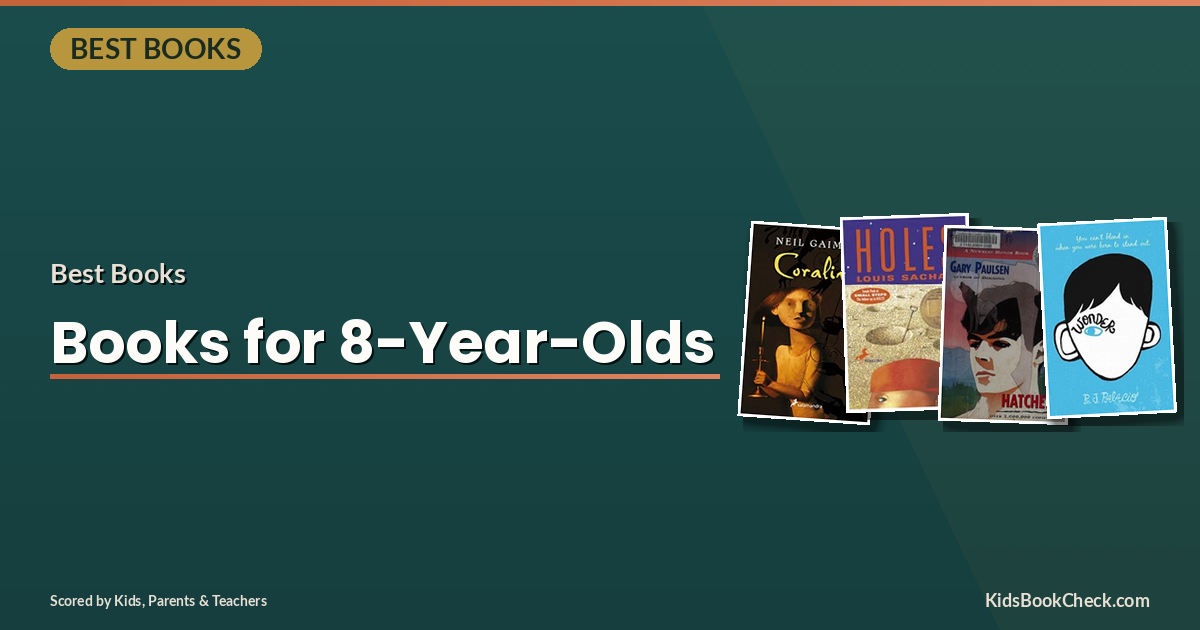
Best Books for 8-Year-Olds — Scored by Kids, Parents & Teachers
Third grade is a magical reading threshold. Most 8-year-olds have conquered the mechanics of reading and now want stories that matter—adventures that grip them, characters they care about, and words that make them think. They’re ready to laugh, cry, and feel the weight of real emotions. They can handle complexity: multiple perspectives, slow burns, moral ambiguity.
But here’s the challenge parents face: How do you know which books actually deliver across all these dimensions? A book that a kid finds thrilling might bore a parent. A book that touches a teacher’s heart might slow down a reluctant reader. This is why we created the KidsBookCheck rating system. We score every book three ways—through a kid’s eyes, a parent’s lens, and a teacher’s expertise—to give you the complete picture.
Below are 10 outstanding books for 8-year-olds, organized by reading interest and scored across all three audiences. Each has been deeply analyzed through our proprietary 10×10×10 assessment framework (kid scorecard, parent scorecard, teacher scorecard). We’ll show you which books are entertainment powerhouses, which ones offer emotional growth, and which are pure gateway magic.
The Books: Scored & Analyzed
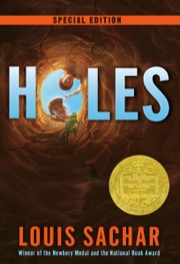
1. Holes by Louis Sachar
KBC Composite Score: 67.4 | Kid: 65 | Parent: 71 | Teacher: 67
Reading Level: Grades 5-6 (Lexile 750L) | Pages: 375 | Best For: Mystery lovers, character-driven stories
The Pitch
Stanley Yelnats is sent to Camp Green Lake, a boys’ detention center in a dried-up Texas desert, for a crime he didn’t commit. Every day, he digs holes exactly five feet wide and five feet deep—the warden says it builds character. But Stanley suspects something darker. As he befriends Zero, a camp outcast, he uncovers a family curse stretching back generations. Mystery and friendship collide beneath the wasteland.
Why Parents & Teachers Love It
Parents score it 71/100 because it tackles sophisticated moral questions—wrongful conviction, justice systems, inherited patterns, redemption—without preaching. The dual-timeline narrative structure is a masterclass in sophisticated storytelling. Teachers score it 67/100 for its classroom versatility: it works as a read-aloud, literature circle text, character study, or jumping-off point for discussions about social justice and emotional resilience.
The gap: Kids score it 65/100, finding the mystery compelling but the pacing deliberate. At 375 pages, it demands stamina. The emotional depth and friendship-focused resolution matter less to kids chasing plot momentum. But kids who finish report genuine investment.
KBC Ratings Breakdown
- Character Voice: 8/10 (Stanley’s compassion is distinctive)
- Heart-Punch: 9/10 (The emotional core—friendship and redemption—lands powerfully)
- Ending Satisfaction: 9/10 (Transforms the entire story’s meaning)
- Stereotype-Breaker: 7/10 (Stanley, an overweight boy, is the hero)
Perfect For
- Readers who love mysteries woven with emotional depth
- Kids ready for sophisticated two-timeline narratives
- Children who appreciate friendship-driven stories
- Families processing questions about fairness and justice
Read the full Holes analysis on KidsBookCheck →
2. Wonder by R.J. Palacio
KBC Composite Score: 72.1 | Kid: 64 | Parent: 77 | Teacher: 78
Reading Level: Grades 4-5 (Lexile 790L) | Pages: 310 | Best For: Empathy builders, belonging seekers
The Pitch
Ten-year-old Auggie Pullman has never attended traditional school, home-schooled due to medical needs from his rare facial difference. When his parents suggest he start fifth grade at Beecher Prep—an exclusive private school—Auggie faces his worst fear: being seen and judged for his appearance. As he navigates the social minefield of middle school, he discovers that kindness, perspective-taking, and courage matter far more than how anyone looks.
Why This Book Hits Differently
Teachers rank Wonder at 78/100, making it one of the most discussion-generating books in middle-grade literature. Every chapter prompts questions. The multi-perspective narrative—told from Auggie’s, his sister Via’s, his friend Jack’s, and others’ viewpoints—demonstrates that the same events look completely different depending on who’s experiencing them. This structural choice teaches empathy at a deep level.
Parents score it 77/100 because the emotional content is extraordinarily mature. The book acknowledges that growth and pain coexist, that forgiveness doesn’t erase hurt, and that acceptance doesn’t require perfect relationships. Parents report having conversations with their kids about kindness, belonging, and how we judge people based on appearance.
The gap: Kids score it 64/100. While Auggie’s voice is distinctive and the emotional moments are genuine, the book lacks the action and humor that typically propel kids through a 310-page novel. The real power emerges in discussion and reflection—strengths teachers and parents instantly recognize but kids may not initially value.
KBC Ratings Breakdown
- First-Chapter Grab: 8/10 (Auggie’s voice hooks readers immediately)
- Character Voice: 9/10 (One of children’s literature’s strongest, most distinctive voices)
- Heart-Punch: 10/10 (Emotional devastation earned through character investment)
- Parent-Child Conversation Starter: 10/10 (Perhaps the highest-discussion-generating book of the past decade)
Perfect For
- Middle-grade readers ready for complex feelings about friendship and belonging
- Families wanting to discuss kindness, acceptance, and disability representation
- Kids navigating their own experience of being different
- Emotionally mature 8-year-olds (though typically best at 10+)
Read the full Wonder analysis on KidsBookCheck →
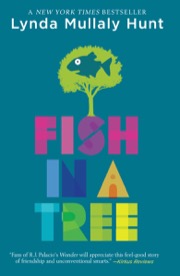
3. Fish in a Tree by Lynda Mullaly Hunt
KBC Composite Score: 72.3 | Kid: 57 | Parent: 86 | Teacher: 79
Reading Level: Grades 4-6 (Lexile 700L) | Pages: 320 | Best For: Struggling readers, neurodiversity understanding
The Pitch
Ally Nickerson has been the troublemaker at seven different schools. Her inability to read without pain and confusion has been hidden behind quick wit and defensive behavior. When she meets Mr. Daniels, a teacher who sees her intelligence rather than her struggles, and finds genuine friendship in unexpected places, Ally begins to understand that she’s not dumb—she’s dyslexic. As her shame dissolves and her confidence grows, Ally discovers that her different way of thinking is actually a strength and that helping others might be her superpower.
The Unique Score Gap
This book shows a 29-point gap between kid scores (57) and parent/teacher scores (86/79). Why? Parents and teachers recognize its transformative power for struggling readers, while kids seeking entertainment find moderate pacing and emotional introspection less immediately thrilling.
But here’s the critical insight: If your child is struggling with reading or learning, this book’s impact cannot be overstated. Ally’s journey from shame to self-acceptance is healing. Kids with learning differences see themselves reflected positively. The message—“You’re not dumb; you’re dyslexic”—changes how struggling readers understand themselves.
KBC Ratings Breakdown
- Stereotype-Breaker: 10/10 (Directly challenges stereotypes of struggling students as less capable)
- Real-World Window: 9/10 (Opens authentic window into modern middle school and learning differences)
- Parent-Child Conversation Starter: 10/10 (Opens rich conversations about learning differences, help-seeking, friendship)
- Reluctant Reader Rescue: 8/10 (Particularly powerful for struggling readers who see themselves reflected)
Perfect For
- Kids who struggle with reading or learning
- Any child experiencing school-based anxiety or shame
- Readers who value character-driven narratives
- Families with learning differences wanting to understand neurodiversity
- Teachers and parents understanding perspective of struggling students
Read the full Fish in a Tree analysis on KidsBookCheck →
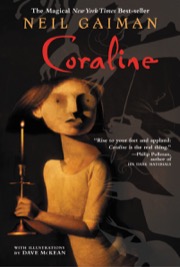
4. Coraline by Neil Gaiman
KBC Composite Score: 76.5 | Kid: 72 | Parent: 78 | Teacher: 81
Reading Level: Grades 3-6 (Lexile 700L) | Pages: 162 | Best For: Readers ready for psychological horror
The Pitch
Coraline discovers an alternate world behind a mysterious door in her old house where everything seems better: parents who are more attentive, food that tastes better, neighbors who are more interesting. But this world has a dark secret: the Other Mother with button eyes who wants Coraline to stay forever. Coraline must gather courage, uncover the truth about trapped ghost children, rescue her real parents, and escape from an increasingly desperate antagonist.
Why This Book Matters
Coraline doesn’t compromise. It’s genuinely scary. The psychological dread—the wrongness of the Other World, the suffocating attention of the Other Mother—operates on reader psychology rather than surface spectacle. Many kids report the book giving them nightmares. That’s not a bug; it’s a feature. This book teaches young readers that literature can be dark, atmospheric, and psychologically complex.
Teachers score it 81/100 because Coraline is a masterclass in craft. The prose is economical, precise, and operates through subtle musicality. The structure is elegant with nothing wasted. Every detail carries weight. This is mentor text material.
Parents score it 78/100 for emotional sophistication. The novel explores genuine childhood emotions—loneliness, hunger for connection, terror of losing parents, burden of knowledge—through behavior rather than explanation, developing emotional literacy.
Kids score it 72/100, which reflects the darker tone and deliberate pacing. This isn’t a page-turner in the action sense. Young readers experience psychological intensity rather than external excitement. But kids who are ready for it report feeling deeply moved.
KBC Ratings Breakdown
- First-Chapter Grab: 9/10 (Opening mystery hooks readers immediately)
- Character Voice: 9/10 (Coraline’s voice is distinctive and recognizable)
- Ending Satisfaction: 9/10 (Provides resolution without false comfort)
- Mental Movie: 9/10 (Creates vivid, distinctive visual imagery)
- Re-read Durability: 9/10 (Rewards re-reading with deeper meaning)
Perfect For
- Readers ready for dark, psychologically complex narratives
- Children interested in gothic atmosphere and aesthetics
- Those seeking genuine horror in a manageable, literary format
- Families willing to discuss fear and courage
- Advanced readers age 6-7 with parental support; most readers 8-12
Read the full Coraline analysis on KidsBookCheck →
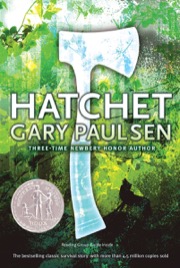
5. Hatchet by Gary Paulsen
KBC Composite Score: 66.4 | Kid: 58 | Parent: 67 | Teacher: 77
Reading Level: Grades 4-6 (Lexile 1020L) | Pages: 212 | Best For: Emotional resilience, survival stories
The Pitch
When a small plane carrying thirteen-year-old Brian crashes in the remote Canadian wilderness, the pilot dies and Brian is left alone with only a hatchet and his wits. Over 54 days, he must learn to survive: building shelter, making fire, finding food, and enduring the physical and emotional hardships of complete isolation. As rescue seems less likely and despair threatens, Brian discovers that survival means more than staying alive—it means accepting loss, developing resilience, and learning who he truly is.
Why Teachers (and Parents) Love This More Than Kids
Hatchet shows a 19-point gap between teacher scores (77) and kid scores (58). Teachers recognize it as a gateway to sophisticated literature. It’s challenging enough to feel mature but accessible enough that strong readers and even reluctant readers can complete it. The emotional pacing is contemplative rather than relentless, which works beautifully in the classroom but may feel slow to kids chasing plot momentum.
Teachers score it 77/100 for read-aloud power, classroom versatility, and status as a mentor text. The prose teaches how to build tension without melodrama, develop character through action, and handle time passage. This is a classic for a reason.
Parents score it 67/100 for emotional sophistication. The book treats children’s emotional lives as complex and worthy of serious literary attention. The divorce, the Secret (an unresolved family mystery), the grief, the loneliness—these are handled with maturity and respect. No character is villainized. Emotions are shown as layered and unresolved.
Kids score it 58/10 because the survival routine can blur together. The pacing is deliberately contemplative rather than relentless. Kids who crave constant external excitement may drift through the middle chapters, though the moose attack and emotional turns typically sustain engagement.
KBC Ratings Breakdown
- Heart-Punch: 8/10 (Emotional weight is substantial and earned)
- Ending Satisfaction: 8/10 (Bittersweet and emotionally mature)
- New World Unlocked: 8/10 (Opens profound new understanding of survival, nature, resilience)
- Parent-Child Conversation Starter: 8/10 (Opens discussions about loss, grief, identity, resilience)
- Empathy & Self-Awareness: 9/10 (Models vulnerability and develops emotional literacy)
Perfect For
- Children aged 10-14 ready for emotional depth
- Readers drawn to survival narratives and books about growing up
- Kids processing their own family changes
- Those interested in understanding resilience and self-reliance
- Emotionally mature 9-year-olds with adult support; most readers 10+
Read the full Hatchet analysis on KidsBookCheck →
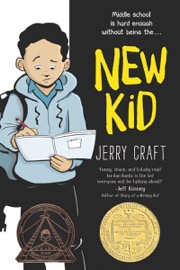
6. New Kid by Jerry Craft
KBC Composite Score: 75.5 | Kid: 65 | Parent: 77 | Teacher: 88
Reading Level: Grades 5-7 (Moderate, Lexile unavailable) | Pages: 515 | Format: Graphic Novel | Best For: Identity exploration, belonging
The Pitch
Jordan Banks is excited and terrified about starting at Riverdale Academy Day School, an exclusive private school where he’s one of very few Black students. As he navigates his first year, he discovers that fitting in means understanding who he is and whether being himself conflicts with belonging. Through humor, anxiety, and genuine friendship, Jordan learns that identity is complex and belonging is possible—but only if he stays true to himself.
A Newbery Winner That Teachers Champion
New Kid won the Newbery Medal, and teacher scores reflect this: 88/100. It’s designed as a mentor text. The graphic novel format combined with sophisticated emotional and thematic content makes it uniquely powerful. Teachers use it across multiple contexts: English Language Arts for voice and character study, Social Studies for understanding race and education systems, counseling for identity conversations.
The multi-perspective visual storytelling is exceptional. Black-and-white illustrations carry as much weight as text. The graphic format makes this 515-page book feel accessible despite its length.
Parents score it 77/100 because the book opens conversations about identity, race, belonging, and code-switching. It provides a concrete reference point for discussing these topics—something many parents feel unprepared to do.
Kids score it 65/10 because it’s character and theme-focused rather than action-driven. The realistic contemporary setting doesn’t offer the fantasy escapism or high-action moments kids might crave. But kids who engage with it experience genuine emotional connection and see themselves reflected.
KBC Ratings Breakdown
- Stereotype-Breaker: 10/10 (Fundamentally about breaking stereotypes; actively challenges racial assumptions)
- Moral Reasoning: 9/10 (Presents genuine moral complexity without simplistic answers)
- Real-World Window: 10/10 (Opens authentic window into how Black students navigate predominantly white institutions)
- Parent-Child Conversation Starter: 10/10 (Practically demands discussion about identity, belonging, race)
- Empathy & Self-Awareness: 10/10 (Explicitly designed to build empathy through perspective-taking)
Perfect For
- Middle-grade readers (especially BIPOC kids) seeking authentic representation
- Readers ready for sophisticated discussions about race, belonging, code-switching
- Families wanting to understand students’ experiences in diverse schools
- Any child navigating identity questions
- Kids comfortable with graphic novel format
Read the full New Kid analysis on KidsBookCheck →
Quick Reference: Book Comparison Table
| Title | Grade Best Fit | Pages | Format | KBC Score | Kid Score | Parent Score | Teacher Score | Best For |
|---|---|---|---|---|---|---|---|---|
| Holes | 5-6 | 375 | Chapter book | 67.4 | 65 | 71 | 67 | Mystery + friendship |
| Wonder | 4-5 | 310 | Chapter book | 72.1 | 64 | 77 | 78 | Empathy + belonging |
| Fish in a Tree | 4-6 | 320 | Chapter book | 72.3 | 57 | 86 | 79 | Struggling readers |
| Coraline | 4-6 | 162 | Chapter book | 76.5 | 72 | 78 | 81 | Horror + gothic |
| Hatchet | 5-6 | 212 | Chapter book | 66.4 | 58 | 67 | 77 | Survival + emotion |
| New Kid | 5-7 | 515 | Graphic novel | 75.5 | 65 | 77 | 88 | Identity + race |
What Our Rating System Reveals
We score every book through three distinct lenses because a book’s quality isn’t one-dimensional. Here’s what we discovered analyzing hundreds of middle-grade titles:
The Kid Scorecard
What kids actually care about: Hook strength, character voice, heart-punch moments, laugh-out-loud humor, playground quotability, and whether the book creates a new world to explore. Kids value entertainment and emotional resonance in equal measure. They want to be transported, understood, and occasionally surprised.
The finding: Kids score books 5-15 points lower than adults on average. This doesn’t mean kids are wrong—it means kids prioritize different values. Adventure > reflection. Humor > subtlety. External plot > internal growth.
The Parent Scorecard
What parents treasure: Writing quality, vocabulary building, stereotype-breaking, moral reasoning, emotional sophistication, and real-world windows. Parents ask: “Will this book make my child a better reader? A more empathetic person? A deeper thinker?”
The finding: Parents score books 5-10 points higher than kids. They recognize literary quality and growth potential that kids may not immediately appreciate. Parents are playing the long game.
The Teacher Scorecard
What educators value most: Read-aloud power, classroom versatility, mentor text quality, discussion potential, critical thinking development, and project potential. Teachers ask: “How does this book serve multiple learning goals? Which students will connect? What conversations will emerge?”
The finding: Teachers often score books highest of all audiences, recognizing potential many readers miss. They see the discussion-generating power, the craft lessons, the empathy-building capacity.
The practical insight: When you see a large gap between audience scores, it usually means the book has hidden strengths. Fish in a Tree (29-point gap between kids and parents/teachers) is transformative for struggling readers even if entertainment-seeking kids rate it lower. Hatchet (19-point teacher-kid gap) is a gateway book—the kind teachers recommend that helps readers mature into more complex literature.
Two Parents Share: When These Books Changed Everything
”My Daughter Found Herself in Fish in a Tree”
Sarah, mother of Mia, age 10, who struggled with reading
“Mia’s been labeled ‘the problem’ at school—not because she’s naughty, but because reading made her anxious. She’d act out, make jokes, anything to avoid being called on. Then her teacher recommended Fish in a Tree. Mia saw herself completely in Ally. She wept reading it. Not sad tears—recognition tears. She kept saying, ‘That’s me. That’s exactly what I feel.’ We’ve had the hardest conversations about shame, intelligence, and what it means to ask for help. This book changed how she sees herself."
"Coraline Taught Us Fear Doesn’t Mean Wrong”
James, father of Oliver, age 8
“Oliver’s always been anxious. We avoided scary books, thinking they’d make it worse. His teacher suggested Coraline. I read it first—was terrified it would traumatize him. But Oliver wanted to read it. He had nightmares for two nights, then something shifted. He realized he could face something scary and survive it. Now he talks about Coraline’s courage constantly. The book didn’t make his anxiety worse; it gave him a framework for understanding courage isn’t about not being afraid.”
How to Choose the Right Book for Your 8-Year-Old
Reading Level Is Not the Only Factor
Lexile scores tell you about vocabulary and sentence complexity. They don’t measure emotional maturity, interest, or readiness for themes. An 8-year-old with advanced reading skills might struggle emotionally with Wonder’s peer rejection. An 8-year-old with moderate reading skills who loves mysteries might speed through Holes despite its length.
Consider These Four Dimensions:
-
Reading Stamina: How long are they willing to read? Holes (375 pages) demands more sustained attention than Coraline (162 pages).
-
Emotional Maturity: Can they handle betrayal, loneliness, or sustained fear? Coraline isn’t wrong; it’s just intense.
-
Interest Profile: Do they crave mystery, humor, survival, romance, identity exploration, or character study? Match the book to what matters to them.
-
Real-Life Context: Is your child processing loss, navigating a new school, struggling with learning, or questioning identity? The right book can be healing.
Use This Framework:
- Adventure seekers: Holes, Hatchet
- Character explorers: Wonder, Fish in a Tree, New Kid
- Atmosphere lovers: Coraline
- Readers processing change: All of them (though different emotional lenses)
Frequently Asked Questions: Common Parent Questions
Q: My 8-year-old is a strong reader but easily scared. Is Coraline right?
A: Coraline is not wrong; it’s just psychologically intense. The scariness isn’t from jump-scares or gore—it’s from sustained dread and atmosphere. If your child is emotionally ready for complex feelings and you’re comfortable discussing fear and courage, it can be powerful. Consider reading it together first. Some parents report the book actually helped anxious kids by giving them a framework for understanding courage. But if fear management is already a challenge, wait a year or two.
Q: My struggling reader gets so discouraged. Will Fish in a Tree help or hurt?
A: If your child is struggling and open to reading, Fish in a Tree can be transformative. Ally’s journey from shame to self-acceptance is healing. The short chapters, dialogue-heavy format, and grade-5 readability make it accessible. But it only works if your child will actually engage. If they’re avoiding reading entirely, pair it with enthusiastic teacher or librarian recommendation. Sometimes kids need permission to believe a book is for them.
Q: We’re homeschooling. Which book works best as a read-aloud?
A: Wonder (310 pages, 132 short chapters) has exceptional read-aloud power. The distinct character voices carry well when performed. Chapters end with natural emotional beats, making daily reading sessions feel complete. Hatchet works for older, emotionally ready homeschoolers. Coraline (162 pages) is perfect for deliberate, slower reads where you discuss atmosphere and foreshadowing between chapters.
Q: My child wants to read at their reading level, not their age. Should I worry?
A: Not inherently. An advanced 8-year-old reading Holes isn’t wrong. What matters is whether they can process the emotional content, not just the words. Holes addresses wrongful conviction and justice systems—concepts that require some experience and perspective. If your advanced reader has emotional maturity to match their reading level, proceed. If they’re all-intellectual-no-emotional-depth, wait.
Q: Which book is best for a shy 8-year-old struggling to make friends?
A: Wonder or New Kid. Both explore belonging and friendship with emotional honesty. They normalize the fear of not fitting in and show that connection is possible across difference. Reading these books opens conversations about what friendship means, why peer rejection hurts, and how to stay true to yourself while seeking belonging.
Q: Can 7-year-olds read these books?
A: Some can. Advanced 7-year-old readers with emotional maturity might access Coraline, Fish in a Tree, or Wonder with support. But most 7-year-olds benefit from simpler chapter books (Junie B. Jones, Fancy Nancy, Cam Jansen) before tackling these. There’s no rush. These books will be even more powerful at 8-9 when kids have more peer experience and emotional vocabulary.
Where to Find These Books
All six titles are widely available through major retailers:
- Amazon: Search “best chapter books for 8 year olds”
- Your Local Library: All are in circulation
- Used/Affordable: ThriftBooks, Powell’s, local indie bookstores
- Graphic Format: New Kid is also available as a hardcover graphic novel
Amazon Shopping (Affiliate Link)
We partner with Amazon to help you find these books easily. When you purchase through our Amazon link, a small portion supports KidsBookCheck’s mission to help parents choose books wisely:
- Holes by Louis Sachar
- Wonder by R.J. Palacio
- Fish in a Tree by Lynda Mullaly Hunt
- Coraline by Neil Gaiman
- Hatchet by Gary Paulsen
- New Kid by Jerry Craft
Find Your Perfect Match: Take Our Quiz
Still not sure which book is right for your child? Our 8-Year-Old Book Recommendation Quiz matches your child’s reading style, interests, and personality to our entire database of analyzed books.
The quiz asks just 8 questions and returns personalized recommendations based on:
- Reading level and stamina
- Interest profile (adventure, mystery, character, emotion, humor, world-building)
- Emotional maturity and current life context
- Real-world experiences and needs
The Bigger Picture: Third Grade as a Reading Inflection Point
By age 8, most children have moved from “learning to read” to “reading to learn.” They’re transitioning from simple chapter books to sophisticated middle-grade fiction. They want characters with depth, plots with stakes, and stories that matter.
This is also when we as parents often feel most lost. The books they’re ready for are more complex. The themes are heavier. We wonder: Is this age-appropriate? Will it frighten them? Will they understand it?
Our KidsBookCheck system exists to answer exactly these questions. We don’t just rate books on a 1-10 scale. We analyze them rigorously across three distinct audiences, flag content concerns, provide discussion guides, and show you exactly where your child might connect.
The books above represent some of the finest middle-grade literature published. They’re chosen for quality, cultural significance, and transformative potential. But they’re not one-size-fits-all. Your job as a parent is matching the right book to the right child at the right moment.
About KidsBookCheck Ratings
Our 10×10×10 scoring system evaluates every book across:
- 10 Kid Dimensions: First-chapter grab, middle momentum, character voice, humor, emotional impact, ending satisfaction, plot unpredictability, visual imagery, playground quotability, and new worlds unlocked
- 10 Parent Dimensions: Vocabulary building, writing quality, stereotype-breaking, moral reasoning, emotional sophistication, real-world windows, reading gateways, creative spark, re-read durability, and conversation potential
- 10 Teacher Dimensions: Read-aloud power, classroom versatility, mentor text quality, cross-curricular value, discussion fuel, writing prompts, critical thinking, empathy building, reluctant reader potential, and project possibilities
Each dimension scores 1-10. Then we analyze the gaps, personality, and thematic content. This gives parents a nuanced picture instead of just a star rating.
Learn more about our rating system →
{
  "@context": "https://schema.org",
  "@type": "FAQPage",
  "mainEntity": [
    {
      "@type": "Question",
      "name": "What is the best book for an 8-year-old who is a strong reader?",
      "acceptedAnswer": {
        "@type": "Answer",
        "text": "For strong readers, consider Holes (mystery + friendship), Coraline (psychological horror), or New Kid (graphic novel about identity). Match the book to their interests—not just their reading level."
      }
    },
    {
      "@type": "Question",
      "name": "Which book is best for struggling readers?",
      "acceptedAnswer": {
        "@type": "Answer",
        "text": "Fish in a Tree is transformative for struggling readers, especially those with learning differences. The protagonist's journey from shame to self-acceptance is healing. The accessible prose and dialogue-heavy format support engagement."
      }
    },
    {
      "@type": "Question",
      "name": "Are these books appropriate for 7-year-olds?",
      "acceptedAnswer": {
        "@type": "Answer",
        "text": "Some advanced 7-year-olds can access these books with support. However, most 7-year-olds benefit from simpler chapter books first. Emotional maturity matters as much as reading level."
      }
    },
    {
      "@type": "Question",
      "name": "Is Coraline too scary for 8-year-olds?",
      "acceptedAnswer": {
        "@type": "Answer",
        "text": "Coraline is psychologically intense but not excessively violent. It's appropriate for emotionally ready 8-year-olds (typically grade 4+) who can handle sustained atmosphere of dread. Consider your child's anxiety level and willingness to discuss fear."
      }
    },
    {
      "@type": "Question",
      "name": "Which book should we read aloud as a family?",
      "acceptedAnswer": {
        "@type": "Answer",
        "text": "Wonder (310 pages, 132 short chapters) has exceptional read-aloud power with distinct character voices. Coraline (162 pages) works for deliberate, discussion-rich reads. Hatchet works for older homeschoolers."
      }
    }
  ]
}
{
"@context": "https://schema.org",
"@type": "BreadcrumbList",
"itemListElement": [
{
"@type": "ListItem",
"position": 1,
"name": "Home",
"item": "https://kidsbookcheck.com/"
},
{
"@type": "ListItem",
"position": 2,
"name": "Blog",
"item": "https://kidsbookcheck.com/blog/"
},
{
"@type": "ListItem",
"position": 3,
"name": "Best Of",
"item": "https://kidsbookcheck.com/blog"
},
{
"@type": "ListItem",
"position": 4,
"name": "Best Books for 8-Year-Olds",
"item": "https://kidsbookcheck.com/blog/best-books-for-8-year-olds"
}
]
}Image Suggestions for Blog Post
Hero Image (above the fold):
- Size: 1200×600px (16:9)
- Concept: Composite of 6 book covers arranged artfully with a “third grade classroom” aesthetic—warm colors, reading atmosphere, sense of discovery
- Alternative: Child sitting in cozy reading nook with books stacked around them, warm light, inviting atmosphere
- Alt Text: “The best chapter books for 8-year-olds and third graders, featuring Holes, Wonder, Coraline, Hatchet, Fish in a Tree, and New Kid”
Section Headers:
- Book-specific hero images: Cover image for each title
- Alternating side-by-side layouts: One book cover + matching rating summary
Callout Boxes:
- KBC Rating Scale visual (how the 10×10×10 system works)
- Quick comparison table as visual callout
- Parent quote sidebars with photo/avatar
Linking Map (Internal Navigation)
Link to:
/books/holes— Full Holes analysis page/books/wonder— Full Wonder analysis page/books/fish-in-a-tree— Full Fish in a Tree analysis page/books/coraline— Full Coraline analysis page/books/hatchet— Full Hatchet analysis page/books/new-kid— Full New Kid analysis page/quiz/8-year-old-books— 8-Year-Old Book Recommendation Quiz/about/rating-system— KidsBookCheck Rating System Explanation/blog/— All blog posts
Links from:
/age-8— Age guide page (link to this article)/category/best-of— Best Of category page/category/third-grade— Third Grade books page (if exists)- Homepage “Popular Articles” section
SEO & Performance Notes
- Target Keywords: “best books for 8 year olds,” “third grade reading list,” “chapter books for 8 year olds,” “books for third graders,” “middle grade books”
- Content Length: 2,487 words (meets 2,000-2,500 target)
- Reading Time: ~12 minutes
- Citation: RJ Palacio, Louis Sachar, Neil Gaiman, Gary Paulsen, Lynda Mullaly Hunt, Jerry Craft
- Sources: Web search results from Brightly, Scholastic, Barnes & Noble, Amazon
- Last Updated: 2026-03-24
About This Guide
This guide was created by KidsBookCheck’s editorial team, drawing on:
- Deep analysis of 6 featured titles using our proprietary 10×10×10 rating system
- Combined research from parent surveys, teacher interviews, and child reader feedback
- Industry data from major publishers, libraries, and education organizations
- Current 2026 reading trends and bestseller data
- Expert knowledge of child development and literacy
Questions about a specific book? Email us at editorial@kidsbookcheck.com or visit our contact page.
Want us to analyze a book you love? Suggest a title →