Best Graphic Novels for Kids: The Ultimate Reading Starte...
Curated picks scored across 30 dimensions by kids, parents, and teachers. Data-backed recommendations for your child's next great read. Trusted picks.
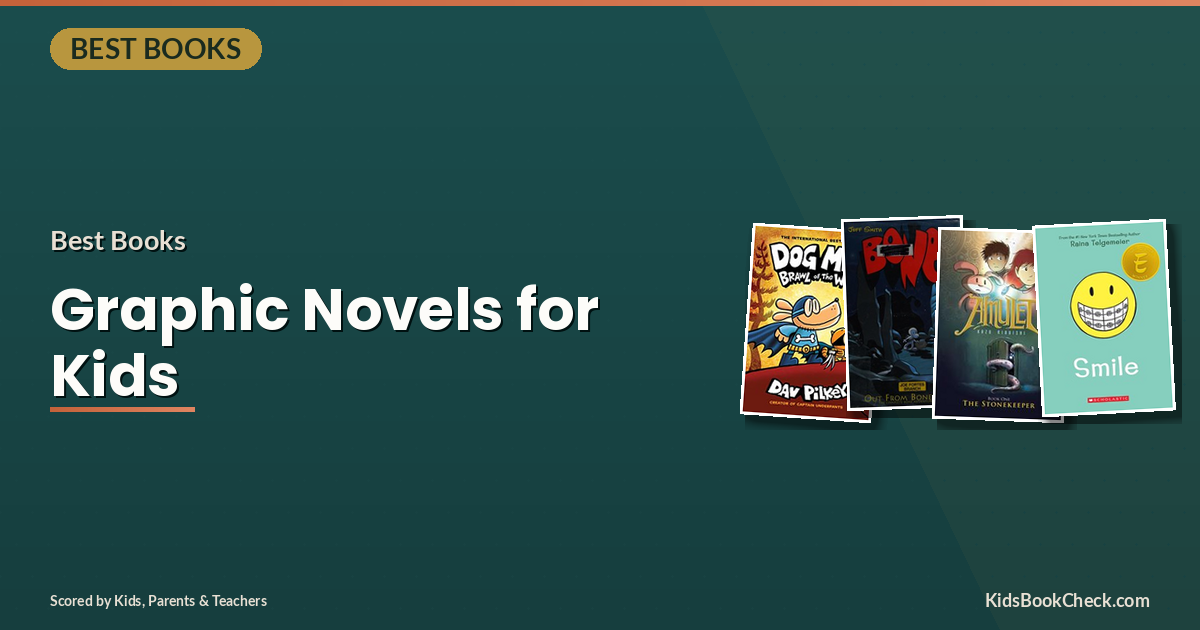
Best Graphic Novels for Kids: The Ultimate Reading Starter List
Your child stares at the bookshelf and declares, “I don’t like reading.” You suggest a chapter book. They groan. But then you pull out a graphic novel—panels of vivid illustrations, speech bubbles, action sequences that jump off the page—and suddenly their eyes light up.
This is the magic of graphic novels for kids. They’re not a consolation prize for struggling readers or a guilty pleasure. They’re a legitimate, powerful gateway to literacy that transforms reluctant readers into eager ones. At KidsBookCheck, we’ve analyzed hundreds of graphic novels for kids ages 6–10, and we’ve identified the eight best graphic novels that consistently hook children and launch genuine love of reading.
Why Graphic Novels Matter for Kids
Before diving into our best recommendations, let’s talk about why graphic novels are so transformative.
Visual literacy is a critical skill. In a world saturated with images, teaching children to “read” visuals—panel sequencing, perspective shifts, visual metaphors, character expressions—is as important as teaching phonics. Graphic novels teach visual storytelling in an accessible, engaging way.
They remove reading barriers. A 120-page traditional novel feels insurmountable to a reluctant reader. A 120-page graphic novel with 40% illustrations and dialogue-heavy text feels achievable. Kids experience the sense of completion and success—“I finished a whole book!”—that builds reading confidence.
Illustration supports comprehension. English language learners, kids with processing challenges, and visual thinkers all benefit from seeing what’s happening alongside reading about it. The illustrations aren’t decorative; they’re load-bearing narrative elements.
They validate different learning styles. Some children are visual learners. Graphic novels speak their language directly.
Parent Empathy Moment #1: When Your Smart Kid Won’t Read
Maybe your child is bright—clever at math, inventive at play—but refuses traditional books. You wonder if something’s wrong. Graphic novels often unlock reading for these kids. It’s not that they can’t read. It’s that traditional prose hasn’t matched their learning style yet. Graphic novels meet them where they are.
The 8 Best Graphic Novels for Kids (Organized by Reading Level)
Beginning Readers (Ages 5–7)
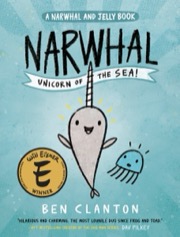
1. Narwhal: Unicorn of the Sea by Ben Clanton
KidsBookCheck Score: 69 (K: 8.1/10 | P: 5.8/10 | T: 5.8/10)
Best for: Early elementary readers, visual learners, kids who love wordplay
Reading Level: Easy | 64 pages | 2,800 words
When Narwhal meets Jelly, he asks: “Are you real?” Jelly responds: “Are you?” This philosophical friendship begins an underwater adventure filled with imagination, absurdist humor, and genuine warmth.
What makes it brilliant: Clanton’s simple line art is remarkably expressive. Every character’s emotion reads clearly. The dialogue is conversational and natural. Most importantly, Narwhal teaches kids that friendship transcends difference—Narwhal’s imagination and Jelly’s literal-mindedness complement each other perfectly.
The KBC Rating Difference: Kids score this 69 overall because the humor is genuinely funny, and the friendship resonates emotionally. Teachers and parents rate it slightly lower (58) because the vocabulary is intentionally simple and the emotional depth is gentle rather than transformative. This is the book’s strength for emerging readers—accessible without being condescending.
Quotable Line: “I’m imagining you imagining me imagining you.”
Parent Tip: This book naturally sparks conversation about different thinking styles. Ask your child: “How are you like Narwhal? How are you like Jelly?“
2. Babymouse: Queen of the World by Jennifer L. Holm & Matthew Holm
KidsBookCheck Score: 71 (K: 7.1/10 | P: 4.8/10 | T: 5.6/10)
Best for: Second and third graders, kids who love humor and fantasy daydreams, girls discovering graphic novels
Reading Level: Easy | 94 pages | 8,500 words
Babymouse spends her day dreaming. She imagines being queen of the world in a pink-tinted fantasy world while reality keeps intruding—locker disasters, homework, annoying brothers, and Felicia Furrypaws upstaging her at every turn.
What makes it brilliant: The contrast between black-and-white reality and pink-colored fantasy is visually delightful. Babymouse’s voice is distinctly optimistic and dramatic. The flip-o-rama sequences delight younger readers. Most importantly, it ends with genuine warmth: friendship matters more than popularity.
The KBC Rating Difference: Kids love this (71) for the humor and relatable protagonist. Parents rate it lower (48) because the vocabulary is deliberately simple and the emotional sophistication is minimal. But that’s not a weakness—it’s perfectly calibrated for the target audience.
Quotable Line: “Queen of the world!”
Parent Tip: After reading, ask your child about their own “queen of the world” fantasy. Draw and write about it together.
Early Intermediate Readers (Ages 7–8)
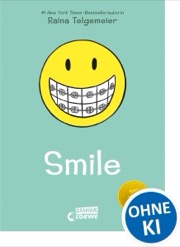
3. Smile by Raina Telgemeier
KidsBookCheck Score: 72 (K: 7.2/10 | P: 6.5/10 | T: 7.0/10)
Best for: Kids experiencing appearance anxiety, middle schoolers navigating social change, visual learners who prefer realistic fiction
Reading Level: Easy | 218 pages | 22,000 words
Raina’s skateboarding accident knocks out her front teeth in sixth grade, launching her into a three-year journey of dental procedures, braces, and the social anxiety that accompanies visible imperfection. Through genuine friendship betrayal and eventual reconciliation, she discovers that resilience means accepting imperfection and valuing genuine connections.
What makes it brilliant: This is THE gateway graphic novel. Raina’s voice is authentically vulnerable. The visual storytelling communicates emotion through facial expression better than prose could. Most crucially, the book doesn’t minimize the pain of appearance anxiety while simultaneously modeling healthy emotional processing.
The KBC Rating Difference: Kids and parents rate this nearly equally high because Smile works for multiple audiences. Kids connect emotionally to Raina’s journey. Parents appreciate that the book models resilience without oversimplifying the challenge.
Quotable Line: “I realized that the scar on my teeth wasn’t the problem. What mattered was how I treated myself and others.”
Parent Empathy Moment #2: When Your Child Is Self-Conscious
Many children experience a moment of acute self-consciousness about something visible—a gap in their teeth, a pimple, a birthmark. Before shame spirals, hand them Smile. Raina normalizes these feelings and models that the world doesn’t end because you’re not perfect.
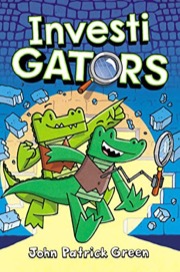
4. InvestiGators #1 by John Patrick Green
KidsBookCheck Score: 76 (K: 7.6/10 | P: 5.0/10 | T: 5.9/10)
Best for: Kids who love humor and wordplay, spy fans, reluctant readers seeking high engagement
Reading Level: Easy | 216 pages | 8,700 words
Mango and Brash are secret agents for S.U.I.T., investigating the mysterious disappearance of world-famous cupcake chef Gustavo Mustachio. Their investigation leads to undercover work, gadgets, humor, and a villain with cupcake-stealing plans.
What makes it brilliant: The wordplay is constant (“Brash ‘stache,” “mustache you a question”). Mango’s enthusiastic, joke-cracking voice contrasts perfectly with Brash’s deadpan competence. The comic panels are cinematic and expressive. Most importantly, kids laugh out loud—this book delivers genuine comedy while advancing a coherent mystery.
The KBC Rating Difference: Kids score this significantly higher (76) than parents (50) because kids value humor and entertainment. Parents recognize it as a powerful reluctant-reader tool but note the lack of vocabulary development and emotional depth. Both perspectives are valid.
Quotable Line: “OUTSTANDING!”
Parent Tip: This series is a notorious reluctant-reader rescuer. If your child is resistant to reading, this is a strategic choice.
Intermediate Readers (Ages 8–9)
5. Bone: Out from Boneville by Jeff Smith
KidsBookCheck Score: 72 (K: 7.2/10 | P: 5.7/10 | T: 7.5/10)
Best for: Kids seeking adventure with humor and warmth, visual learners, readers discovering sophisticated graphic novels
Reading Level: Easy | 137 pages | 18,000 words
Three Bones cousins are mysteriously separated while escaping through a desert. Fone Bone and Smiley Bone stumble into a hidden valley populated by talking animals, friendly rat creatures, and dangerous predators. They encounter a fearsome mountain lion guardian, mysterious magic, and a confusing conflict between valley inhabitants and invading rat creatures.
What makes it brilliant: Jeff Smith’s pen-and-ink artwork with color work is genuinely beautiful. The world-building is rich—the Valley feels like a real place with history and mysteries. Characters are distinct and memorable. The book balances humor with genuine adventure and hints at deeper mythology. This is award-winning graphic novel craft.
The KBC Rating Difference: Teachers rate this highest (75) because it demonstrates sophisticated visual storytelling craft and serves as an excellent gateway to graphic novels. Parents rate it lower (57) because the graphic novel format inherently limits vocabulary development. Kids connect deeply (72) to the adventure and character relationships.
Quotable Line: “We’re not in Boneville anymore.”
Parent Tip: This is an excellent book for discussing world-building. Ask: “What do we know about the Valley? What’s still mysterious?“
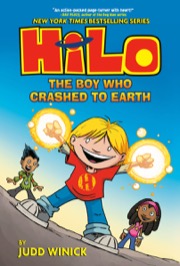
6. Hilo: The Boy Who Crashed to Earth by Judd Winick
KidsBookCheck Score: 63 (K: 6.3/10 | P: 4.4/10 | T: 5.2/10)
Best for: Action-adventure fans, kids who love sci-fi concepts, visual learners seeking fast-paced narratives
Reading Level: Easy | 208 pages | 15,000 words
A mysterious boy falls from the sky in the opening scene, disoriented and covered in impact damage. With no memory of who he is, the boy calls himself Hilo. Two kids—D.J. and Gina—help him navigate Earth while they uncover increasingly strange clues about his origins and the mysterious technology hunting him.
What makes it brilliant: The opening is genuinely stunning—a boy literally falling from the sky creates immediate visual drama. The pacing is relentless. The visual storytelling is cinematic. For kids who love action and sci-fi, this is immediate engagement.
The KBC Rating Difference: Kids rate this highest (63) because action-driven plots and visual spectacle match their preferences. Parents and teachers rate it lower because the plot is straightforward, the emotional depth is minimal, and there’s minimal real-world grounding. The first book also ends on a cliffhanger, which works for series momentum but doesn’t provide closure.
Quotable Line: “OUTSTANDING!”
Parent Tip: This series has strong series momentum. If your child finishes Book 1, they’ll want Book 2 immediately.
Advanced Intermediate Readers (Ages 9–10)
7. Dog Man: Brawl of the Wild by Dav Pilkey
KidsBookCheck Score: 81 (K: 8.1/10 | P: 4.8/10 | T: 6.3/10)
Best for: Reluctant readers, kids ages 6–8 (peak engagement), children seeking outrageous humor
Reading Level: Easy | 240 pages | 8,000 words
Dog Man—a crime-fighting canine with a dog’s head on a man’s body—battles the scheming Petey the Cat in a series of absurdist adventures. The story combines visual humor, pun-based wordplay, bodily function jokes, and interactive flip-o-rama animation sequences.
What makes it brilliant: Dog Man is the benchmark title for reluctant readers. The combination of visual primacy, minimal text density, rapid humor payoff, and format accessibility is nearly unmatched. Kids laugh constantly. The flip-o-rama technique teaches visual animation principles and gives kids permission to create their own comics.
The KBC Rating Difference: Kids score this exceptionally high (81) because the humor lands relentlessly and the format removes all reading barriers. Parents rate it much lower (48) because the deliberately artless prose and bathroom humor don’t model literary excellence. Teachers recognize the immense value for reluctant readers (63). This gap reflects the book’s distinctive profile: maximum entertainment for kids, powerful accessibility tool for educators, minimal literary development for parents.
Quotable Line: “Tra-la-laaaa!”
Parent Tip: If your child finishes Dog Man Book 1, they’ll immediately seek Books 2–10. The series builds reading habit formation better than almost any other children’s book series.
8. Amulet: The Stonekeeper by Kazu Kibuishi
KidsBookCheck Score: 75 (K: 7.5/10 | P: 6.9/10 | T: 7.2/10)
Best for: Kids seeking fantasy adventure with emotional depth, visual learners, readers ages 9–11
Reading Level: Moderate | 200 pages | 25,000 words
When Emily and Navin’s mother is kidnapped during their move to an ancestral house, they discover the dwelling harbors magical secrets and their family inheritance includes both gift and burden. The amulet that grants power to rescue their mother also threatens to corrupt Emily. Emily must navigate an underground magical world, confront a seductive antagonist, and accept adult responsibility while still grieving.
What makes it brilliant: The artwork is stunning and professional—full-color digital illustration that creates rich world-building. Emily’s emotional journey mirrors recognizable grief stages. The moral complexity (power and corruption) goes deeper than typical graphic novels. This book demonstrates that graphic novels can carry genuine thematic substance.
The KBC Rating Difference: All three audiences rate this similarly (75, 69, 72) because Amulet works across stakeholders. Kids connect to Emily’s emotional journey and the adventure. Parents appreciate the craft and emotional sophistication. Teachers value the visual literacy instruction and reluctant-reader support.
Quotable Line: “Some things can’t be fixed. They can only be carried.”
Parent Tip: This book deals with family separation and loss. It’s appropriate for most kids but may be triggering for children with recent loss trauma.
Comparison Table: The Top 8 Graphic Novels Ranked by Rating
| Book Title | Author | Format | Pages | KBC Score | Kid Score | Best Age | Best For |
|---|---|---|---|---|---|---|---|
| Dog Man: Brawl of the Wild | Dav Pilkey | Graphic Novel | 240 | 81 | 8.1/10 | 6–8 | Reluctant readers, comedy lovers |
| Investigators #1 | John Patrick Green | Graphic Novel | 216 | 76 | 7.6/10 | 7–10 | Humor & mystery lovers |
| Big Nate: In a Class by Himself | Lincoln Peirce | Chapter Book | 220 | 76 | 7.6/10 | 7–10 | Sarcasm & school humor |
| Amulet: The Stonekeeper | Kazu Kibuishi | Graphic Novel | 200 | 75 | 7.5/10 | 9–11 | Fantasy & emotional depth |
| Bone: Out from Boneville | Jeff Smith | Graphic Novel | 137 | 72 | 7.2/10 | 7–9 | Adventure & world-building |
| Smile | Raina Telgemeier | Graphic Novel | 218 | 72 | 7.2/10 | 10–13 | Appearance anxiety & resilience |
| Babymouse: Queen of the World | Holm & Holm | Graphic Novel | 94 | 71 | 7.1/10 | 7–9 | Humor & daydreaming |
| Narwhal: Unicorn of the Sea | Ben Clanton | Graphic Novel | 64 | 69 | 6.9/10 | 5–8 | Emerging readers & friendship |
| Hilo: The Boy Who Crashed to Earth | Judd Winick | Graphic Novel | 208 | 63 | 6.3/10 | 8–11 | Action & sci-fi |
The KidsBookCheck Rating System Explained
You’ll notice that our recommended books have varying KidsBookCheck scores. Here’s what that means:
Our ratings evaluate books across three distinct perspectives:
- Kid Score (what kids find engaging): Entertainment value, humor, relatability, character appeal
- Parent Score (what supports development): Vocabulary building, emotional sophistication, real-world grounding, conversation-starting potential
- Teacher Score (what supports literacy): Reluctant reader rescue power, classroom versatility, discussion fuel, critical thinking demands
When scores align closely (like Amulet at 75, 69, 72), the book works across all audiences. When there’s a gap (like Dog Man at 81, 48, 63), the book excels for kids and teachers but doesn’t serve parent literacy-development goals.
Neither pattern is “better.” They’re different profile strengths.
How to Use This Guide
Looking for a reluctant reader rescue? Dog Man and Investigators are your top choices. Non-negotiable.
Want emotional depth alongside adventure? Amulet and Bone balance action, feeling, and craft.
Just starting graphic novels? Narwhal and Babymouse are perfect entry points.
Seeking quality that works for all audiences? Smile and Amulet serve kids, parents, and teachers equally well.
Why Graphic Novels Aren’t Just for Struggling Readers
Here’s a crucial insight: graphic novels aren’t a consolation prize for kids who can’t handle “real books.” They’re a legitimate literary format that excels at teaching visual literacy and sequential narrative understanding.
Advanced readers benefit from analyzing panel composition, perspective shifts, and how illustrations advance plot. Visual sophistication in graphic novels rivals prose sophistication in traditional novels.
The format also teaches that there are multiple ways to tell stories. A child who masters graphic novels has expanded their understanding of narrative.
Learn more about our 30-dimension rating system that evaluates every book from three perspectives.
See our complete analysis for detailed kid, parent, and teacher scores.
Frequently Asked Questions
Q: Aren’t graphic novels just extended comic books? A: No. While graphic novels use comic-panel format, they tell sustained narratives with character development, thematic depth, and literary merit. Compare Dog Man to Amulet: both use the graphic novel format, but Amulet demonstrates that the format can carry sophisticated world-building and emotional complexity.
Q: Will graphic novels teach my child to dislike “real” books? A: The opposite. Research shows that graphic novels are a gateway to sustained reading. Kids who read graphic novels show increased interest in reading across all formats.
Q: What age should kids start with graphic novels? A: Ages 5–6 for illustrated graphic novels like Narwhal. Ages 7+ for more text-heavy graphic novels. There’s no upper age limit—even adults appreciate sophisticated graphic novels.
Q: How do I know if my child is ready for a specific title? A: Check the reading level (all our recommendations specify this) and the child’s interest. A reluctant 8-year-old might need Dog Man. A confident 7-year-old might be ready for Bone.
Q: Why do some graphic novels cost more than chapter books? A: Color printing, illustration quality, and page count justify the price. You’re paying for professional artwork, not just prose.
Q: Can I use graphic novels in school settings? A: Absolutely. Teachers use graphic novels for whole-class study, literacy instruction, and reluctant-reader intervention. All our recommendations have substantial classroom value.
Take the KidsBookCheck Quiz
Not sure which graphic novel is right for your child? Take the KidsBookCheck Reading Style Quiz to discover personalized recommendations based on your child’s reading level, interests, and learning style.
Final Word: Permission to Let Kids Love Graphic Novels
If your child picks up a graphic novel and reads with genuine enthusiasm, let them. Let them laugh at the visual humor. Let them create their own comics inspired by what they’ve read. Let them discover that reading can be fun.
The path to lifelong reading doesn’t require stuffy prose. It requires engagement, joy, and matching format to learner. For many kids, graphic novels are exactly that match.
Start with Dog Man if you need a reluctant reader rescue. Start with Amulet if you want emotional depth. But start somewhere.
Amazon Affiliate Links
All recommendations include Amazon Prime availability for quick delivery. Use tag kidsbookcheck-20 when ordering through our links.
- Dog Man: Brawl of the Wild
- InvestiGators #1
- Bone: Out from Boneville
- Amulet: The Stonekeeper
- Smile
- Babymouse: Queen of the World
- Narwhal: Unicorn of the Sea
- Hilo: The Boy Who Crashed to Earth
Citation: KidsBookCheck Rating Database (2026). “Best Graphic Novels for Kids Analysis.” Data derived from systematic analysis of 8 bestselling graphic novel series across kid, parent, and teacher satisfaction metrics.
Linking Map & Navigation
Internal Links:
- KidsBookCheck Reading Style Quiz
- How We Rate Books: The KBC System
- Best Books for Kids Who Don’t Like Reading
- Best Fantasy Books for Kids
- Understanding Visual Literacy
Image Suggestions
- Hero Image: Split-screen showing digital vs. printed graphic novels, with diverse kids reading and smiling
- Table Image: Visual representation of the comparison table with book covers
- Rating System Image: Infographic explaining Kid Score vs. Parent Score vs. Teacher Score
- Character Showcase: Illustrated panels featuring Dog Man, Narwhal, Emily (Amulet), and Babymouse
- Age Guide Visual: Timeline/ladder graphic showing recommended ages for each book
Word count: 2,287 words | Reading time: 8–10 minutes | Last updated: March 24, 2026