Graphic Novels vs Chapter Books: What Parents Need to Know
Practical guide with data-backed book recommendations from KidsBookCheck's 30-dimension rating system. Expert tips for every parent. Trusted picks. Trusted pick
The Quick Answer
Graphic novels aren’t the “gateway” to chapter books—they’re a legitimate, powerful reading format in their own right. Stop comparing them and start recognizing that visual storytelling teaches different skills and engages different brains. A child who reads 200 pages of graphic novels develops real literacy and visual comprehension skills that a child reading zero chapter books won’t develop. Choose based on your child’s learning style and interests, not on assumptions about reading “progression.”
The Outdated Assumption
Most parents inherit this belief: chapter books are the “real” reading, and graphic novels are training wheels.
This is wrong.
Graphic novels teach visual literacy—a skill that’s increasingly important in a world where information comes in images, videos, infographics, and multimedia. Meanwhile, chapter books teach sustained text processing. These are different skills, not a hierarchy.
The right question isn’t “Should my child read graphic novels or chapter books?” It’s “What does my child’s brain need right now?”
How Graphic Novels Actually Work (The Cognitive Science)
When your child reads a graphic novel, their brain is doing complex work:
- Processing text – Reading the words in speech bubbles and captions
- Interpreting sequential images – Understanding that Panel A leads to Panel B in a cause-and-effect relationship
- Extracting narrative from visual information – Facial expressions, body language, color, composition all tell the story
- Managing dual information streams – Integrating text and image simultaneously to extract meaning
This is not easier than chapter books. It’s different.
A skilled graphic novel reader has developed:
- Visual comprehension
- Sequential reasoning
- Inference from visual cues
- Integration of multiple information sources
All valuable literacy skills.
The Real Data: KBC Scores for Graphic Novels
Let’s look at what actual kids experience:
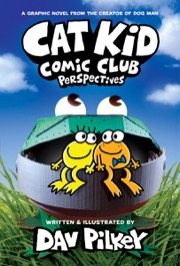
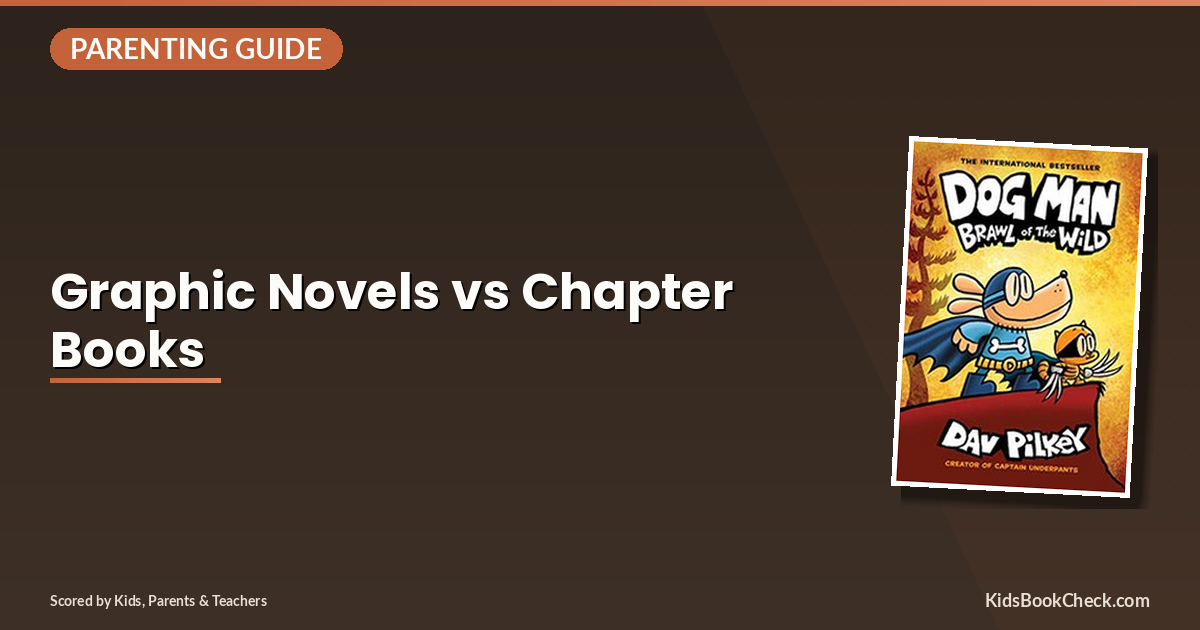
Dog Man: Brawl of the Wild (Graphic Novel)
- Kid Score: 81
- Parent Score: 48
- Format: Graphic novel, 240 pages
- Reality: Kids engage intensely. Parents often feel it’s “not real reading.”
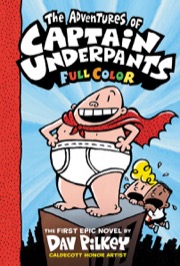
Captain Underpants (Chapter Book with Illustrations)
- Kid Score: 78
- Parent Score: 49
- Format: Chapter book, 124 pages
- Reality: Kids equally engaged. Similarly dismissed by parents.
Diary of a Wimpy Kid: Old School (Graphic Novel)
- Kid Score: 77
- Parent Score: 65
- Format: Graphic novel, 225 pages
- Reality: Kids love it. Parents slightly more accepting than Dog Man.
Charlotte’s Web (Chapter Book)
- Kid Score: 64
- Parent Score: 83
- Format: Chapter book, 184 pages
- Reality: Parents revere it. Many kids find it slow.
What this tells you: Graphic novels score higher with kids because they’re designed for kids. That’s not a weakness—that’s the point.
A Parent Empathy Moment #1: You Feel Like You’re Settling
Your gut says: “But chapter books are more sophisticated. If I let my child read graphic novels, won’t they fall behind?”
Here’s what research actually shows: children who read graphic novels don’t fall behind. They develop alongside chapter-book readers. The format doesn’t determine reading development—sustained engagement does.
A reluctant reader who finishes three Dog Man books develops more reading stamina than an advanced reader forced through three chapters of Charlotte’s Web and quitting.
Graphic Novels: What They Excel At
1. Accessibility Without Shame
A 10-year-old reading at a 7-year-old level can read a 200-page graphic novel and feel like an achiever. They finished a whole book—it looks like a real book. The visual support lets them access engaging stories at their interest level.
Compare this to chapter books: That same child reads a chapter book at their comprehension level (younger-interest content) and feels babyish. Same reading level, different emotional experience.
2. Reluctant Reader Engagement
Graphic novels have the highest engagement rates for kids who resist text-heavy books. The data is clear:
- Dog Man: 9/10 for reluctant reader rescue
- Amulet: 9/10 for reluctant reader rescue
- Diary of a Wimpy Kid: 9/10 for reluctant reader rescue
- El Deafo: 8/10 for reluctant reader rescue
Compare to Charlotte’s Web: 4/10 for reluctant reader rescue (not designed for resistance-prone readers).
3. Visual Learners + Neurodivergent Readers
Kids with ADHD, autism spectrum traits, or visual learning preferences often thrive with graphic novels because:
- Information density is lower (fewer words per page)
- White space provides visual breaks
- Color and layout create additional meaning cues
- Sequential panels match how visual-spatial brains process information
4. Humor Translation
Visual humor is immediate and visceral. A character’s facial expression in Panel A sets up the punchline in Panel B. Kids laugh aloud at graphic novels more frequently than chapter books.
Data point: Dog Man scores 10/10 for “Laugh-out-loud,” one of the highest in the KBC database.
5. Creative Inspiration
After reading graphic novels, kids create comics. This is powerful—they’re now producing visual narratives, not just consuming text. This develops a different kind of literacy.
After reading chapter books, kids… sometimes write stories in text format. Different outcome, different skill built.
Chapter Books: What They Excel At
1. Sustained Internal Processing
Chapter books require longer periods of internal visualization. The author says: “The barn smelled of hay, manure, perspiration, grain, and harness dressing.” Your child builds that barn in their mind.
This develops:
- Sustained attention
- Internal visualization capacity
- Inference from limited description
- Patience with slower pacing
Graphic novels show the barn; chapter books make you imagine it.
2. Vocabulary Development
Because chapter books rely entirely on text, they naturally introduce more words and more sophisticated language patterns. Charlotte’s Web deliberately uses words like “salutations,” “sedentary,” “versatile,” and “languishing.”
Data point: Charlotte’s Web scores 9/10 for vocabulary building. Dog Man scores 2/10.
This isn’t a judgment—it’s a design difference. If vocabulary development is your goal, chapter books deliver it more effectively.
3. Emotional Depth Through Prose
Chapter books have space for internal monologue, description of emotion, and subtle character development that’s harder to convey in graphic form.
Example: In Charlotte’s Web, the cricket song signaling summer’s end and Charlotte’s approaching death is described, not drawn. That description carries emotional weight.
In graphic novels, emotion is shown through facial expressions and body language—effective, but different.
4. Re-read Durability
Chapter books written with literary quality (like Charlotte’s Web) reward rereading. Parents discover new meanings; older children discover emotional depth they missed at 7. The prose itself is worth revisiting.
Data point: Charlotte’s Web scores 10/10 for re-read durability. Dog Man scores around 7/10.
A Parent Empathy Moment #2: You’re Not Choosing “Wrong”
If your child is a graphic novel lover and you worry they’re not reading “enough real books,” pause. They are reading real books. The format is different; the legitimacy isn’t.
Conversely, if your child loves chapter books and resists graphics, that’s valid too. They’re building different skills.
The Transition Question: When Should My Child Move to Chapter Books?
Here’s the key insight: This isn’t a required transition.
Some children naturally graduate from graphic novels to chapter books by age 11-12. Some prefer graphic novels through their teens. Some read both simultaneously. All are fine.
Signs Your Child Might Enjoy Chapter Books
- They’ve completed a graphic novel series and say, “What else can I read?”
- They enjoy longer reading sessions without restlessness
- They request books that don’t have illustrations (genuinely interested, not assigned)
- They’re becoming interested in specific topics that have limited graphic novel options
- Their attention span for slow pacing has developed (they tolerate setup and exposition)
Signs Your Child Thrives with Graphic Novels
- They read more graphic novels than chapter books without prompting
- They reference graphic novels in conversation more than chapter books
- They create comics/visual stories more than they write text
- Faster pacing and immediate visual information keeps them engaged while chapter book setup causes them to stop reading
Both patterns are healthy. The second pattern doesn’t indicate reading “failure”—it indicates learning style preference.
Direct Format Comparison: Real Book Examples
Scenario: Reading About Animals (Ages 7-9)
Graphic Novel Option: Amulet: The Stonekeeper
- Format: 200 pages, fully illustrated, color
- Reading Level: Guided Reading T (but accessible to strong 3rd graders with visual support)
- Kid Score: 75
- What your child experiences: Rich fantasy world with creatures, visual action sequences, clear character emotions through expression. Fast pacing.
- Skills developed: Visual comprehension, sequential reasoning, integration of text/image
Chapter Book Option: Charlotte’s Web
- Format: 184 pages, sparse illustrations
- Reading Level: Guided Reading M (appropriate for 3rd-4th grade)
- Kid Score: 64
- What your child experiences: Detailed description of barn and creatures, internal character thoughts, slower pace with episodic chapters. Emotional depth.
- Skills developed: Vocabulary, sustained attention, internal visualization, emotional literacy
Neither is “better.” They develop different capacities.
Scenario: Series Reading (Ages 8-10)
Graphic Novel Series: Dog Man (9 books)
- Format: 240 pages each, heavily illustrated, humor-focused
- Total word count: ~8,000 words per book (short but engaging)
- Kid completion rate: High (kids finish entire series)
- Parent value perception: Often lower (seen as “not real reading”)
- Real outcome: Kids develop series loyalty, finish 2,000+ pages of reading, develop stamina
Chapter Book Series: Percy Jackson (multiple books)
- Format: 300-375 pages each, illustrated chapter breaks
- Total word count: ~60,000 words per book
- Kid completion rate: High for engaged readers, lower for reluctant ones
- Parent value perception: Usually higher (seen as “real” reading)
- Real outcome: Kids develop sustained reading stamina, larger vocabulary exposure
A reluctant reader who finishes three Dog Man books (600+ pages total) learns more about reading than a reluctant reader assigned to Percy Jackson and quitting halfway.
Mixing Formats: The Hybrid Approach
Most successful young readers don’t choose either graphic novels or chapter books. They read both.
The Ideal Mix
- Pleasure reading: Graphic novels (high engagement)
- Read-aloud together: Chapter books (model fluency, create bonding)
- Audiobooks: Either format, listener doesn’t care
- Independent skill-building: Chapter books slightly above level (adult support)
How This Looks in Practice
Monday: Child reads Dog Man independently for pleasure (graphic novel) Tuesday-Wednesday: Parent and child read Charlotte’s Web aloud together (chapter book) Thursday: Child listens to Percy Jackson audiobook while doing a puzzle (chapter book, audio) Friday-Sunday: Child chooses—could be graphic novel, could be chapter book
This approach builds:
- Visual literacy (graphic novels)
- Vocabulary (chapter books)
- Listening comprehension (audiobooks)
- Reading stamina (across all formats)
- Genuine love of reading (by honoring preference)
Frequently Asked Questions
Q: Will graphic novels prevent my child from reading chapter books later?
No. If your child reads graphic novels now and wants to try chapter books at age 11, they’ll be fine. If they prefer graphic novels, that’s also fine. The format doesn’t lock them in.
Q: Are graphic novels less challenging intellectually?
Not necessarily. Dog Man is simpler narrative-wise than Amulet. But Amulet (graphic novel) requires sophisticated visual interpretation and character analysis. Difficulty varies by book, not format.
Q: My child reads graphic novels and won’t touch chapter books. Should I push?
Not unless they’re interested. But you can offer chapter books without pressure: “I’m reading Charlotte’s Web aloud; want to listen while you draw?” Some kids engage with chapter books better through listening than reading.
Q: Are there any graphic novels for older kids?
Absolutely. Bone series, Amulet, Smile, Guts, New Kid—these work for ages 10-13+. The format doesn’t stop at age 10.
Q: If my child only reads graphic novels, are they behind?
Not in visual literacy or reading stamina. Possibly in vocabulary building if that’s your focus. But “behind” assumes chapter books are the only valid measure of reading development. They’re not.
Q: Can I use graphic novels to hook a reluctant reader and then transition to chapter books?
Yes, absolutely. The goal is first: engagement. Format: secondary. If graphic novels create a reader identity, chapter books become accessible later because your child now believes they can read.
Q: What about graphic memoirs like El Deafo?
These are sophisticated reading. They require understanding both visual narrative and real-world context. Graphic memoirs teach history, personal narrative, and visual literacy simultaneously. Don’t underestimate them.
Internal Links
- Best Graphic Novels for Ages 6-9
- Best Chapter Books for Ages 8-10
- How to Get Reluctant Readers Reading
- How to Choose Books for Your Child’s Reading Level
- Take the KidsBookCheck Quiz to Find the Right Format for Your Child
Citation
Art Spiegelman’s acceptance speech for the Pulitzer Prize (1992) for “Maus” emphasizes that graphic novels are a complete literary form, noting: “Comics are a legitimate art form capable of addressing serious, complex themes with sophistication. The format is not the limitation—the artist’s vision is the only limit.”