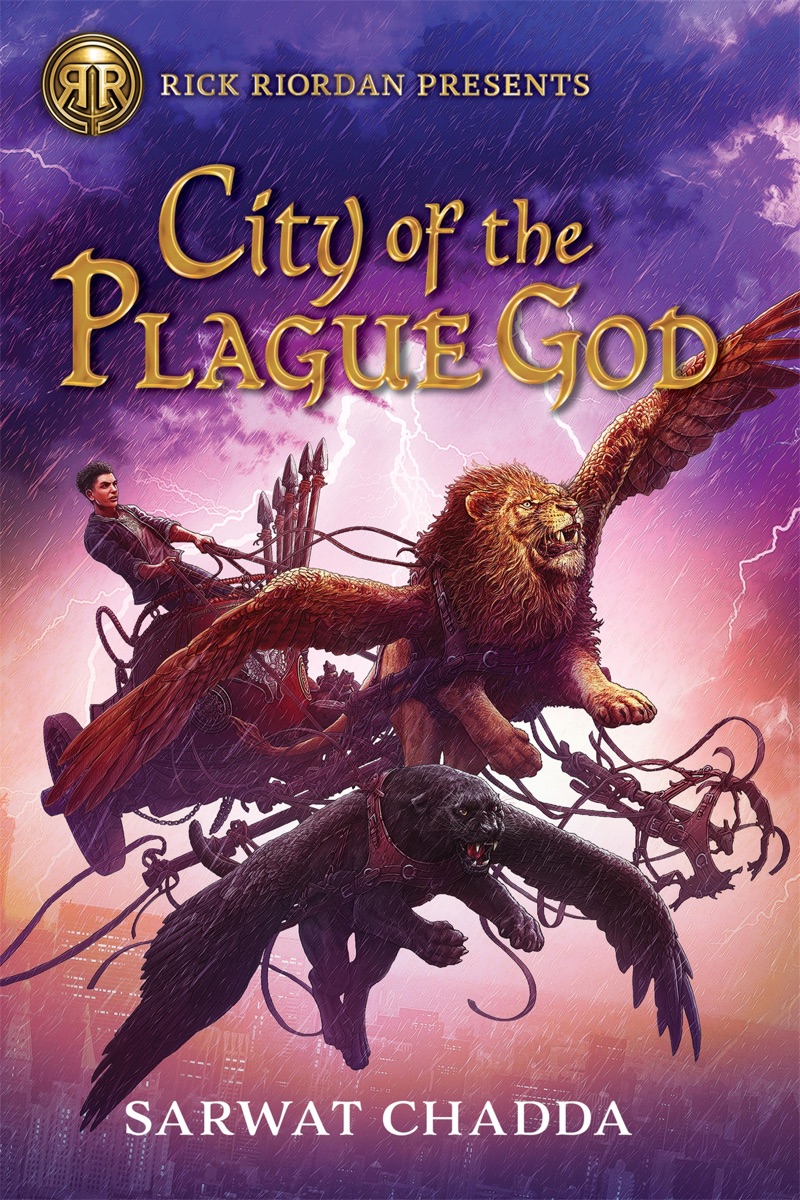
City of the Plague God
by Sarwat Chadda · Adventures of Sik Aziz #1
Mesopotamian mythology crashes into modern Manhattan in this action-packed adventure about a grieving Iraqi-American teen who discovers gods and demons are real.
The story
Thirteen-year-old Sik Aziz just wants to help at his family's deli and get through the grief of losing his brother. But when ancient demons show up in the back alley and a mysterious plague sweeps through New York City, Sik discovers he has unexpected connections to Mesopotamian mythology. With help from a warrior named Belet and a very opinionated magical sword, Sik must find a legendary cure before the plague god destroys everything he loves.
Age verdict
Best for ages 10-12 but works well from 9-14. The protagonist is 13, and themes of grief, family duty, and identity are handled with age-appropriate sensitivity. Violence is supernatural, not graphic.
Our take
Entertainment-first adventure with genuine emotional depth and cultural richness. Scores highest on engagement and world-building, lower on literary craft and practical classroom utility for reluctant readers.
What stands out
Each audience's top 3 dimensions. Out of 30 scored per book.
Kids love
- New world unlocked Exceptional
Opens an entire mythological tradition — Mesopotamian gods, Gilgamesh, Kurnugi, Asakku demons, the Flower of Immortality — that virtually no middle-grade reader has encountered before. While Greek, Egyptian, and Norse myths saturate the genre, this book makes Mesopotamian mythology feel as vivid and accessible as Percy Jackson made Olympus. Stronger than The Golem's Eye (9, magical London) because the mythological system itself is genuinely unfamiliar territory; comparable to Artemis Fowl (10, inventive underground civilization) in the scope of new knowledge unlocked.
- First-chapter grab Strong
Dual-layer opening hooks immediately — Sik mopping the deli while talking to his dead brother's ghost grounds the reader in voice and emotional stakes before demons crash through the alley. Stronger than Lunch Lady (8, cafeteria-to-action) because the emotional hook runs deeper alongside the action hook, though not at A Court of Mist and Fury (9) psychological intensity.
Parents love
- Stereotype-breaker Strong
Iraqi-American Muslim protagonist who is sarcastic, brave, witty, and ordinary — not defined by his religion or refugee background but enriched by it. Parents are refugees portrayed with dignity and agency as business owners, not as victims. Breaks the helpless-kid and troubled-immigrant stereotypes simultaneously. Comparable to A Snicker of Magic (7, subverts multiple conventions) in quiet, multi-layered stereotype disruption.
- Emotional sophistication Strong
Grief is processed through internal conversation with a deceased loved one rather than performed emotion — a sophisticated portrayal of how teenagers actually handle loss. The book holds multiple emotional registers simultaneously (fear, loyalty, humor, grief) without any one flattening the others. Comparable to Hollow City (7, guilt layered with self-awareness) in emotional layering that treats young readers as capable of complexity.
Teachers love
- Empathy & self-awareness Strong
Sik's controlled vulnerability — expressed through physical behavior and silence rather than dramatic declarations — builds authentic empathy. Students must inhabit an Iraqi-American Muslim perspective navigating both supernatural crisis and grief, with the additional depth of cross-cultural family dynamics and immigrant identity. The understated emotional processing models healthy masculine vulnerability for young readers. Comparable to Amal Unbound (8, perspectives across cultural, economic, and gender divides) in requiring genuine empathy across cultural lines.
- Read-aloud power Strong
Sik's conversational first-person voice reads aloud naturally with expressive rhythm and sass. Demon dialogue with rhyming threats and Sik's sarcastic responses are genuinely fun to perform. Arabic and Mesopotamian terms add performative texture without tripping the reader. Comparable to The Golem's Eye (7, Bartimaeus's voice is highly performable with sarcastic asides) in rewarding dramatic reading.
✓ Perfect for
- • Kids who devoured Percy Jackson and want mythology from a different tradition
- • Readers who enjoy action-adventure with genuine emotional depth
- • Middle-grade readers ready for stories about grief that treat them as capable of complexity
- • Fans of Rick Riordan Presents who want diverse mythology
Not ideal for
Readers who prefer quiet, contemplative stories or those sensitive to parental illness and themes of death. The 400-page length may also challenge reluctant readers who need shorter books.
⚠ Heads up
At a glance
- Pages
- 400
- Chapters
- 41
- Words
- 65k
- Difficulty
- Moderate
- POV
- First Person
- Illustration
- None
- Published
- 2021
Mood & style
You'll know it worked when…
Fast-paced enough that most readers will finish within a week. Short chapters with cliffhanger endings create natural momentum. The series hooks at the end will make readers want the sequel.
If your kid loved "City of the Plague God"
Matched across 30 dimensions — interest hooks, character appeal, tone, pacing, emotional core. Not by what other people bought. By what fits the same reader profile.
Charlie Hernández & the League of Shadows
by Ryan Calejo
Same genre (fantasy). Both adventurous in tone

Twice Upon a Time
by James Riley
Same genre (fantasy). Both adventurous in tone
Aru Shah and the Song of Death
by Roshani Chokshi
Same genre (fantasy). Both adventurous in tone
Dragonborn
by Struan Murray
Same genre (fantasy). Both adventurous in tone
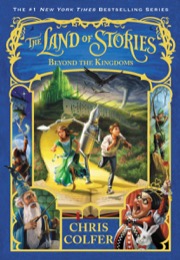
The Land of Stories: Beyond the Kingdoms
by Chris Colfer
Same genre (fantasy). Both adventurous in tone
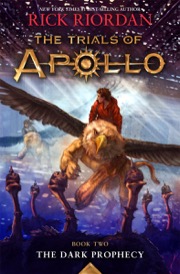
The Dark Prophecy
by Rick Riordan
Same genre (fantasy). Both adventurous in tone
Want more picks like this?
Get 5 hand-picked book reviews for your child's age — one email a month.