
Chirp
by Kate Messner
A layered mystery about cricket farming, finding your voice, and the courage to speak up
The story
When twelve-year-old Mia moves back to Vermont, she's hiding a painful secret from her time in Boston. Helping her grandmother run an innovative cricket farm and entering an entrepreneurship camp with new friends Clover and Anna gives her summer purpose — but someone is sabotaging the farm. As Mia investigates the mystery and builds a business plan to save the farm, she also finds the courage to face what happened to her and discovers that speaking up is the bravest thing she can do.
Age verdict
Best for ages 10-12. The book's heavier emotional themes are handled sensitively and age-appropriately, but parents of younger or more sensitive readers should be aware they are central to the story. Common Sense Media recommends 10+.
Our take
Strong classroom and growth text that rewards teachers and parents more than kids. The book's real-world relevance, ethical complexity, and emotional depth drive teacher and parent scores higher, while moderate humor and cool factor temper the kid score.
What stands out
Each audience's top 3 dimensions. Out of 30 scored per book.
Kids love
- Heart-punch Strong
Three earned emotional peaks build across the novel: a pivotal moment where Mia first speaks about her painful experience to a trusted adult, a return to a physical challenge she'd been avoiding that mirrors her emotional growth, and a joyful reclamation of childhood freedom in the final scene. Each payoff is set up through chapters of avoidance and silence. Architecture matches Earthquake in the Early Morning (8, three emotional paydays at different scales); not as devastatingly sustained as A Court of Mist and Fury (9).
- First-chapter grab Strong
The opening drops readers into immediate action — Gram perched on a chair fighting seagulls with a broom, declaring sabotage — establishing mystery and eccentric character within the first pages. Stronger than Sunny Rolls the Dice (5, anxious quiz scene) but not as instantly electrifying as Lunch Lady (8, cafeteria-to-action in three panels); closest to All the Broken Pieces (7, emotional mystery stakes from line one).
Parents love
- Parent-child conversation starter Exceptional
One of the richest conversation catalysts in middle-grade fiction. The trauma disclosure invites 'Who would you tell? Why is speaking up hard?' The trespassing invites ethical debate. The entrepreneurship invites 'What would you create?' Cricket farming invites 'Would you try it?' Anne Marie's speech invites intergenerational dialogue about harassment. Comparable to Blended (9, every thread invites genuine family conversation); one of the strongest in its weight class.
- Emotional sophistication Strong
Mia holds contradictory emotions simultaneously — she loves gymnastics AND it's the site of her trauma; she wants to speak up AND fears the consequences; she's healing AND not 'over it.' Recovery is shown as non-linear, with setbacks and avoidance coexisting with progress. Comparable to Breakout (8, characters hold contradictory feelings about their community); approaches but doesn't match Children of Blood and Bone (9, contradictory emotions across identity and loyalty).
Teachers love
- Classroom versatility Strong
Functions as novel study, literature circle text, independent reading, and read-aloud. Serves multiple curricular areas: ELA (voice, theme, mystery structure), science (entomology, sustainability), social studies (entrepreneurship, ethics), health/SEL (consent, trauma, speaking up). Comparable to Eyes That Kiss in the Corners (8, works across grades with different entry points); approaches A Wolf Called Wander (10, bridges four curriculum slots).
- Cross-curricular value Strong
Connects to science (entomology, cricket biology, CPV, sustainable protein), economics (business plans, supply/demand, marketing, pricing), technology (listening devices, robotics, ethics of surveillance), health education (consent, trauma processing, bodily autonomy), and social studies (entrepreneurship, community building). Stronger than A Deadly Education (7, language connections); comparable to the cross-curricular breadth of A Reaper at the Gates (9).
✓ Perfect for
- • Readers who enjoy mysteries with real-world settings and smart kid investigators
- • Kids interested in entrepreneurship, STEM, or food science
- • Readers ready for emotionally complex stories about finding your voice
- • Fans of realistic fiction with strong female friendships
Not ideal for
Readers who prefer fast-paced fantasy or action-adventure, or very sensitive readers who may find the heavier emotional themes difficult even though they are handled with restraint.
⚠ Heads up
At a glance
- Pages
- 240
- Chapters
- 25
- Words
- 54k
- Difficulty
- Moderate
- POV
- Third Person Limited
- Illustration
- None
- Published
- 2020
- Publisher
- Bloomsbury Children's Books
- ISBN
- 9781547602810
Mood & style
You'll know it worked when…
Most readers in the target age range will finish this in 3-5 sittings. The mystery pulls forward and the emotional investment deepens as chapters progress.
More like this
Same genre, similar age range. Ranked by kid score.

The Name of This Book Is Secret
by Pseudonymous Bosch
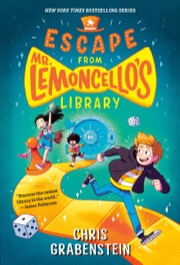
Escape from Mr. Lemoncello's Library
by Chris Grabenstein

The Haunted Serpent
by Dora M. Mitchell

Enola Holmes: The Case of the Left-Handed Lady
by Nancy Springer
Want more picks like this?
Get 5 hand-picked book reviews for your child's age — one email a month.