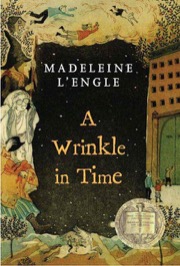
Is A Wrinkle in Time Appropriate for 9-Year-Olds? The Dense Classic That Adults Get First
Is A Wrinkle in Time right for 9-year-olds? KidsBookCheck scores reveal why adults rate this classic higher than kids. Complete age-by-age guide inside.
The Verdict
A Wrinkle in Time is the rare book where parents and teachers rate it higher than kids do. KidsBookCheck’s composite score is 71.5, with parents scoring 72 and teachers scoring 73, while kids give it a 70. This gap reveals something important: the book’s brilliance lives in themes that adults recognize immediately but kids have to grow into.
Meg Murry is 12 at the start, dealing with alienation, belonging, and the tension between conformity and individuality. The tesseract (space-time jump) is genuinely mind-bending. The villains are abstract (the Dark Thing, IT) rather than concrete. Madeleine L’Engle deliberately wrote a weird book—she doesn’t explain everything, she trusts readers to sit with confusion. Most 9-year-olds find that challenging rather than thrilling.
However: if your 9-year-old is a strong reader who loves sci-fi, enjoys complexity, or has seen the 2018 Disney+ film, they’re ready. If they prefer straightforward adventure stories, wait until 10-11. This is a book that rewards rereading and grows richer with age.
KidsBookCheck Scorecard
| Category | Score | Notes |
|---|---|---|
| Kid Appeal | 70 | Complex worldbuilding, intentionally weird, abstract villains |
| Parent Comfort | 72 | Deep themes about individuality, love, and conformity |
| Teacher Recommendation | 73 | Literary merit, philosophical depth, discussion-rich |
| Composite Score | 71.5 | Recommended age 9-10+; best at 10-12 |
How KidsBookCheck Rates Complex Books
When parents and teachers score higher than kids, it usually means: this is a book kids will appreciate more on rereading, or they need more guidance to unlock it. A Wrinkle in Time is both. Learn how we evaluate books across different audiences.
Reading Level Details
A Wrinkle in Time’s reading level is accessible, but its conceptual complexity is advanced:
| Metric | Level | Grade Band |
|---|---|---|
| Lexile Score | 740L | Grades 4-5 |
| AR (Accelerated Reader) | 4.7 | 4th-5th grade independent reader |
| Grade Reading Level | 4.7 | 4th-5th grade text complexity |
| Recommended Reading Age | 9-12+ | Can read independently; appreciates fully at 10+ |
Here’s the key insight: Lexile measures word difficulty, not idea difficulty. A Wrinkle in Time uses accessible vocabulary and relatively short sentences, but those sentences discuss tesseracts, dimensions, and abstract evil. A child who can decode the words might not understand why Meg’s anger is her power, or why conformity is the real villain. That’s philosophical maturity, not reading skill.
Age-by-Age Breakdown
Ages 8-9: The Ambitious Entry Point
A strong 8-9 year old reader—one who’s comfortable with sci-fi, enjoys big ideas, and isn’t bothered by “weird” books—can start A Wrinkle in Time. However, they’ll likely need an adult nearby to talk through confusing moments. The tesseract sequences will confuse them (they confuse adults too—that’s intentional). The lack of clear explanations might frustrate them. Reading this age group aloud is ideal.
Success factor: Does your child enjoy talk about dimensions, time, and abstract concepts? If yes, try it. If they prefer action-driven plots, wait.
Ages 9-10: The Comfortable Range
This is where A Wrinkle in Time hits its stride. A 9-10 year old with solid reading skills can read it independently and understand the core journey: Meg is alienated, she joins a mission, she learns that her “flaws” are actually strengths, she rescues her father through love rather than perfection. That narrative arc is clear. The philosophical layers underneath are bonus.
Sweet spot: Confident reader, enjoys science fiction or fantasy, doesn’t need every plot point explained, and is okay with “weird” writing.
Ages 11+: Full Appreciation
Older kids recognize the conformity theme—the way IT (a malevolent force) makes everyone identical and “happy.” They understand why Meg’s anger and stubbornness are her salvation. They catch the love-as-weapon metaphor. They appreciate L’Engle’s deliberate strangeness and refusal to explain everything. At this age, A Wrinkle in Time becomes a favorite.
Parent Concerns: Honest Conversation
”The Tesseract Section Is Confusing. Is My Child Missing Something?”
Yes, but intentionally. L’Engle writes the tesseract sequence so it’s deliberately unclear—jumps between dimensions, logic that doesn’t quite follow, abstract physics. She wanted readers to feel the weirdness of space-time folding. Adults find it confusing too. That’s not a failure of the book or your child’s reading; it’s L’Engle’s style.
What helps: Read those sections aloud and talk through them. Ask your child: “What do you think just happened?” Don’t give answers. The confusion is the point.
”Is This Scary?”
A Wrinkle in Time isn’t scary in the monster-under-the-bed way. IT is an abstract darkness, a malevolent mind-control force. Camazotz (the planet where IT rules) is described as too perfect and orderly—creepily same. The Dark Thing is described as a shadow over a planet.
What might unsettle kids: The loss of individuality theme (everyone on Camazotz is identical and controlled). The father is imprisoned in a suspended state. The idea that love and anger might be more powerful than intellect. These are psychologically sophisticated worries, not horror-movie scares.
Sensitive kids: If your child is bothered by loss of control or conformity, proceed carefully.
”Why Doesn’t She Explain the Science?”
L’Engle was a Christian writer and a scientist (her husband was a physicist). She deliberately mixed real science (tesseracts are a real mathematical concept), fantasy (Camazotz isn’t explained by science), and theology (love is the ultimate power). She wasn’t writing hard sci-fi; she was writing a philosophical adventure.
This might frustrate kids who want everything logical and explained. That’s age-appropriate frustration. Older kids learn to appreciate her refusal to spell everything out.
”The Female Protagonist Issue”
Meg is angry, awkward, and intelligent. She’s not the pretty girl in the story—she’s the “wrong” girl who saves the day. This is revolutionary and wonderful, but it also means Meg doesn’t match traditional YA heroine templates. Some readers immediately connect; others don’t see themselves. Both are fine.
Comparison Table: Similar Books
| Book | Lexile | Age Range | Similarities | Key Difference |
|---|---|---|---|---|
| The Hobbit | 1000L | 10-14 | Adventure, protagonist discovers hidden strength, journey narrative | Hobbit is more straightforward; less philosophical |
| Charlotte’s Web | 680L | 7-11 | Death, love, friendship across difference, accessible language | Charlotte is gentler, more emotional than philosophical |
| Coraline (Neil Gaiman) | 650L | 9-13 | Dark fantasy, protagonist vs. evil force, girl must save others | Coraline is scarier and more concrete; Wrinkle is abstract |
Why compare? If your child loved Charlotte’s Web’s depth but found it too sad, A Wrinkle in Time might feel abstract and unsatisfying. If they loved The Hobbit’s adventure, Wrinkle will feel too internal. These comparisons help predict whether this book will click.
The 2018 Movie Connection
The Disney+ film (2018, directed by Ava DuVernay) brings A Wrinkle in Time to visual life. Some parents worry the movie gives away the plot. Actually, it’s a perfect entry point. The movie simplifies the philosophical elements and makes the visuals tangible (the tesseract, IT, Camazotz). Kids who watch the movie first often want to read the book to understand what the movie didn’t explain. The book deepens the movie experience rather than being spoiled by it.
Strategy: Movie first, then book? Totally valid. Kids who’ve seen the film might be more motivated to read it.
A Parent Empathy Moment
Here’s what parents often experience with A Wrinkle in Time: You reread it as an adult and realize L’Engle was writing about conformity pressure the whole time. Meg’s “flaws” (her anger, her stubbornness, her not-fitting-in) are her salvation. IT represents the seductive comfort of being identical and controlled. And you think: This is what I needed as a teenager. Then you give it to your 9-year-old and they ask, “But what is IT, exactly?” and you realize it’s a book that needs time to do its work.
That’s not failure. That’s a book that grows with your child. If they read it at 9 and find it confusing, they can read it again at 11 and have their mind blown by how much more they understand. That’s beautiful.
FAQ
Should I read this aloud or let them read independently?
Both work, but differently. Read aloud for ages 8-9 (the pacing is intentional and slow—hearing it helps). Independent reading at 10+ works better because your child can reread confusing passages at their own pace. If you read aloud and your child seems lost, that’s okay—pause and talk through it. Confusing moments are discussion points, not failures.
How long is this book?
A Wrinkle in Time is about 218 pages with illustrations in some editions. Read-aloud takes 3-4 weeks at one chapter per night. Independent reading for a solid 9-10 year old takes 1-2 weeks. It’s a perfect middle-grade length—long enough to get invested, short enough to maintain momentum.
Is there a series?
Yes—there are three sequels: A Wind in the Door, A Swiftly Tilting Planet, and Many Waters. However, they’re less read and less acclaimed than the first book. A Wrinkle in Time stands alone beautifully. If your child loves it, they can explore the sequels, but they’re not essential. A Wind in the Door (book 2) is most closely related and follows some characters.
What comes after this?
Once kids finish A Wrinkle in Time, they’re ready for: The Hobbit, Percy Jackson, Wings of Fire, Keeper of the Lost Cities, or other complex middle-grade fantasy. They’ve proven they can handle abstract worldbuilding and philosophical themes. Go deeper.
My child’s school is reading this. Should I preview it?
Yes. It’s a classic assigned book, which means your child will encounter it. Knowing whether it’s appropriate for your child’s reading level and emotional readiness is valuable. If they’re struggling, read it aloud together. If they’re flying through it, that’s data about their reading maturity.
Is the 2018 movie faithful to the book?
Mostly, yes—with simplifications. The movie removes some philosophical elements and focuses more on the visuals and emotional journey. It’s not a bad adaptation; it’s a necessary one. Movies can’t convey L’Engle’s abstract prose the way books can. The movie is 90 minutes; the book is a full experience.
Why do parents and teachers rate this higher than kids?
Because adults recognize what L’Engle was doing—writing about conformity, individuality, and love as power. Kids feel these themes but don’t name them. Rereading or discussing the book unlocks why adults find it profound. Your kid might rate it 70 at first read and 85 after discussion and reflection.
What KidsBookCheck Readers Are Saying
“My daughter read this at 9 and said it was boring. At 11, she picked it up again and devoured it. Now she talks about the conformity theme constantly. Books grow with kids.” — Patricia, parent
“This book changed how Our data suggests about what’s ‘weird’ versus what’s innovative. L’Engle made me realize that my strangeness is my power.” — David, 12-year-old reader
“We read this aloud as a family and had to pause constantly to talk about what was happening. Those conversations were the best part.” — Elena, homeschool parent
“Teaching this in fifth grade, I see immediate splits: kids who get it immediately, and kids who need the full year to understand it. Both groups usually come back to it as teenagers and love it.” — Mr. Patel, teacher
Ready to Start?
Next step: Take our quick quiz to see if A Wrinkle in Time is right for your child’s reading level and maturity, or go straight to the Wrinkle in Time book page for study guides and discussion questions.
Ready to read? Grab a copy on Amazon, support Bookshop.org, or borrow from your library. And consider the movie first if your child responds better to visuals—it’s a beautiful entry point.
KidsBookCheck’s take: This is a book where a “lower” kid rating actually means something good is happening. Adults are recognizing complexity your child will grow into. That’s exactly what reading should do.
Related Reading
- Best Science Fiction Books for Kids Age 9-12
- Classics Every Kid Should Read (Eventually)
- How We Rate Books
- Books That Teach Individuality and Self-Acceptance
- Read-Aloud Classics for Families
<!-- JSON-LD Schema Markup -->
<script type="application/ld+json">
{
  "@context": "https://schema.org",
  "@graph": [
    {
      "@type": "Article",
      "headline": "Is A Wrinkle in Time Appropriate for 9-Year-Olds? The Dense Classic That Adults Get First",
      "description": "Madeleine L'Engle's Wrinkle analyzed: Kid score 70, Parent/Teacher score 72-73. Adults appreciate themes more than kids initially do.",
      "image": "/images/blog/is-a-wrinkle-in-time-appropriate-for-9-year-olds.png",
      "datePublished": "2026-03-25",
      "dateModified": "2026-03-25",
      "author": {
        "@type": "Organization",
        "name": "KidsBookCheck Team"
      },
      "publisher": {
        "@type": "Organization",
        "name": "KidsBookCheck",
        "logo": {
          "@type": "ImageObject",
          "url": "https://kidsbookcheck.com/logo.png"
        }
      }
    },
    {
      "@type": "Book",
      "name": "A Wrinkle in Time",
      "author": {
        "@type": "Person",
        "name": "Madeleine L'Engle"
      },
      "isbn": "0312367546",
      "bookFormat": "Hardcover",
      "numberOfPages": 218
    },
    {
      "@type": "Review",
      "itemReviewed": {
        "@type": "Book",
        "name": "A Wrinkle in Time"
      },
      "reviewRating": {
        "@type": "Rating",
        "ratingValue": "71.5",
        "bestRating": "100",
        "worstRating": "1"
      },
      "author": {
        "@type": "Organization",
        "name": "KidsBookCheck"
      }
    },
    {
      "@type": "FAQPage",
      "mainEntity": [
        {
          "@type": "Question",
          "name": "Should I read this aloud or let them read independently?",
          "acceptedAnswer": {
            "@type": "Answer",
            "text": "Read aloud for ages 8-9. Independent reading works better at 10+."
          }
        },
        {
          "@type": "Question",
          "name": "Why do parents and teachers rate this higher than kids?",
          "acceptedAnswer": {
            "@type": "Answer",
            "text": "Adults recognize the philosophical themes about conformity and individuality that kids feel but don't yet name."
          }
        }
      ]
    },
    {
      "@type": "BreadcrumbList",
      "itemListElement": [
        {
          "@type": "ListItem",
          "position": 1,
          "name": "Home",
          "item": "https://kidsbookcheck.com"
        },
        {
          "@type": "ListItem",
          "position": 2,
          "name": "Blog",
          "item": "https://kidsbookcheck.com/blog"
        },
        {
          "@type": "ListItem",
          "position": 3,
          "name": "Age Check",
          "item": "https://kidsbookcheck.com/blog"
        },
        {
          "@type": "ListItem",
          "position": 4,
          "name": "Is A Wrinkle in Time Appropriate for 9-Year-Olds?",
          "item": "https://kidsbookcheck.com/blog/is-a-wrinkle-in-time-appropriate-for-9-year-olds"
        }
      ]
    }
  ]
}
</script>