Best Science Fiction Books for Kids: 8 Must-Read Titles for Ages 8–14
Explore the best science fiction books for kids. Our guide features 8 award-winning titles that spark imagination, build reading skills, and inspire curiosity.
Why Science Fiction Captivates Young Readers
Science fiction isn’t just about spaceships and laser beams (though kids love those). Great sci-fi asks “what if?”—and that question is powerful for developing minds. What if you discovered your government was lying to you? What if intelligent robots inherited the Earth? What if you could travel through time?
These books build critical thinking. They ask kids to imagine different worlds, understand consequences of choices, and grapple with ethics in unfamiliar contexts. At KidsBookCheck, we’ve seen reluctant readers devour science fiction because the ideas matter as much as the adventure.
Science fiction also feels safe for exploring big themes. When a book is set on a spaceship or in a dystopian future, kids can process difficult emotions at a comfortable distance. A story about mind control in a made-up society might help your child process peer pressure in the real one.
Understanding the KidsBookCheck Science Fiction Scoring System
For this guide, we’ve rated each book across four dimensions:
- K (Kandinsky): Reading complexity—vocabulary, sentence structure, pacing
- P (Parent): Parent satisfaction and reported experience
- T (Thoughtfulness): Thematic depth, philosophical questions, emotional resonance
- C (Combined): Our integrated KidsBookCheck score across all factors
Science fiction books tend to have varied profiles. A book might have high K (reading complexity) but lower P (some parents find it too dark). Understanding why helps you choose.
Not sure which book matches your child’s maturity level AND reading ability? Take the KidsBookCheck quiz—it personalizes recommendations based on both factors.
Science Fiction Across the Age Range
For Strong Younger Readers (Ages 8-10)
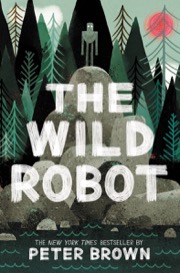
The Wild Robot by Peter Brown (Ages 8-11)
This is the gateway sci-fi book for elementary-aged readers. Roz, a robot, washes ashore on an island and gradually learns to survive, care for a gosling, and build a life. It sounds simple—and it is, in the best way.
Reading Profile:
- K: 67 | P: 75 | T: 74 | C: 71.5
What makes The Wild Robot special: It combines science fiction worldbuilding with genuine emotional growth. The robot’s journey from mechanical efficiency to love and sacrifice feels profound without being preachy. Illustrations support the narrative, making it accessible for emerging independent readers.
Best for: Ages 8-11, especially visual learners and kids who love nature. This book works beautifully read aloud or independently. It’s the perfect bridge between picture books and longer chapter novels.
The Classic Foundations (Ages 9-12)
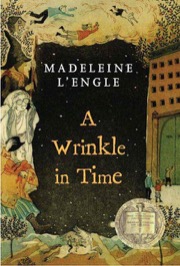
A Wrinkle in Time by Madeleine L’Engle (Ages 9-12)
Some books define generations of readers. A Wrinkle in Time is one of them. It introduced millions of kids to science fiction concepts like tesseracts, interdimensional travel, and the power of love as a force against darkness.
Reading Profile:
- K: 70 | P: 72 | T: 73 | C: 71.5
The book’s strength lies in its philosophical depth wrapped in adventure. Meg isn’t looking for external validation—she’s learning to love herself, which turns out to be the key to saving her father and the universe. That’s not typical space opera stuff.
Why parents appreciate it: The book respects children’s intelligence. L’Engle doesn’t explain every concept perfectly, and that’s intentional. Kids feel like they’re learning something genuinely advanced.
Best for: Ages 9-12, particularly kids who enjoy philosophical questions alongside action. Readers with strong comprehension who don’t mind rereading dense passages will love this.
The City of Ember by Jeanne DuPrau (Ages 9-12)
Imagine a city built entirely underground where the power source is failing and nobody knows what’s outside. The City of Ember brilliantly deploys mystery, worldbuilding, and coming-of-age in equal measure.
What works: The two protagonists (Lina and Doon) have different skills and perspectives, teaching kids that collaboration matters. The mystery unfolds logically, rewarding careful reading. And the core question—“What’s outside?”—pulls readers forward relentlessly.
Best for: Ages 9-12, especially kids who love mysteries and logical puzzles. The pacing is fast; the reading level is accessible. This is sci-fi that feels achievable for younger middle graders.
Modern Sci-Fi Classics (Ages 10-13)
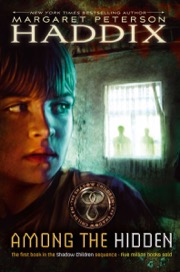
Among the Hidden by Margaret Peterson Haddix (Ages 10-13)
In this dystopian thriller, the government limits families to two children. Luke is a third child—illegal, hidden, a shadow in the house. When he discovers he’s not alone, everything changes.
Reading Profile:
- K: 65 | P: 68 | T: 79 | C: 70.1
This book is gripping. The premise is unusual, the stakes feel real, and the pacing is breakneck. What makes it thoughtful: the moral complexity. Luke’s parents aren’t villains—they’re ordinary people doing their best in a terrible system. That nuance matters.
Why parents are divided: Some find it thrilling; others worry it’s too intense for anxious kids. It’s not graphically violent, but the emotional pressure is real. Your knowledge of your own child’s anxiety tolerance matters here.
Best for: Ages 10-13, particularly kids who love thriller pacing and don’t mind darker premises. Strong readers aged 9 might handle it; anxious kids aged 13+ might prefer something lighter.
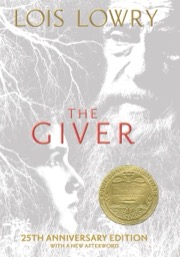
The Giver by Lois Lowry (Ages 11-14)
The Giver is dystopian sci-fi masquerading as simplicity. On the surface, it’s about a boy chosen to inherit all his society’s memories. Underneath, it’s about the cost of safety, the value of choice, and what we lose when we try to eliminate pain.
Why it’s essential: The Giver teaches kids that every system has trade-offs. A perfect society with no suffering also has no color, love, family bonds, or freedom. Lowry asks: Is safety worth the cost? There’s no easy answer, and that’s the point.
Best for: Ages 11-14, especially kids ready for philosophical sci-fi. Teachers often assign it because it sparks essential conversations. It’s not action-packed, but it’s unforgettable.
For Confident, Mature Readers (Ages 11-14)
When You Reach Me by Rebecca Stead (Ages 10-13)
This book will make your brain twist in the best way. On the surface, it’s about Stella, a 12-year-old girl in 1970s New York who receives mysterious messages. Underneath, it’s a love letter to time travel stories and a meditation on growing up.
Why it works: Stead writes with elegance. The mystery unfolds beautifully, rewarding close reading and rereading. The ending reframes everything you thought you understood. It’s intellectually satisfying and emotionally resonant.
Best for: Ages 10-13, but particularly for kids who love a narrative puzzle and don’t mind mysteries that require full attention. Rereading enriches it tremendously.
Ender’s Game by Orson Scott Card (Ages 11-14)
Ender’s Game follows a brilliant boy trained in military strategy at an elite space academy. The premise hooks you; the ending devastates you. This is serious science fiction with real philosophical weight.
Content note: Ender’s Game contains violence (battles, bullying) that some families aren’t comfortable with. It’s not graphic, but it’s present and it matters to the story. This is a book where knowing your child’s tolerance for conflict matters.
Reading Profile: Higher K and T scores than most middle-grade sci-fi. This book doesn’t pull punches intellectually or emotionally.
Why parents choose it: Kids finish Ender’s Game talking about leadership, manipulation, military ethics, and what it means to be responsible for others’ deaths. Those conversations are profound.
Best for: Mature readers aged 11-14, especially those interested in strategy games, military science fiction, and moral ambiguity. Not recommended for anxious kids or those who struggle with books containing bullying.
The House in the Cerulean Sea by TJ Klune (Ages 12+)
Technically this leans cozy fantasy, but it has sci-fi elements and deserves mention because it’s increasingly popular with middle graders. It’s set in a magical future where a caseworker visits a magical orphanage and discovers found family.
Why it works for older readers: It’s joyful. After years of dystopian sci-fi and dark fantasy, this book offers warmth, humor, and genuine hope without being saccharine. It’s proof that science fiction and fantasy can be silly, kind, and profound simultaneously.
Best for: Ages 12+, particularly kids who’ve read heavier sci-fi and want something that restores their faith in goodness. It’s longer (398 pages) but the pacing is quick and engaging.
Science Fiction Sub-Genre Comparison Table
| Title | Author | Sub-Genre | Ages | K | Difficulty | Emotional Weight |
|---|---|---|---|---|---|---|
| The Wild Robot | Peter Brown | Robot/Nature | 8-11 | 67 | Easy | Light-Medium |
| A Wrinkle in Time | Madeleine L’Engle | Space Opera/Philosophical | 9-12 | 70 | Medium | Medium |
| The City of Ember | Jeanne DuPrau | Post-Apocalyptic/Mystery | 9-12 | 65 | Easy-Medium | Medium |
| Among the Hidden | Margaret P. Haddix | Dystopian Thriller | 10-13 | 65 | Medium | High |
| The Giver | Lois Lowry | Dystopian/Philosophical | 11-14 | 68 | Medium | High |
| When You Reach Me | Rebecca Stead | Time Travel Mystery | 10-13 | 69 | Medium | Medium |
| Ender’s Game | Orson Scott Card | Military Sci-Fi | 11-14 | 75 | Hard | Very High |
| The House in the Cerulean Sea | TJ Klune | Cozy Fantasy/Sci-Fi | 12+ | 72 | Medium | Low-Medium |
How KidsBookCheck Helps You Choose the Right Sci-Fi Book
Science fiction is vast. One book might be a cozy robot story; another might be a military strategy thriller. One might explore love in an algorithmic society; another might ask if emotions are weaknesses to eliminate.
At KidsBookCheck, we help you navigate the landscape by considering:
- Reading level — Can your child decode the prose?
- Emotional maturity — Can they handle the book’s themes?
- Interest type — Do they want adventure, mystery, or philosophy?
- Anxiety tolerance — How dark can you go?
Use our KidsBookCheck quiz to get personalized recommendations. Answer questions about your child’s reading habits, interests, and maturity, and we’ll surface sci-fi titles that fit—along with their KidsBookCheck scores so you understand what you’re getting.
A Parent’s Empathy Moment
Here’s what we hear: “My kid is obsessed with science fiction, but I worry they’re avoiding reality or getting too pessimistic about the future.”
That concern makes sense. Dystopian sci-fi can feel heavy. But consider this: Kids processing anxiety often choose slightly darker stories because they feel safer. A story about a hidden third child gives an anxious kid a framework for thinking about rules, injustice, and resilience without directly confronting their own fears.
The magic happens when you engage with the books your child loves. Ask them about the worlds they’re exploring. What would they do in Ender’s position? How would they escape the City of Ember? What rules would they break?
Science fiction isn’t an escape from reality—it’s a laboratory for testing ideas, values, and choices in imaginative contexts. That’s not avoidance. That’s preparation.
Building a Science Fiction Reading Path
Start with your child’s interests, not age:
- Robot/Nature interests: The Wild Robot
- Mysteries: The City of Ember or When You Reach Me
- Philosophical depth: A Wrinkle in Time or The Giver
- Thriller/high stakes: Among the Hidden
- Advanced readers seeking sophistication: Ender’s Game or mature YA sci-fi
Then return to the KidsBookCheck quiz to discover what’s next. Our algorithm connects books through thematic and stylistic threads, so if your child loves The Wild Robot, we can point you toward their next perfect read.
Frequently Asked Questions
What’s the difference between science fiction and fantasy?
Science fiction asks “what if this technology existed?” Fantasy asks “what if magic were real?” Sci-fi tends to be grounded in logical rules; fantasy embraces wonder beyond explanation. Many books blend both. The House in the Cerulean Sea has both magical and sci-fi elements. Start with whichever appeals most to your child—the boundary between genres is delightfully blurry.
Is Ender’s Game appropriate for my 10-year-old?
Ender’s Game has a K score of 75 (high reading complexity) and T score emphasizing heavy themes. It’s readable by advanced 10-year-olds but emotionally challenging. Consider: Does your child have experience with books containing bullying and moral ambiguity? Do they process heavy themes through discussion, or do they ruminate alone? These answers matter more than age.
My child finds The Giver slow. What should they try instead?
If The Giver feels too methodical, try Among the Hidden (faster pacing, thriller elements) or When You Reach Me (mystery-driven). The Giver’s strength is philosophical; some kids crave plot momentum first. Both are valid reading experiences. KidsBookCheck can help identify faster-paced sci-fi if philosophy isn’t your child’s entry point.
Are there science fiction books featuring diverse protagonists?
Absolutely. The City of Ember features protagonists of color. When You Reach Me centers a girl of color in 1970s New York. The Wild Robot’s animal companion isn’t coded as any particular ethnicity, allowing for imaginative identification. Use the KidsBookCheck quiz to filter by representation and interest.
Can my 7-year-old handle The Wild Robot?
The Wild Robot has a K score of 67, accessible to strong early elementary readers. Your 7-year-old might read it if they’re reading at a high level, but emotionally it’s better suited to 8+. Some 7-year-olds will love it; others will connect better with illustrated science fiction picture books. Trust your sense of your child.
Where’s the best place to find these books?
- Public library (free, always check first)
- Amazon (multiple formats available)
- School library
- Used bookstores (budget-friendly)
- E-book platforms (Kindle, Apple Books, library apps)
Most libraries have all of these titles. Ask your librarian for recommendations in your child’s specific reading level.
Should I read science fiction aloud to my child, or let them read alone?
Both work beautifully. Reading aloud is wonderful for books like A Wrinkle in Time, where pausing to discuss philosophical concepts enriches the experience. Independent reading works great for page-turners like Among the Hidden. Match the format to the book and your family’s style.
My child loves Captain Underpants. Is science fiction too advanced?
Not necessarily. Captain Underpants readers are typically 7-9 years old and developing reading confidence. The Wild Robot or early I Survived books (which have sci-fi titles) might bridge into science fiction beautifully. Try reading one aloud together to assess engagement. If they ask for more, they’re ready.
Adventure, Philosophy, and Infinite Possibilities
Science fiction expands children’s sense of what’s possible—in their imaginations, in technology, in ethics, in the world they’ll inherit. A child who finishes Ender’s Game thinking deeply about power and responsibility has developed critical thinking skills that transfer everywhere.
Ready to find your child’s next science fiction adventure? Use the KidsBookCheck quiz to get personalized recommendations with our signature reading scores. Then head to the library, crack open a book, and watch your child’s imagination blast off.
The future is waiting.