Books Like Magic Tree House: 8 Series for Emerging Chapter Book Readers
Guide to 8 fantastic series for kids transitioning to chapter books. Magic Tree House alternatives perfect for emerging readers who love adventure and learning.
Your Child Just Discovered Chapter Books—Now What?
The moment your child finishes their first Magic Tree House book is genuinely special. They’ve made the leap from picture books to real chapter books. The accomplishment is tangible. The pride is visible. And suddenly, you’re thinking: what comes next?
This is one of the most important transitions in a reading life. Your child has discovered that stories can sustain across multiple pages, that illustrations can support (but aren’t necessary for) understanding, and that their imagination can carry them into new worlds. That’s remarkable.
But it also creates pressure—both on them and on you. There’s an implicit message that now they need to read “harder” books, or they’re not progressing fast enough. In reality, this is exactly the right moment to help them love chapter books before they worry about difficulty.
The eight series below all share what makes Magic Tree House special: accessible prose, adventure, short chapters, series structure, and the promise that there’s always another book waiting. But each offers something different—a different kind of adventure, a different tone, a different way of engaging with reading.
1. A to Z Mysteries: Mystery Plus Adventure
The Series: By Ron Roy
A to Z Mysteries is the sister series to Magic Tree House (and the predecessor—it came first). Instead of time travel, you get mysteries. Instead of historical settings, you get contemporary communities. But the structure is identical: accessible chapters, recurring characters, books that can be read in one sitting, and the deep satisfaction of solving a puzzle.
Why Magic Tree House fans love it: The format is nearly identical. The chapter length is similar. The sense of accomplishment at finishing is the same. And the adventure is there—just focused on mystery-solving rather than historical exploration.
How it’s different: This is less about learning history and more about using logic and observation to solve problems. The protagonists are four friends who work together, which introduces the concept of ensemble problem-solving. The contemporary setting feels more “real” to kids who worry that history is boring.
Best age: 6-10, especially kids who love puzzles and detective work.
Read A to Z Mysteries on Amazon
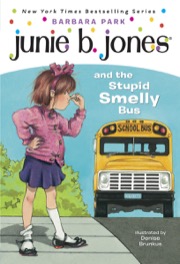
2. Junie B Jones: The Humor-Forward Transition
KidsBookCheck Score: 54.9/100 (Kid: 60, Parent: 51)
The Series: By Barbara Park
Junie B Jones is a first-grader with strong opinions, poor impulse control, and hilarious observations about school life. The books are shorter than Magic Tree House, which makes them feel incredibly achievable. The humor lands immediately, and the character voice is strong.
Why Magic Tree House fans love it: The chapter book format is what they’re already comfortable with. The humor appeals to the same sensibility. But the school setting is familiar—it’s not about time travel or fantasy, it’s about navigating first grade.
How it’s different: Junie B Jones is significantly sillier than Magic Tree House. There’s less learning, more laughing. The protagonist is more of a comic character than a hero. If your child has mastered Magic Tree House and wants humor as their next priority, this series delivers.
Best age: 6-9, especially kids who loved Dog Man or other humor-based books.
3. Amelia Bedelia: Wordplay as Adventure
KidsBookCheck Score: 64.3/100 (Kid: 64, Parent: 62)
The Series: By Herman Parish (continuing Peggy Parish’s original character)
Amelia Bedelia is a housekeeper who takes everything literally. When asked to “draw the curtains,” she sketches them. When told to “pick up the living room,” she tries to lift it. The entire series is built on misunderstandings that lead to ridiculous situations.
Why Magic Tree House fans love it: The chapter structure is accessible. The books are short and satisfying. But the adventure here is different—it’s wordplay and logic games disguised as stories.
How it’s different: This is pure wordplay. The humor comes from language, not from situations. The protagonist never travels anywhere; instead, the “adventure” is finding the humor in everyday misunderstandings. If your child enjoys clever word jokes, this series unlocks a whole new way of thinking about language.
Best age: 6-9, especially kids who are naturally curious about how words work.
4. Flat Stanley: Imagination Unleashed
The Series: By Jeff Brown (and continued by Sara Pennypacker)
Flat Stanley is a boy who becomes flat. Like, genuinely flat. His flatness allows him to travel in ways regular boys can’t: mailed in envelopes, slipped under doors, folded like a postcard. The books explore what adventures become possible when the rules of physics change.
Why Magic Tree House fans love it: The adventure element is strong. The protagonist travels to interesting places. The imagination required is substantial. And the series structure means there’s always another book waiting.
How it’s different: While Magic Tree House travels through time, Flat Stanley travels through space in more creative ways. The premise is inherently fantastical, which appeals to kids who’ve realized that imagination is the real magic. The books tend toward the lighthearted end of the spectrum.
Best age: 6-10, especially kids with wild imaginations and kids who love the why behind adventures.
5. Nate the Great: Detective Work as Learning
The Series: By Marjorie Weinman Sharmat
Nate the Great is a boy detective who solves neighborhood mysteries. His best friend is Annie (who has her own series), and his dog Sludge accompanies him on cases. The books are structured around logical deduction—readers are invited to solve the mystery alongside Nate.
Why Magic Tree House fans love it: The chapter structure is similar. The sense of adventure and discovery is present. But the mystery focus introduces a new kind of learning: logical thinking and observation skills.
How it’s different: Nate the Great is purely contemporary and neighborhood-based. There’s no fantasy, no time travel, no magic. It’s straightforward detective work in realistic settings. For kids who loved the puzzle-solving aspect of Magic Tree House but don’t care about the historical elements, this is perfect.
Best age: 6-10, especially logical thinkers and kids who love mysteries.
6. Mercy Watson: Animal Humor Meets Chapter Books
The Series: By Kate DiCamillo
Mercy Watson is a pig. Not a metaphorical pig or a pig with human intelligence—she’s genuinely a pig who eats toast, believes she’s a superhero, and creates chaos wherever she goes. The books are short, funny, and surprisingly gentle.
Why Magic Tree House fans love it: The chapter structure is accessible. The series offers recurring characters and the comfort of knowing what to expect. And the imagination required to accept a pig as the protagonist is the right amount of fantastical for emerging readers.
How it’s different: This series is gentler than Magic Tree House. The humor is character-based rather than plot-based. The stakes are lower. If your child loved Magic Tree House but wants something cozier and sillier as their next step, Mercy Watson hits that note perfectly.
Best age: 6-9, especially kids who love animals and gentle humor.
7. Ivy + Bean: Friendship as Adventure
The Series: By Sophie Blackall
Ivy is quiet and imaginative. Bean is loud and spontaneous. Together, they’re an unstoppable team navigating second grade through elaborate games, schemes, and friendships. The books celebrate imagination while grounding it in realistic (if comedic) school situations.
Why Magic Tree House fans love it: The chapter structure and pacing are similar. The sense of adventure is present, though it’s adventure within the everyday rather than across time. And the emphasis on friendship gives readers characters to genuinely care about.
How it’s different: This is fundamentally about friendship and imagination within realistic settings. There’s no time travel, no magic, no mysteries to solve. Instead, the story is watching two kids imagine their world into something more interesting. For kids who’ve mastered Magic Tree House and want character-driven stories, this is the perfect bridge.
Best age: 6-10, especially kids who love friendships and imaginative play.
8. The Bad Guys: Humor Plus Visual Support
KidsBookCheck Score: 58.6/100 (Kid: 70, Parent: 49)
The Series: By Aaron Blabey
The Bad Guys are morally questionable creatures trying (and repeatedly failing) to become good. Each book has illustrations and a comic-panel-style format, which provides visual support for emerging readers. The humor is accessible, and the message about redemption is surprisingly touching.
Why Magic Tree House fans love it: While it’s more illustrated than Magic Tree House, it still requires sustained reading. The series structure is present. But the visual support makes it feel achievable for kids still building confidence.
How it’s different: This is the halfway point between illustrated books and pure chapter books. It’s shorter than Magic Tree House. The humor is broader. And the emotional arc (characters trying to be better) adds depth without being heavy.
Best age: 6-11, especially kids who still appreciate visual support while reading chapter books.
The Reading Level Progression
If your child is currently reading Magic Tree House, here’s how to think about the next steps:
Same difficulty, different genre:
- A to Z Mysteries (mystery instead of adventure)
- Nate the Great (pure mystery-solving)
- Flat Stanley (imagination instead of time travel)
Slight difficulty decrease, more humor:
- Junie B Jones (shorter chapters, funnier tone)
- Amelia Bedelia (wordplay-focused)
- Mercy Watson (gentler, cozier)
Same difficulty, character-focused:
- Ivy + Bean (friendship-driven)
- The Bad Guys (character growth plus humor)
Quick Comparison: Finding the Right Fit
| Series | Primary Appeal | Chapter Length | Illustration | Best For |
|---|---|---|---|---|
| A to Z Mysteries | Mystery | Short | Minimal | Puzzle-lovers |
| Junie B Jones | Humor | Very Short | Minimal | Kids who love funny |
| Amelia Bedelia | Wordplay | Short | Minimal | Language enthusiasts |
| Flat Stanley | Imagination | Short-Med | Minimal | Creative thinkers |
| Nate the Great | Logic/Mystery | Short | Minimal | Detectives |
| Mercy Watson | Character humor | Short | Minimal | Animal lovers |
| Ivy + Bean | Friendship | Short-Med | Minimal | Social kids |
| The Bad Guys | Humor + Heart | Short | Substantial | Visual learners |
Parent Empathy Moment: The Pressure to Progress
Here’s something nobody tells you: there’s an invisible pressure around reading that starts the moment your child reads their first chapter book. Suddenly, people ask, “What level is she reading at?” and “What are you reading next?” and “That seems easy for him now—shouldn’t he move up?”
This pressure comes from a good place—most people genuinely want your child to succeed. But it also creates the false belief that reading is about constantly moving to “harder” books, rather than finding books that create joy.
Magic Tree House is perfect for emerging readers. It’s not a stepping stone to be rushed through. It’s a foundation to build from. And the best thing you can do for your child’s reading life is to let them stay with Magic Tree House as long as it delights them, while also introducing other series that might spark new kinds of joy.
Some kids read ten Magic Tree House books and then move to A to Z Mysteries. Others read all thirty and then discover Ivy + Bean. Some bounce between series, reading one book of different series before settling. All of these are healthy, normal, wonderful ways to build a reading life.
The goal isn’t to get them to “advanced” readers as fast as possible. The goal is to create a child who loves reading so much that they do it voluntarily, for pleasure, for decades. That love is built by finding books that speak to who they are right now, not who they might be eventually.
FAQ: Books Like Magic Tree House
Is Magic Tree House too easy for my child now?
If your child is still enjoying Magic Tree House, it’s not too easy. Reading level and reading enjoyment are different metrics. A book that’s easy to read but deeply joyful is perfect. The moment they start wanting something harder, they’ll naturally gravitate toward it.
Should my child read all the Magic Tree House books before trying something new?
No obligation exists. Some kids do read the whole series. Others sample three books and want to try something else. Both patterns are healthy. Let your child’s interest guide you—if they want to explore other series, that’s wonderful.
My child is reading Magic Tree House at age 7, but other kids are reading “harder” books. Should I be concerned?
Not at all. Reading level varies wildly among seven-year-olds. What matters more is that your child is engaged, building fluency, and experiencing reading as pleasurable. A child who reads Magic Tree House enthusiastically at seven will naturally progress. A child forced into “harder” books before they’re ready often develops reading anxiety instead.
Which of these alternatives is closest to Magic Tree House?
A to Z Mysteries is structurally the most similar—same chapter length, same pacing, same spirit of adventure. But “closest” doesn’t mean “best.” The best alternative is whichever series matches your child’s personality and interests right now.
How do I introduce a new series without my child thinking I’m saying Magic Tree House isn’t good enough?
Frame it as expansion, not replacement. “You’ve loved Magic Tree House so much, I found some other adventures Our data suggests you’d enjoy too.” Offer it without pressure. Some kids will say “maybe later” and happily finish the series. Others will immediately want to try something new. Both responses are fine.
My child has already read hundreds of chapter books. How do I know when to move to middle-grade novels?
Watch for these signs: they’re finishing books faster than you can get them, they’re asking for longer stories, they’re losing interest in series with short chapters, they’re spending time re-reading less often. When they’re ready, they’ll usually tell you by gravitating toward longer books. There’s no timeline—some kids make this leap at age 8, others at age 12.
Are these series appropriate for different age groups?
Yes, but with variation. Most work from age 6-10, but kids mature and develop interests differently. A six-year-old might love Ivy + Bean while a nine-year-old finds it too simplistic. Reading readiness matters more than age.
How KidsBookCheck Evaluates Books
When we score chapter books, we’re evaluating multiple dimensions: how engaging the story is for kids, how parents feel about the content, how appropriate the reading level is, and how the book functions as part of a series. Magic Tree House excels at being accessible while still being genuinely interesting—that’s a rare combination.
The alternatives above all share that quality, though they express it differently.
Learn more about our evaluation process at How It Works.
Personalized Recommendations
Every child’s reading journey is unique. The best next series after Magic Tree House isn’t the same for every kid.
Take our quick quiz to get personalized recommendations based on your child’s actual preferences, interests, and reading level. We’ll match them with series that will genuinely engage them, not just check boxes.
The Magic Tree House Deep Dive
If you want to understand Magic Tree House more deeply—whether it’s appropriate for your child’s age, what makes it work as a series, and what themes run through it—we’ve written: Is Magic Tree House Appropriate for 6-Year-Olds?
Your Next Chapter
The transition from picture books to chapter books is genuinely significant. Your child has discovered that stories can span multiple pages, that their imagination can sustain complex narratives, and that reading can be an adventure.
What comes next isn’t about moving to “harder” books. It’s about finding stories that speak to who your child is becoming: a reader, a thinker, someone who loves narratives and adventures and friendships and puzzles.
KidsBookCheck is here to help you navigate every step of that journey. Try our quiz for personalized recommendations, or explore detailed reviews to discover your child’s next favorite series.
Happy reading!