Best Chapter Books for 4-Year-Olds: When to Start and What Actually Holds Attention
Can 4-year-olds handle chapter books? Yes — the right ones. 8 early chapter books that bridge picture books and longer stories, picked by KidsBookCheck's 30-dimension analysis.
The 4-Year-Old Chapter Book Question
Most advice online says chapter books start at age 5 or 6. That’s not wrong — but it’s not the full picture either.
A 4-year-old listening to their parent read a chapter book aloud is absolutely reading a chapter book. A 4-year-old who’s been read picture books consistently for two years can track a longer narrative, remember characters across chapters, and — here’s the part most advice misses — actually prefer the deeper stories.
The real question isn’t “can they handle chapter books?” It’s “which ones bridge the gap between picture books and real chapter books?”
At KidsBookCheck, we score every book across 30 dimensions, including First-chapter Grab, Reading Gateway, and Read-aloud Power. These are the dimensions that matter for this exact moment in a child’s reading life. Here are the 8 books that score highest for 4-year-olds ready for more.
What makes an “early chapter book” work at age 4
Before the list, a quick framework. The books that actually work for 4-year-olds share four traits:
- Illustration on every page or spread. Pure text loses a 4-year-old fast. Early chapter books like Mercy Watson and Narwhal and Jelly keep the visual scaffolding.
- Short chapters (3–6 pages each). A natural stopping point every few minutes respects the 4-year-old attention span.
- One clear character. Frog and Toad works because there are two and only two. Kids this age can’t track a cast of 12.
- A feeling, not a moral. The best early chapter books leave kids with an emotion — not a lesson. Lessons come later.
With that filter, here are the 8 that pass both our scoring model and the “will a 4-year-old actually want another chapter” test.
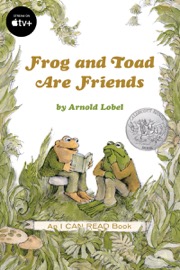
1. Frog and Toad Are Friends — Arnold Lobel
Why it works at 4: Five short stories, each 8–10 minutes of reading. Two characters, one big friendship, gentle humor. No other early chapter book in the last 50 years has done it better.
What parents notice: Kids who hear these at 4 still quote them at 9. The emotional intelligence in “The Letter” (Toad worries a letter never comes, Frog has written him one) is the kind of quiet teaching that sticks.
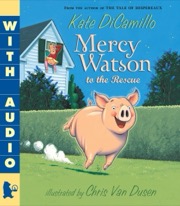
2. Mercy Watson to the Rescue — Kate DiCamillo
Why it works at 4: Every page has a lush color illustration. The pig Mercy causes chaos, adores buttered toast, and never loses her dignity. Short chapters, big humor.
What parents notice: The vocabulary is richer than it looks (“porcine wonder,” “predicament”) — a gift to kids’ language development without feeling like a vocabulary drill.
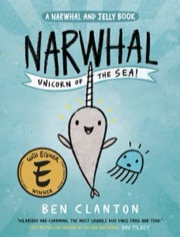
3. Narwhal and Jelly — Ben Clanton
Why it works at 4: Graphic-novel format with enormous pictures, silly jokes, and one-page interludes about real ocean facts. Kids read it with you once and then “read” it to themselves the next five nights.
What parents notice: It’s the book that gets non-readers to ask for a sequel. The series has 10+ entries — your 4-year-old can grow with it until they’re 7.
4. Elephant & Piggie — Mo Willems
Why it works at 4: Two friends talking. That’s it. Mo Willems knows how to build an entire emotional arc out of two sentences and two facial expressions. Kids absorb dialogue rhythm without realizing they’re learning to read.
What parents notice: Kids can “read” these aloud before they technically can — the speech bubble format is that intuitive. It’s the single best book for building reading confidence.
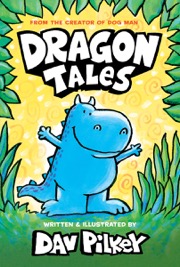
5. A Friend for Dragon — Dav Pilkey
Why it works at 4: Before Pilkey wrote Dog Man, he wrote Dragon — five short, tender stories about a lonely blue dragon who befriends an apple. It’s the Dav Pilkey book nobody talks about, and it’s his quietest masterpiece.
What parents notice: The humor is clean. The feelings are real. A 4-year-old who loves Dragon at 4 is primed for Dog Man at 7.
6. Owl Diaries #1: Eva’s Treetop Festival — Rebecca Elliott
Why it works at 4: Diary format with doodles, stickers, and a narrator (Eva the owl) who says “HA!” out loud. Chapters are tiny. Stakes are tiny. Joy is huge.
What parents notice: This is often the book that clicks for kids who’ve been resisting “words-only” books. The “diary” frame gives every page a reason to feel personal.
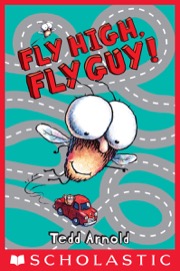
7. Fly Guy — Tedd Arnold
Why it works at 4: 30 pages, oversized illustrations, and one joke (a boy has a pet fly) repeated with variations. The entire book takes 7 minutes. Some nights that’s exactly right.
What parents notice: Once a 4-year-old knows Fly Guy, they’ll read the next 18 books in the series themselves. It’s a gateway drug to independent reading in the best possible way.
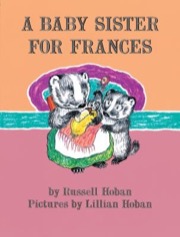
8. A Baby Sister for Frances — Russell Hoban
Why it works at 4: A badger named Frances is not happy about her new baby sister. She runs away — under the dining room table. Everything at 4-year-old scale.
What parents notice: This is the book to give a 4-year-old who’s about to become a big sibling, two weeks before the baby arrives. It doesn’t lecture. It just lets them see themselves.
How to use this list
Start with a read-aloud. Pick the one whose cover makes your kid reach for it. Read one chapter. If they ask for another, you have a match.
Don’t push. If your 4-year-old wants Goodnight Moon for the 400th time instead, read Goodnight Moon for the 400th time. Early chapter books are a door that opens — not a standard to meet.
Come back to picture books. The move to chapter books isn’t a one-way door. A strong picture book at 4 is still doing more for vocabulary and narrative comprehension than a weak chapter book.
What’s next: age 5 and beyond
When your 4-year-old starts asking for “just one more chapter” three nights in a row, they’re ready for early readers with longer arcs — Magic Tree House, Ivy and Bean, Mercy Watson deeper into the series.
We cover that transition in our Best Books for 5-Year-Olds guide.
And if your kid wants something with a little more plot tension but still at their level, our Best Books for Kids Who Don’t Like Reading guide is where to look next.
The KidsBookCheck difference
Every book on this list has been scored across 30 dimensions by our analysis system — First-chapter Grab, Character Voice, Laugh-out-loud, Reading Gateway, Heart-punch, Read-aloud Power, and more. The scores aren’t opinions; they’re measurements against a 100-book benchmark.
When we say Frog and Toad scores highest for read-aloud power among early chapter books, it’s because we measured it.
Try the SPARK quiz to get two books picked for your 4-year-old’s specific reading personality — it takes 2 minutes and emails you the results.