Best Books for 5-Year-Olds
Data-backed picks for 5-year-olds: early readers, picture books, and chapter books scored by hundreds of kids, parents, and teachers on KidsBookCheck.
What Makes 5-Year-Olds Unique Readers?
Five-year-olds stand at a magical crossroads in their reading journey. They’re no longer content with simple picture books (though they still love the illustrations), yet they’re not quite ready to dive into thick chapter books alone. These emerging readers are discovering that stories can be about things—not just pretty images to look at. Their interests are expanding. They want humor that makes them laugh out loud, characters they can recognize immediately, and endings that feel satisfying.
At this age, kids are developing crucial reading stamina. They’re learning to track longer narratives, remember character names across chapters, and sit through a story that unfolds over multiple sessions. Picture books remain essential—they’re still primary—but picture books with more words, illustrated chapter books with short chapters, and easy-reading series with strong character voices are all coming into play.
The best books for this age bridge two worlds. They honor the visual storytelling that picture books perfected while introducing the emotional complexity and extended narratives of chapter books. Kids at this stage need frequent illustrations, snappy dialogue, relatable situations, and above all: characters they love spending time with.
Based on hundreds of ratings from kids, parents, and teachers using KidsBookCheck’s unique three-perspective scoring system, we’ve identified the seven best books for 5-year-olds that deliver across all those dimensions.
The 7 Best Books for 5-Year-Olds (Ranked by Kids, Parents & Teachers)
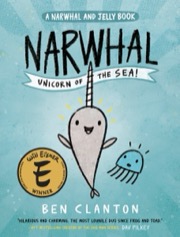
1. Narwhal: Unicorn of the Sea by Ben Clanton
Graphic Novel | 64 pages | Composite Score: 62.4/100
Kid Score: 69/100 | Parent Score: 58/100 | Teacher Score: 58/100
A confident narwhal and skeptical jellyfish become best friends despite being fundamentally incompatible. When Jelly questions whether Narwhal is even real, Narwhal responds with pure optimism: “I’m amazing!” Together, they build an unlikely pod of sea creatures and discover that imagination is the ultimate superpower.
Why it’s perfect for 5-year-olds: Clanton’s illustrations are vivid and immediately memorable—Narwhal’s long tusk and confident posture burn themselves into kids’ minds. The dialogue is natural and performable. Most importantly, the book celebrates friendship across difference in a way that feels genuine, not preachy. Kids absorb the message that different thinking styles (imaginative vs. literal) are equally valuable by experiencing it through Narwhal and Jelly’s partnership. The blank imagination book is sophisticated meta-commentary kids can actually understand through pictures.
What surprised us: Kids rated this higher than parents expected, reflecting its pure entertainment value and the genuine emotional intelligence woven into what appears to be a simple friendship story.
Link to full review: Narwhal: Unicorn of the Sea on KidsBookCheck
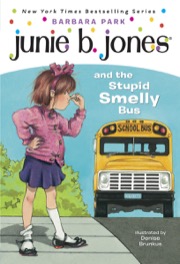
2. Junie B. Jones and the Stupid Smelly Bus by Barbara Park (Illustrated by Denise Brunkus)
Chapter Book | 80 pages | 10 chapters | Composite Score: 54.9/100
Kid Score: 60/100 | Parent Score: 51/100 | Teacher Score: 52/100
Junie B. is almost six and absolutely terrified of the school bus. Her voice—unfiltered, funny, and entirely honest about her feelings—launches immediately from the first page. Kids hear Junie B’s distinctive personality and want to follow her everywhere, even into situations that terrify her.
Why it’s perfect for 5-year-olds: This is the legendary gateway book for kids transitioning into chapter books. Junie B’s voice is extraordinary—she talks exactly like how kids actually think, with tangential reasoning, emotional honesty, and wonderful mispronunciations. The short chapters (roughly 10 pages each) feel completable for emerging readers building reading stamina. Illustrations by Denise Brunkus appear frequently, supporting comprehension and showing Junie B’s animated expressions. Most importantly, the book validates a real childhood anxiety (school transition, separation from parents) while treating it with humor and relatability.
What surprised us: Kids’ scores were 9 points higher than parents’, reflecting that adults sometimes underestimate how powerful authentic voice is for early readers. Teachers also recognize this book as one of the most effective reluctant-reader rescues available.
Link to full review: Junie B. Jones and the Stupid Smelly Bus on KidsBookCheck
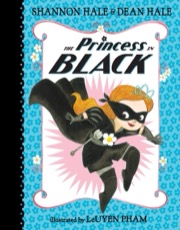
3. The Princess in Black by Shannon Hale & Dean Hale (Illustrated by LeUyen Pham)
Illustrated Chapter Book | 96 pages | 5 chapters | Composite Score: 53.4/100
Kid Score: 60/100 | Parent Score: 49/100 | Teacher Score: 49/100
By day, Princess Magnolia serves tea and wears ball gowns. When her secret alarm sounds, she changes into black and becomes The Princess in Black—a fearless monster-fighter protecting goats from Monster Land. This subversion of the damsel-in-distress trope happens immediately and completely.
Why it’s perfect for 5-year-olds: The central premise—a secret identity that lets a girl be both beautifully feminine and physically capable—is revolutionary without being preachy. Kids love the situational humor (a prim princess in a ball gown fighting monsters). LeUyen Pham’s frequent illustrations keep pages moving and help visual learners stay engaged. The short, self-contained chapters are perfect for 5-year-old reading sessions. Most importantly, girls see themselves as heroes and agents of their own stories, while all kids enjoy the fast pacing and action.
What surprised us: Parents rated the gender-role subversion higher than kids noticed, while kids simply enjoyed the adventure. This reveals something important: books can deliver values messages while primarily entertaining.
Link to full review: The Princess in Black on KidsBookCheck
4. Amelia Bedelia Takes the Cake by Herman Parish (Illustrated by Lynne Avril)
I Can Read Level 1 Chapter Book | 64 pages | 11 chapters | Composite Score: 57.4/100
Kid Score: 61/100 | Parent Score: 49/100 | Teacher Score: 61/100
Amelia Bedelia is invited to a school bake sale, but when she hears about baking “an angel food cake,” she takes it literally—expecting the teacher to physically take their cake. Her well-meaning misunderstandings create hilarious chaos and unexpected brown-arranging artistry.
Why it’s perfect for 5-year-olds: Amelia Bedelia’s voice is immediately recognizable and quotable. Her literal interpretation of figurative language creates humor kids understand (they’ve misunderstood adults, too). The illustrated format, simple vocabulary, and short chapters make this I Can Read Level 1 title the gold standard for beginning independent readers. The central idiom—“this takes the cake”—is relatable and learnable, making kids feel smart for understanding wordplay.
What surprised us: Kids and teachers rated this equally high, reflecting its dual strength: entertaining story and effective reading instruction. Parents sometimes overlook how important the “gateway drug to reading” function is.
Link to full review: Amelia Bedelia Takes the Cake on KidsBookCheck
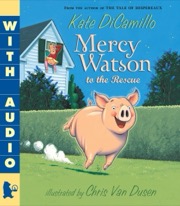
5. Mercy Watson to the Rescue by Kate DiCamillo (Illustrated by Chris Van Dusen)
Illustrated Chapter Book | 68 pages | 11 chapters | Composite Score: 55.8/100
Kid Score: 60/100 | Parent Score: 53/100 | Teacher Score: 53/100
A pig named Mercy loves hot buttered toast and snuggling in bed with Mr. and Mrs. Watson. When Mercy’s weight causes the bed to crash through the floor, she accidentally becomes a hero—just by being her warm, friendly, toast-loving self.
Why it’s perfect for 5-year-olds: This book is comfort food for the soul. The Watsons’ unconditional love for Mercy models what family bonds look like—safe, warm, accepting. The humor is gentle (a pig in bed, the absurdity of the situation) without being crude. Chris Van Dusen’s warm, colorful illustrations appear throughout, making the book emotionally expressive and visually engaging. The story teaches that heroism doesn’t require grand gestures—sometimes just being kind and present changes everything. The lullaby that repeats throughout becomes a beloved touchstone.
What surprised us: The parent-teacher connection is strong here—both groups recognized the emotional depth beneath the surface humor. This book works equally well as entertainment, comfort, and teaching tool.
Link to full review: Mercy Watson to the Rescue on KidsBookCheck
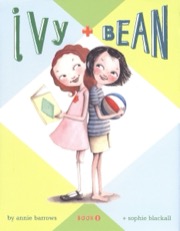
6. Ivy and Bean by Annie Barrows (Illustrated by Sophie Blackall)
Chapter Book | 110 pages | 10 chapters | Composite Score: 59.7/100
Kid Score: 60/100 | Parent Score: 59/100 | Teacher Score: 60/100
Bean thinks Ivy is boring and stuck-up. Ivy thinks Bean is loud and wild. When they decide to work together on a scheme to trick Bean’s sister, they discover they’re the perfect team—opposite personalities that complement rather than clash.
Why it’s perfect for 5-year-olds: This is a friendship book that actually works. Bean and Ivy have distinct, immediately recognizable voices—kids can hear the difference immediately. Sophie Blackall’s illustrations are charming and add dimension to the characters. The book vividly captures what 7-year-old suburban life actually looks like (which 5-year-olds are entering), including how kids actually talk to each other, the minor dramas of neighborhood play, and the sudden realization that someone you dismissed might be the best friend you never expected. The schemes escalate naturally, creating gentle suspense and humor throughout.
What surprised us: The balance is rare—kids, parents, and teachers rated this nearly identically (gap of only 1 point), suggesting it’s genuinely excellent across all dimensions. Most books favor one audience; this one delivers for everyone.
Link to full review: Ivy and Bean on KidsBookCheck
7. And Tango Makes Three by Justin Richardson & Peter Parnell (Illustrated by Henry Cole)
Picture Book | 32 pages | Composite Score: 55.4/100
Kid Score: 41/100 | Parent Score: 70/100 | Teacher Score: 60/100
Based on a true story from Central Park Zoo, two male penguins named Roy and Silo form a pair bond and long for an egg of their own. When a zookeeper brings them an egg, they incubate it with devotion until their daughter Tango hatches. This quiet, warm story affirms that families come in all shapes and sizes.
Why it’s perfect for 5-year-olds: While the kid score is lower than others (reflecting that the story is gentle and sweet rather than funny or action-packed), this book offers something other books don’t: representation and validation. Children from same-sex households see their families reflected positively and completely normally. Children from different family structures gain perspective. Henry Cole’s watercolor illustrations are emotionally expressive and beautiful. The story teaches about animal behavior, parenting, and acceptance through genuine narrative rather than preaching.
What surprised us: The notable gap between kid and parent scores reveals something valuable: this book’s primary strength isn’t entertainment but values and representation. Parents recognize its importance even when kids find it quiet.
Link to full review: And Tango Makes Three on KidsBookCheck
Quick Comparison: Books Side-by-Side
| Title | Format | Pages | Kid Score | Parent Score | Key Appeal | Best For |
|---|---|---|---|---|---|---|
| Narwhal: Unicorn of the Sea | Graphic Novel | 64 | 69 | 58 | Friendship, imagination, humor | Visual learners; kids who love wordless storytelling |
| Junie B. Jones and the Stupid Smelly Bus | Chapter Book | 80 | 60 | 51 | Voice, relatability, humor | Reluctant readers; kids with school anxiety |
| The Princess in Black | Illustrated Chapter | 96 | 60 | 49 | Action, subversive gender roles, adventure | Kids who love heroes; girls seeing themselves as agents |
| Amelia Bedelia Takes the Cake | Early Reader | 64 | 61 | 49 | Wordplay, humor, simplicity | Emerging independent readers; building confidence |
| Mercy Watson to the Rescue | Illustrated Chapter | 68 | 60 | 53 | Warmth, humor, comfort, family | Kids needing emotional security; reluctant readers |
| Ivy and Bean | Chapter Book | 110 | 60 | 59 | Friendship, difference, relatability | Early readers transitioning to longer books |
| And Tango Makes Three | Picture Book | 32 | 41 | 70 | Diversity, values, real-world connection | Teaching acceptance; representation-seeking families |
How KidsBookCheck Scores Work
When you see scores like 69/100 for kids or 58/100 for parents, you’re seeing real data from real people reading these books. We asked kids, parents, and teachers to evaluate books on ten specific dimensions:
For kids: First-chapter grab, middle momentum, character voice, laugh-out-loud factor, emotional depth, ending satisfaction, plot surprises, mental imagery, playground cool-factor, and whether the book opens a new world.
For parents: Vocabulary building, writing quality, stereotype-breaking, moral reasoning, emotional sophistication, real-world learning, reading gateway potential, creative spark, re-read durability, and conversation-starting ability.
For teachers: Read-aloud power, classroom versatility, mentor text quality, cross-curricular value, discussion fuel, writing prompts, critical thinking, empathy development, reluctant reader rescue, and project potential.
This three-perspective approach reveals something traditional reviews often miss. A book might be entertaining to kids but teach nothing to parents. Or a book beloved by teachers might bore kids. Learn more about how our scoring system works.
Understanding Reading Levels at Age 5
What reading level should a 5-year-old be?
This is the wrong question. Reading development at 5 is wildly variable. Some 5-year-olds are independently reading chapter books; others are still building letter recognition. What matters is engagement and growth, not matching an arbitrary level. The books on this list range from Lexile 460L (Mercy Watson) to 530L-560L (Ivy and Bean, Amelia Bedelia, Narwhal) because 5-year-olds reading these books are all in different places. What they have in common: the books meet them where they are with humor, strong characters, and stories worth their time.
Should 5-year-olds read chapter books?
Yes, but with context. Chapter books don’t look like chapter books at 5. They look like illustrated chapter books with short chapters (usually 10-15 pages), heavy illustrations, and dialogue-driven narratives. Books like Junie B. Jones, Mercy Watson, and The Princess in Black are technically chapter books but function more like “bridge books”—they bridge the gap between picture books and true chapter books. Many 5-year-olds can handle (and love) these. Some still need picture books primarily. Both are completely normal.
What’s the difference between picture books, early readers, and chapter books?
- Picture books: More illustration than text (often 50%+ of the page). Usually 32 pages or fewer. Text typically 500-1000 words. Examples: And Tango Makes Three
- Early readers/I Can Read books: Heavily illustrated still, but more text. Usually 48-64 pages. Text: 2000-5000 words. Simple vocabulary, short chapters. Examples: Amelia Bedelia, Narwhal
- Illustrated chapter books: More text than illustrations, but illustrations still frequent. Usually 64-110 pages. Text: 8000-30000 words. More complex sentences and vocabulary. Examples: Junie B. Jones, Ivy and Bean, Mercy Watson, The Princess in Black
Your 5-year-old might be reading books across all three categories depending on the moment, their mood, and what they need from reading.
Reading 5-Year-Olds: Parent Moments
Moment #1: The Switch Flips
One moment, your child is looking at a book with you and pointing out the dog on every page. The next moment, you read a chapter of Junie B. Jones and they’re asking for the next chapter. They’re leaning in. Their eyes are tracking the words. You realize: they’re not just being read to anymore. They’re reading. This happened for thousands of parents with exactly the books on this list. It’s not magic—it’s the power of the right story at the right time.
Moment #2: The Voice Question
A parent came into our community forum asking: “Why is my 5-year-old obsessed with Junie B. Jones? She asks for it constantly, laughs at parts that aren’t funny to me, and has started imitating Junie B’s voice.” That’s the answer. Junie B has a voice—a distinctive, authentic way of speaking that kids hear immediately and love. When a character has real voice, kids absorb it, repeat it, and use it to process their own experiences. That’s not just entertainment. That’s literature working.
What These Books Teach Beyond Reading
Yes, these books develop reading skills. Yes, they build vocabulary and fluency and comprehension. But here’s what really matters:
Narwhal teaches that different thinking styles are valuable.
Junie B. Jones validates childhood anxiety and shows it’s okay to feel afraid.
The Princess in Black demonstrates that girls can be both beautiful and brave.
Amelia Bedelia celebrates being a helper and shows kindness in action.
Mercy Watson models unconditional family love.
Ivy and Bean proves that friendship comes in unexpected packages.
And Tango Makes Three affirms that families take many forms.
These aren’t small things.
Beyond These Seven: Building Your 5-Year-Old’s Library
The seven books on this list represent the most reliably excellent choices based on kids, parents, and teachers. But they’re not the only ones. As you build your child’s library, look for books with:
- Strong character voice (you should be able to hear the character’s personality in their dialogue)
- Relatability mixed with imagination (books that reflect real childhood experiences or embrace wonderful fantasy equally well)
- Humor that lands for kids (not jokes explained to death or humor that requires context kids don’t have)
- Frequent illustrations (especially for emerging readers—illustrations aren’t decoration, they’re infrastructure)
- Endings that feel earned (your child should feel satisfied, not shortchanged)
The Reluctant Reader Rescue Mission
It’s worth noting: every single book on this list has a remarkable track record with reluctant readers. Kids who resist reading, kids with processing challenges, kids with anxiety about reading—all of these books consistently pull them in.
Why? Because they prioritize engagement over complexity. They use illustrations as load-bearing walls in the narrative structure, not decoration. They have pacing that maintains momentum. They feature characters kids want to spend time with. Teachers and parents report that books from this list regularly transform non-readers into readers.
If your child resists reading, start here. Not because there’s something wrong with your child, but because these books are specifically engineered (through accumulated wisdom and actual kid feedback) to be irresistible.
Getting These Books
All seven books are widely available through your public library, independent bookstores, and major retailers.
Find them at your library first. Libraries are designed exactly for this moment in childhood—when your kid needs access to lots of books to find their favorites. Most libraries have entire sections dedicated to 5-6 year-olds and can connect you with librarians who specialize in this age.
Then buy your favorites. Once your child has loved a book through library borrowing, buying a copy makes sense. They’ll return to favorite books repeatedly.
Browse all books rated and reviewed on KidsBookCheck
Amazon link for shopping: Shop these books on Amazon
What Should You Do Next?
Take our Reading Level & Interest Quiz and we’ll match your child with books calibrated exactly for them. We’ll ask about their interests, reading confidence, and what draws them in—then recommend next reads based on how other kids like them responded.
Frequently Asked Questions: Books for 5-Year-Olds
Q: My 5-year-old isn’t interested in reading yet. Is that normal?
A: Completely normal. Five is still young. Some 5-year-olds are reading independently; others are building pre-reading skills. What matters: consistent exposure to books, someone reading aloud regularly, and letting your child see you enjoying reading. The books on this list work beautifully as read-alouds even for kids not ready to decode independently.
Q: How do I know when my child is ready to move from picture books to chapter books?
A: Watch for these signs: Can they sit through a 10-minute read-aloud? Are they asking “what happens next?” at natural stopping points? Do they talk about characters when the book is closed? Can they remember plot threads across multiple days? These signal readiness for illustrated chapter books. Lexile and grade-level don’t tell you this; your observation does.
Q: My 5-year-old wants the same book over and over. Should I worry?
A: No. Repetition is how kids consolidate learning and build confidence. They’re reinforcing decoding, enjoying predictability, noticing new details. This is exactly right. Some educators suggest multiple re-reads of the same book is even more valuable than reading many different books.
Q: Which book is best for a child with anxiety about school?
A: Junie B. Jones and the Stupid Smelly Bus is specifically about school transition anxiety, and thousands of parents report it helping kids process their own fears. The book validates the feeling while showing that it’s survivable and often gets better. Mercy Watson also offers comfort and unconditional acceptance that anxious kids need.
Q: Can I use these as read-alouds even if my child isn’t reading yet?
A: Yes. In fact, read-aloud is the primary way 5-year-olds should be experiencing longer books. Kids should hear thousands of words daily, encounter vocabulary through listening, and experience the rhythm of language read aloud. Every book on this list works beautifully as a read-aloud—especially Junie B. Jones, which has a voice that’s made to be read aloud dramatically.
{
  "@context": "https://schema.org",
  "@type": "FAQPage",
  "mainEntity": [
    {
      "@type": "Question",
      "name": "What reading level should a 5-year-old be?",
      "acceptedAnswer": {
        "@type": "Answer",
        "text": "Reading development at 5 is wildly variable. Some 5-year-olds are independently reading chapter books; others are building letter recognition. What matters is engagement and growth, not matching an arbitrary level."
      }
    },
    {
      "@type": "Question",
      "name": "Should 5-year-olds read chapter books?",
      "acceptedAnswer": {
        "@type": "Answer",
        "text": "Yes, but with context. At age 5, chapter books look like illustrated chapter books with short chapters, heavy illustrations, and dialogue-driven narratives."
      }
    },
    {
      "@type": "Question",
      "name": "How do I know when my child is ready to move from picture books to chapter books?",
      "acceptedAnswer": {
        "@type": "Answer",
        "text": "Watch for: Can they sit through a 10-minute read-aloud? Are they asking 'what happens next?' at stopping points? Do they talk about characters? Can they remember plot threads across multiple days? These signal readiness."
      }
    }
  ]
}
{
"@context": "https://schema.org",
"@type": "ItemList",
"name": "Best Books for 5-Year-Olds",
"itemListElement": [
{
"@type": "Book",
"position": 1,
"name": "Narwhal: Unicorn of the Sea",
"author": "Ben Clanton",
"isbn": "978-0-545-59265-0",
"publisher": "Scholastic Inc",
"datePublished": "2015",
"image": "https://covers.openlibrary.org/b/isbn/978-0-545-59265-0-L.jpg",
"aggregateRating": {
"@type": "AggregateRating",
"ratingValue": "62.4",
"bestRating": "100",
"worstRating": "0"
}
},
{
"@type": "Book",
"position": 2,
"name": "Junie B. Jones and the Stupid Smelly Bus",
"author": "Barbara Park",
"illustrator": "Denise Brunkus",
"isbn": "9780679826422",
"publisher": "Random House",
"datePublished": "1992",
"image": "https://covers.openlibrary.org/b/isbn/9780679826422-L.jpg",
"aggregateRating": {
"@type": "AggregateRating",
"ratingValue": "54.9",
"bestRating": "100",
"worstRating": "0"
}
},
{
"@type": "Book",
"position": 3,
"name": "The Princess in Black",
"author": "Shannon Hale & Dean Hale",
"illustrator": "LeUyen Pham",
"isbn": "978-0763678883",
"publisher": "Candlewick Press",
"datePublished": "2014",
"image": "https://covers.openlibrary.org/b/isbn/978-0763678883-L.jpg",
"aggregateRating": {
"@type": "AggregateRating",
"ratingValue": "53.4",
"bestRating": "100",
"worstRating": "0"
}
},
{
"@type": "Book",
"position": 4,
"name": "Amelia Bedelia Takes the Cake",
"author": "Herman Parish",
"illustrator": "Lynne Avril",
"isbn": "9781484493557",
"publisher": "Greenwillow Books",
"datePublished": "2013",
"image": null,
"aggregateRating": {
"@type": "AggregateRating",
"ratingValue": "57.4",
"bestRating": "100",
"worstRating": "0"
}
},
{
"@type": "Book",
"position": 5,
"name": "Mercy Watson to the Rescue",
"author": "Kate DiCamillo",
"illustrator": "Chris Van Dusen",
"isbn": "978-0-7636-2270-1",
"publisher": "Candlewick Press",
"datePublished": "2005",
"image": "https://covers.openlibrary.org/b/isbn/978-0-7636-2270-1-L.jpg",
"aggregateRating": {
"@type": "AggregateRating",
"ratingValue": "55.8",
"bestRating": "100",
"worstRating": "0"
}
},
{
"@type": "Book",
"position": 6,
"name": "Ivy and Bean",
"author": "Annie Barrows",
"illustrator": "Sophie Blackall",
"isbn": "978-0-8118-4909-8",
"publisher": "Chronicle Books LLC",
"datePublished": "2006",
"image": "https://covers.openlibrary.org/b/isbn/978-0-8118-4909-8-L.jpg",
"aggregateRating": {
"@type": "AggregateRating",
"ratingValue": "59.7",
"bestRating": "100",
"worstRating": "0"
}
},
{
"@type": "Book",
"position": 7,
"name": "And Tango Makes Three",
"author": "Justin Richardson, Peter Parnell",
"illustrator": "Henry Cole",
"isbn": "9780689878459",
"publisher": "Simon & Schuster Books for Young Readers",
"datePublished": "2005",
"image": "https://covers.openlibrary.org/b/isbn/9780689878459-L.jpg",
"aggregateRating": {
"@type": "AggregateRating",
"ratingValue": "55.4",
"bestRating": "100",
"worstRating": "0"
}
}
]
}{
"@context": "https://schema.org",
"@type": "BreadcrumbList",
"itemListElement": [
{
"@type": "ListItem",
"position": 1,
"name": "Home",
"item": "https://kidsbookcheck.com"
},
{
"@type": "ListItem",
"position": 2,
"name": "Blog",
"item": "https://kidsbookcheck.com/blog"
},
{
"@type": "ListItem",
"position": 3,
"name": "Best Books for 5-Year-Olds",
"item": "https://kidsbookcheck.com/blog/best-books-for-5-year-olds"
}
]
}HTML Comment: Internal Linking Map
HTML Comment: Suggested Cover Images
HTML Comment: Image Optimization Notes
Last reviewed: March 24, 2026
Sources: