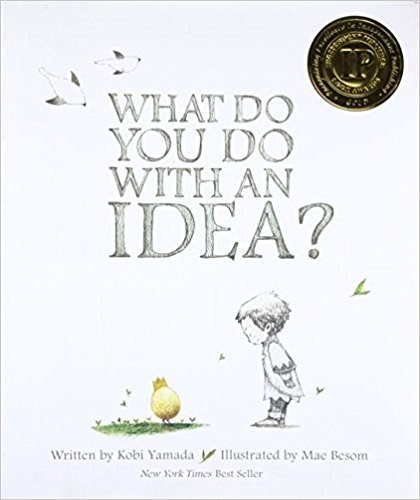
What Do You Do with an Idea?
by Kobi Yamada · What Do You Do With... #1
A quiet meditation on creative courage that teaches children ideas are worth nurturing — even when you're afraid
The story
A young child discovers they have an idea — visualized as a small golden glowing orb. At first the child is uncertain and afraid: What if it fails? What if nobody likes it? Through gentle determination, the child chooses to care for the idea despite fear. As they nurture it, the idea grows, and the world around them transforms into something beautiful.
Age verdict
Best for ages 4-7. The visual narrative works for very young children while the philosophical depth resonates with older readers. Adults often connect with this book as deeply as children do.
Our take
This contemplative picture book scores highest for classroom and parenting use, where its philosophical depth and conversation-starting power shine. Kid scores are lower because the book prioritizes emotional depth over entertainment, lacking humor, cool factor, and surprise — the currency of pure kid appeal.
What stands out
Each audience's top 3 dimensions. Out of 30 scored per book.
Kids love
- Heart-punch Strong
fear crescendo (pages 11-12), quiet courage/commitment (pages 17-18), wonder/realization (pages 35-36). Each is earned through 5+ pages of setup.
- Mental movie Strong
Comparable to Lunch Lady and the Cyborg Substitute — Fully illustrated with pen-and-ink and watercolor rendering distinct visual spaces. The illustrations carry the emotional narrative. Sits at/above because the color transformation itself (muted to vibrant) is emotionally charged, not just visually striking.
Parents love
- Writing quality Strong
parallel structure (fearful questions to confident declarations), text-image marriage creates meaning neither medium achieves alone, showing sophisticated craft.
- Emotional sophistication Strong
the child doesn't stop being afraid, they choose to care for the idea anyway. Characters hold contradictory feelings simultaneously (fear AND commitment). This anxiety-to-commitment arc is psychologically sophisticated.
Teachers love
- Read-aloud power Strong
Comparable to Charlotte's Web , settling at T1=8 — The rhythmic text builds naturally from quiet questioning to confident declaration, with natural breath points and visual pages that hold group attention. The escalating what-if questions invite choral participation, and the color transformation creates shared classroom moment.
- Empathy & self-awareness Strong
the child names their fears through questions, recognizes their capacity for courage, and discovers that commitment matters more than confidence. Students see their own anxieties reflected and validated.
✓ Perfect for
- • Children who are shy about sharing creative work
- • Families who want to discuss courage and perseverance
- • Classroom read-alouds about growth mindset
- • Gift-giving to children starting new creative endeavors
Not ideal for
Children seeking humor, action, or fast-paced entertainment — this is a contemplative book that rewards patience and emotional engagement rather than providing excitement
At a glance
- Pages
- 40
- Words
- 0k
- Lexile
- 490L
- Difficulty
- Easy
- POV
- Third Person Limited
- Illustration
- Fully Illustrated
- Published
- 2014
- Illustrator
- Mae Besom
- ISBN
- 9781938298073
Mood & style
You'll know it worked when…
Single sitting (5-10 minutes). The visual beauty invites immediate re-reading.
More like this
Same genre, similar age range. Ranked by kid score.


Want more picks like this?
Get 5 hand-picked book reviews for your child's age — one email a month.