
The Hundred and One Dalmatians
by Dodie Smith
A mid-century English classic where one-hundred-and-one Dalmatians outthink a fur-obsessed villainess — richer, wittier, and more literary than the Disney films that follow.
The story
Pongo and Missis, two Dalmatians who consider themselves the rightful owners of the young Dearly couple, welcome fifteen puppies into their Regent's Park home just as Mrs. Dearly's schoolmate Cruella de Vil takes a sinister interest in Dalmatian fur. When the puppies are stolen, Pongo organizes a nationwide dog-communication network called the Twilight Barking to trace them into the English countryside, and the rescue becomes a cross-country adventure larger than anyone bargained for. The novel predates and inspired the Disney film; the two mother dogs, a memorable country-house encounter, and the chimney-soot disguise march through a snowy Christmas Eve are Dodie Smith's, not the studio's.
Age verdict
Best fit 9-11; holds as a family read-aloud from about 7 upward and remains a genuine adult-readable classic.
Our take
classic-crossover — literary-grade prose and dynasty-scale ending anchor a rescue adventure that rewards adult re-readers as much as it engages children
What stands out
Each audience's top 3 dimensions. Out of 30 scored per book.
Kids love
- Ending satisfaction Exceptional
Every subplot — Perdita's missing husband, the abused cat's long-standing grievance, the household staff, the henchmen, the title's arithmetic — lands in the final chapters with full-circle satisfaction. The title itself is a narrative contract the book pays off on the final page, converting the reader from passenger into counter. Comparable to A Wolf Called Wander (9, full-circle belonging) — a gold-standard classic ending.
- Middle momentum Strong
The long cross-country stretch never sags because Dodie Smith shifts genre every few chapters — domestic comedy, detective-network set piece, country-house interlude, military briefing, kitchen heist, chase thriller — and delivers a true midpoint twist that dramatically resets the scale of the rescue. Comparable to Charlotte's Web (8, segmented barn-year momentum) with more propulsion than Mrs. Frisby and the Rats of NIMH (7).
Parents love
- Writing quality Exceptional
Smith was a playwright and literary novelist (I Capture the Castle) before she wrote this, and every sentence shows it — precise rhythm alternating short declaratives with long legato clauses, anaphora used ritualistically for the Twilight Barking, descriptions loaded with sensory detail without a wasted adjective. Prose is literary-grade and equally pleasurable aloud. Comparable to Charlotte's Web (9, E.B. White prose) and above Mrs. Frisby (7).
- Vocabulary builder Strong
Dodie Smith's mid-century English stretches a modern child's vocabulary steadily: 'area' (as the basement walkdown), 'perambulator,' 'svelte,' 'furrier,' 'chauffeur,' 'ex libris,' 'parlourmaid,' 'ermine,' 'hassock,' 'folly.' A Latin etymology lesson is dropped in when Perdita is named ('perditus,' the lost one). Stronger than Charlotte's Web (7) for a modern reader and close to The Tale of Despereaux (8, vocabulary-first narrator voice).
Teachers love
- Read-aloud power Exceptional
This is the book's peak strength. Smith's Edwardian-lyric cadence is tuned for performance — the opening paragraph, Pongo's wild-ancestry oratory in chapter 11, the ritual four-beat repetition of the Twilight Barking ('He barked to the north, he barked to the south, he barked to the east and west'). The dual-audience narrator gives the reading parent or teacher parenthetical winks to catch. On par with Charlotte's Web (9) for prose music and above most classic adventure texts.
- Mentor text quality Strong
A rich mentor text for specific craft moves: the inverted-cosmology opening as a model for world-establishment in a single sentence; the theft-by-glimpse scene in chapter 7 as a model for showing an event through a small witnessed object rather than direct description; the dramatic-irony comedy in chapter 15 as a lesson in how humor can release tension without defusing stakes. Stronger than adventure genre peers.
✓ Perfect for
- • confident 9-11 readers ready for a meatier sentence than most modern middle-grade offers
- • families looking for a long, satisfying chapter-per-night read-aloud
- • classrooms teaching British children's literature, opening-paragraph craft, or book-vs-film comparison
- • dog lovers, especially ones frustrated by the simplification of the Disney versions
- • readers of The Wind in the Willows, Charlotte's Web, and Mrs. Frisby and the Rats of NIMH
Not ideal for
Very sensitive readers who will be upset by the villain's explicit (if off-page) plan to kill and skin the puppies; reluctant readers who need contemporary colloquial prose to keep going; children under about seven without a read-aloud partner.
⚠ Heads up
At a glance
- Pages
- 199
- Chapters
- 18
- Words
- 60k
- Difficulty
- Challenging
- POV
- Third Person Omniscient
- Illustration
- None
- Published
- 1956
Mood & style
You'll know it worked when…
Children who love The Wind in the Willows, Charlotte's Web, or the original Mary Poppins typically finish this in a week of nightly chapters; a reluctant modern middle-grade reader may need a read-aloud partner to stay in the period prose.
More like this
Same genre, similar age range. Ranked by kid score.
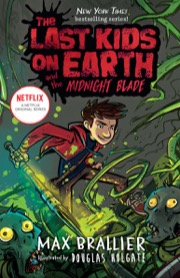
The Last Kids on Earth and the Midnight Blade
by Max Brallier
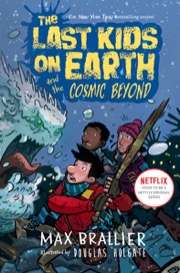
The Last Kids on Earth and the Cosmic Beyond
by Max Brallier
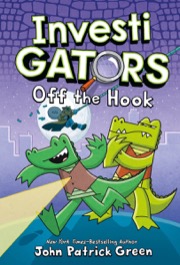
InvestiGators: Off the Hook
by John Patrick Green
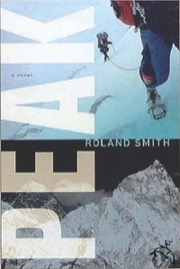
Peak
by Roland Smith
Want more picks like this?
Get 5 hand-picked book reviews for your child's age — one email a month.