
The House in the Night
by Susan Marie Swanson
A Caldecott-winning bedtime classic — hushed, beautiful, and built for the lap.
The story
A young child is handed the key to a house and, spread by spread, the world inside opens: a light in the house, a bed in the light, a book on the bed, a bird in the book, a song in the bird, a moon in the dark. At the widest point the pattern reverses, and the song-inside-the-bird-inside-the-book-inside-the-bed carries her safely home to sleep. Susan Marie Swanson's cumulative verse, adapted from the traditional rhyme 'This is the key of the kingdom,' is paired with Beth Krommes's Caldecott-Medal-winning scratchboard-and-gold artwork — one of the most visually distinctive picture books of the last twenty years. Best at lap-read age; re-reads beautifully for weeks.
Age verdict
Best at 3-6. Works for 2-year-olds as a listen-and-look (the board book edition suits this best) and for 7-8-year-olds as a poetry mentor text in school, but the emotional sweet spot is preschool bedtime.
Our take
Quiet pre-K bedtime classic. Teachers and parents see the Caldecott craft, pre-readers feel the pattern and sleep well — kids don't rate it as highly as adults because there are no jokes, no quotable lines, and no big emotional punch. Teacher-favored by design.
What stands out
Each audience's top 3 dimensions. Out of 30 scored per book.
Kids love
- Ending satisfaction Strong
The final spread mirrors the opening frame — key by the door, lamp lit, child in bed — and the cumulative chain closes on 'light in the house in the night,' giving the reader both formal and emotional resolution in one image. Exceptionally satisfying for a preschooler who has been tracking the pattern. Comparable to Goodnight Moon's whispered hush (7) but slightly stronger because the circular grammar actually CLOSES. Not 9-territory (The Snowy Day's perfect snow-fall finish) because there is no character-arc revelation.
- Mental movie Strong
Krommes's scratchboard-and-watercolor art with gold-only color-economy creates a mental movie stronger than most picture books — a child who has seen it once can re-picture the gold key, the bird flying off the page, and the moon over the rooftops without the book in hand. Peak visual moment: the gold moon over the darkened landscape at spread 8, which stays with pre-readers for years. Strong enough to match The Snowy Day (8) which also earns this via iconic imagery. Not quite Where the Wild Things Are (9) whose images are burned into the culture.
Parents love
- Writing quality Strong
2009 Caldecott Medal (illustration) and multi-starred reviews for the text: Booklist, Kirkus, Publishers Weekly. Swanson is a published poet and the sentence-level work is genuinely masterful — metrical control, nested-preposition grammar, and a volta at the moon-in-the-dark that most literary prose never achieves. Caldecott Medal floor applies (P2 ≥ 6). Comparable to Where the Wild Things Are (8). Charlotte's Web (10) sits above.
- Reading gateway Strong
Caldecott Medal, 40+ lesson plans logged, ALA Notable, Reading Rockets recommended, TeachingBooks featured, book-fair presence, Common Sense Media 4-star. Functions as a foundational early-literacy text — the cumulative pattern is a known pre-reader scaffold and the book is widely used in preschool classrooms. Gateway evidence floor applies (P7 ≥ 6). Comparable to Goodnight Moon (9, which is the genre-defining gateway); this scores a step below because Goodnight Moon is THE benchmark.
Teachers love
- Read-aloud power Strong
The text is metrically tight and literally designed to be read aloud — every sentence is four to six words, every page turn is a breath, and the cumulative scaffold creates call-and-response energy with a listening child. The type is set in Cronos Pro Semibold Display for storytime legibility. Booklist and Kirkus both starred it for this quality. Comparable to Brown Bear Brown Bear (9) which is the read-aloud pole star; this is a step below because Brown Bear has sturdier call-and-response chunks.
- Classroom versatility Strong
Fits pre-K and K circle-time bedtime units; works as a poetry mentor text in grades 1–2; pairs well with nursery-rhyme study (author's note names 'This is the key of the kingdom'); and the scratchboard art supports a visual-arts tie-in. Multiple curriculum entry points. Comparable to The Snowy Day (8) which has slightly broader K–2 reach; this scores a step below.
✓ Perfect for
- • Families building a bedtime ritual with 3-6 year olds
- • Parents who loved Goodnight Moon and want something with slightly more visual sophistication
- • Pre-K and kindergarten teachers teaching cumulative pattern or the concept of 'nouns and objects'
- • Poetry-unit mentor texts in grades 1-2
- • Art-loving children who respond to strong visual technique (scratchboard, gold accents)
Not ideal for
Kids who want funny, loud, or fast-paced stories (Dog Man fans will be bored); independent readers age 7+ looking for plot (this is a mood book, not a story book); families wanting diverse representation (the world depicted is a traditional American home with no named character of color).
At a glance
- Pages
- 40
- Chapters
- 12
- Words
- 0k
- Lexile
- 170L
- Difficulty
- Easy
- POV
- Second Person
- Illustration
- Fully Illustrated
- Published
- 2008
- Publisher
- Houghton Mifflin
- Illustrator
- Beth Krommes
- ISBN
- 9780618862443
Mood & style
You'll know it worked when…
If the child asks for it again the next night, and then the next, it is working. This is a re-read book, not a once-and-done book; one reading is not the test.
More like this
Same genre, similar age range. Ranked by kid score.
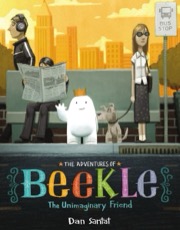
The Adventures of Beekle: The Unimaginary Friend
by Dan Santat
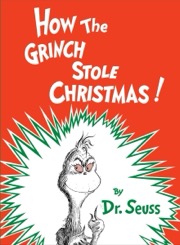
How the Grinch Stole Christmas!
by Dr. Seuss
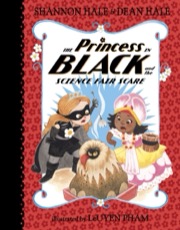
The Princess in Black and the Science Fair Scare
by Shannon Hale and Dean Hale

Chicka Chicka Boom Boom
by Bill Martin Jr and John Archambault
Want more picks like this?
Get 5 hand-picked book reviews for your child's age — one email a month.