
The Haunting of Derek Stone (The Red House and The Ghost Road)
by Tony Abbott · The Haunting of Derek Stone #3
A propulsive Southern Gothic horror finale that braids Civil War history, Louisiana atmosphere, and one sarcastic narrator's identity crisis.
The story
Fourteen-year-old Derek Stone — chubby, sarcastic, and on the run with his older brother Ronny — narrates the back half of Tony Abbott's four-book series in a single Scholastic compilation. Together, The Red House and The Ghost Road follow Derek across post-Katrina Louisiana to the long-abandoned Amaranthia plantation and beyond, as he tries to understand what happened to his family and what the Legion of dead souls actually wants. Abbott combines short chapters, ticking-clock pacing, and a first-person voice that jokes its way through genuine horror, building toward a series finale set on a Civil War-era submarine and a battlefield bridge. The compilation works as the satisfying second half of a series, but assumes readers have met Derek and the Legion in Books 1 and 2 (City of the Dead and Bayou Dogs).
Age verdict
Best for ages 11-13. Confident 10-year-olds with horror experience will manage; sensitive 9-10 year olds will not.
Our take
kid_engaging_horror
What stands out
Each audience's top 3 dimensions. Out of 30 scored per book.
Kids love
- First-chapter grab Exceptional
Abbott opens Red House with the two-word psychological punch 'We died,' then lets Derek's voice unspool the entire prior series in 600 conversational words while a kinetic promise — a bloody forehead — pulls the reader forward. The hook sits alongside A Court of Mist and Fury (9) for immediate psychological disturbance, and is stronger than the kid-grounded Lunch Lady opening (8) because Abbott fuses trauma, voice, world, and stakes inside the first chapter without exposition. Ghost Road then re-opens with the same trick for late-jumping kids.
- Heart-punch Strong
Multiple genuine emotional paydays at different scales: a sustained sibling-decay arc that Ronny carries chapter by chapter, plus mid-book mother-and-son confessions that earn their weight through fifteen chapters of patient setup. Sits with Earthquake in the Early Morning (8) for engineering three earned heart-punches at three scales rather than relying on a single climactic moment.
Parents love
- Moral reasoning Strong
The ancestor identity question forces Derek into a sustained moral negotiation — does inheriting Ulysses' soul mean inheriting his violence? The Long Bridge sequence in Ghost Road Ch.16 makes the question physical: Derek must choose whether to repeat a 1864 atrocity. Comparable to Wolf Called Wander (7) for natural moral dilemma emergence; not Maze Runner's (8) leadership ethics, but genuine kid-graspable choices about violence inherited.
- Reading gateway Strong
Short chapters, immediate visceral hook, first-person voice, and propulsive cliffhangers make this a textbook gateway from picture books or Dog Man to longer middle-grade. Floor of 6 met from Scholastic Book Fair presence. Compares to Clementine (7) for short illustrated-chapter rhythm and accessible voice; below the format-collapse of 5 Worlds (10) which removes reading friction entirely. Best-case bridge for spooky-reader kids.
Teachers love
- Reluctant reader rescue Strong
Floor of 6 met by Scholastic gateway profile; pushed to 8 by the genuinely rare combination — boys' horror with first-person voice, short chapters, propulsive ticking-clock pacing, and a hook strong enough to convert non-readers. Comparable to Babymouse (8) and the early end of the Wimpy Kid (9) zone for reluctant-reader engineering; below Dog Man (10) only because it lacks the visual-storytelling shortcut. A staff-pick reluctant-reader rescue.
- Read-aloud power Solid
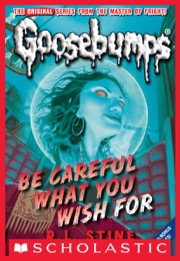
Short chapters, frequent cliffhangers, and a performable first-person voice make this strong for serial classroom read-aloud — each chapter ends on a hook engineered to make kids beg for one more. Comparable to Be Careful What You Wish For (4 with the same architectural advantage but plainer prose) and approaching The Golem's Eye (7) for sarcastic-narrator performability. Horror content limits formal classroom adoption.
✓ Perfect for
- • Middle-graders aged 11-13 who outgrew Goosebumps and want their horror to actually mean something
- • Reluctant readers who respond to first-person sarcasm and short cliffhanger chapters
- • Kids fascinated by ghost stories, Civil War history, or New Orleans atmosphere
- • Fans of the first two Derek Stone books who want the series finale in one volume
Not ideal for
Sensitive readers who find body horror, on-page death of a major character, or family-relationship reveals about death overwhelming; this is at the heavier end of middle-grade horror and the publisher's '8+' label understates the emotional weight.
⚠ Heads up
At a glance
- Pages
- 292
- Chapters
- 39
- Words
- 65k
- Difficulty
- Moderate
- POV
- First Person
- Illustration
- None
- Published
- 2009
- Publisher
- Scholastic (Apple Paperbacks)
- ISBN
- 9780545209045
Mood & style
You'll know it worked when…
Strong — chapter-end cliffhangers, ticking-clock structure, and a propulsive 'just one more chapter' rhythm. Most readers finish; the compilation format also reduces the gap between Books 3 and 4 that fans of the original paperbacks had to wait through.
More like this
Same genre, similar age range. Ranked by kid score.

Want more picks like this?
Get 5 hand-picked book reviews for your child's age — one email a month.