
Explorer Academy: The Falcon's Feather
by Trudi Trueit · Explorer Academy #2
National Geographic's globe-trotting spy school delivers Book 2 with real-world science, real locations, and real stakes.
The story
Cruz Coronado starts his second term at Explorer Academy aboard a research ship sailing from Chesapeake Bay to Iceland, continuing the mission his late mother left him: find her hidden cipher pieces before a pharmaceutical company catches up to him. Whale-communication dives, the Svalbard Seed Vault, and Icelandic glaciers become the stages for cipher-hunt and sabotage, while a closing-chapter revelation about Cruz's father sets stakes for Book 3.
Age verdict
Best for 9-11. Accessible for strong 8-year-olds. 12-year-olds will find it easy but may still enjoy the tech/adventure for a few hours' pleasure read.
Our take
Balanced adventure with slight teacher-lean — classroom-friendly NatGeo cross-curricular value edges slightly ahead of kid fun and parent growth-value, all three within a tight 5-point band.
What stands out
Each audience's top 3 dimensions. Out of 30 scored per book.
Kids love
- Middle momentum Strong
Every chapter ends on cliffhanger or revelation (sabotage question, warning letter, cipher clue, cave explosion) creating relentless just-one-more-chapter pull. The Ch.5-7 pivot from Svalbard to Iceland accelerates rather than sags. Matches InvestiGators: Off the Hook (8) for set-piece cadence per chapter — Trueit uses location-change + cipher beat + danger beat almost every chapter, stronger than Breakout (7, document-driven pacing).
- New world unlocked Strong
Explorer Academy + Orion ship + global-cipher-hunt + speculative NatGeo-plausible tech (honeybee drones, emotion-sensing glasses, holo-journal, dive helmets that talk to whales) opens a genuinely immersive world. Matches Earthquake in the Early Morning (8) for making a specific real world feel new — here it's the real world layered with near-future gadgets plus first-visit-to-Svalbard wonder. Below The Golem's Eye (9) which builds a fully alternate universe.
Parents love
- Stereotype-breaker Strong
Multi-ethnic ensemble is genuinely multi-ethnic without tokenism: Cruz (Hawaiian-Latino), Bryndis (Icelandic, detective-capable, not damsel), Sailor (New Zealand), Emmett (Asian-American inventor), Nori. Female peers are rescuers as often as rescued — Bryndis and Sailor both save Cruz at different moments. Female faculty (Aunt Marisol, Dr. Hightower, Dr. Fanchon) hold authority.
- Real-world window Strong
This is National Geographic's core competency and the book delivers: Bay of Fundy whale biology, Svalbard Global Seed Vault (a real place few 10-year-olds have heard of), Langjökull glacier climate science, Icelandic geography. The 'Truth Behind the Fiction' back-matter extends this explicitly. Real-world content is the book's distinguishing feature — stronger than most fantasy-driven adventure series. Override note: no direct _scoring_evidence entry, but Depth 1 world_and_sensory_economy + Depth 3 invisible_scaffolding provide the craft warrant.
Teachers love
- Cross-curricular value Strong
Marine biology (whale communication, right whales, sensotivia gel concept), geography (Chesapeake, Bay of Fundy, Svalbard, Iceland — all real locations to plot on a map), earth science (glaciers, climate change), conservation (Global Seed Vault mission), tech-ethics (pharmaceutical corporate pressure). Matches City Spies (8) for cross-subject breadth. Below A Wolf Called Wander (10, biology-central) because science is vehicle, not subject.
- Reluctant reader rescue Strong
Lexile 690L + AR 4.8 make this readable by strong 8-year-olds and non-resistant for reluctant 11-12 readers. High action-density, short chapters, interior illustrations (Scott Plumbe), real-world adventure hook, and speculative tech are all reluctant-reader bait. Book-fair presence confirms this is a 'books that kids actually finish' title. Matches City Spies (8) for reluctant-reader appeal; gateway evidence floor=6 easily exceeded.
✓ Perfect for
- • kids who loved Book 1 and want the next installment
- • readers who enjoy globe-trotting mystery and real-world science
- • reluctant readers rescued by high-action adventure with short chapters
- • fans of National Geographic content
- • classrooms doing a cross-curricular adventure + geography unit
Not ideal for
Readers seeking a standalone experience — this is a mid-series installment that assumes Book 1 context and leaves a major plot thread open for Book 3. Also not ideal for readers highly sensitive to peril scenes (near-drowning, cave entrapment).
⚠ Heads up
At a glance
- Pages
- 240
- Chapters
- 9
- Words
- 55k
- Lexile
- 690L
- Difficulty
- Moderate
- POV
- Third Person Limited
- Illustration
- Sparse
- Published
- 2019
- Publisher
- National Geographic Kids
- Illustrator
- Scott Plumbe
Mood & style
You'll know it worked when…
Readers who finish Book 1 have a very high probability of finishing Book 2; book-fair and gift-pick selection data support strong completion rates.
More like this
Same genre, similar age range. Ranked by kid score.
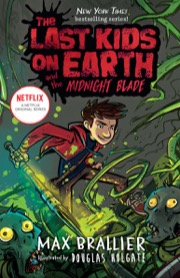
The Last Kids on Earth and the Midnight Blade
by Max Brallier
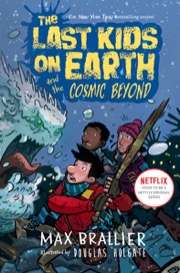
The Last Kids on Earth and the Cosmic Beyond
by Max Brallier
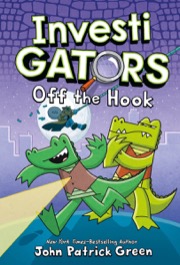
InvestiGators: Off the Hook
by John Patrick Green
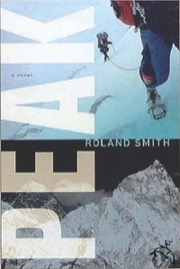
Peak
by Roland Smith
Want more picks like this?
Get 5 hand-picked book reviews for your child's age — one email a month.