
The Conjurer's Riddle
by Andrea Cremer · The Inventor's Secret #2
A morally serious steampunk sequel that matures The Inventor's Secret series into real ethical territory.
The story
The second book in Andrea Cremer's alt-history trilogy picks up with Charlotte leading a band of refugees out of the Floating City. Their journey through the Wildlands, down the Mississippi, and into French-held New Orleans brings them face-to-face with both the British Empire and a rival faction that introduces conjuring as a parallel magic system. Cremer uses the middle-book slot to complicate the moral landscape — loyalty, family, and the ethics of resistance all come under pressure. Ends with a genuine cliffhanger into book three.
Age verdict
Best for 13-15; older teens will also enjoy. Younger readers should start with book one.
Our take
Thoughtful middle-book YA adventure that treats its readers as moral agents — steady balance across kid entertainment, parent value, and classroom use with no dominant strength.
What stands out
Each audience's top 3 dimensions. Out of 30 scored per book.
Kids love
- Plot unpredictability Strong
Three genuine reversals land in the final third: Meg's Ch24-25 return as a transformed warrior-priestess, the Perseus's Ch32 sea-to-air transformation (entirely unforeshadowed at the scene level), and Ch33's single-chapter POV shift to a secondary character that retroactively recolors earlier scenes. Cremer uses the chapter architecture itself to carry surprise. Similar to Artemis Fowl (8, multiple genuine reversals), below Mockingjay (9, genre-shaking twist).
- First-chapter grab Strong
Opens in motion in the Wildlands with a winged creature scraping toward Charlotte and her pistol already drawn, then in Ch3 lets the mechanical catamounts kill Rufus — confirming within forty pages that this sequel will cost something. Stronger than All the Broken Pieces (7, verse hook establishes mystery) because the stakes are ratified by an actual casualty, but without the full psychological immediacy of A Court of Mist and Fury (9) or the in-motion criminal energy of Artemis Fowl (10).
Parents love
- Vocabulary builder Strong
Cremer's formal YA register naturally introduces low-frequency vocabulary across three axes — seafaring (prow, bowsprit, keelhaul, maelstrom), Greek mythology (Charybdis, Daedalus, Cerberus, Athene), and colonial politics (suzerainty, regalia, escutcheon, cipher, conjurer). The words appear in context without glossing, the way A Tale Dark and Grimm (8, fairy-tale register) and Amal Unbound (7, cultural vocabulary) use register to stretch readers. Not quite A Deadly Education (9) level but decisively above City Spies (5).
- Moral reasoning Strong
Ch17-18 is the novel's central ethical case — the Resistance plans to use Grave as a template for reanimated super-soldiers, and Coe defends the plan with chilly pragmatism Cremer refuses to editorialize. Ch27's private decision to flee with Grave and Ch33's cipher reveal force readers to evaluate means-vs-ends across two parallel institutions. Similar to The Maze Runner (8, genuine internal conflict about authority), below Artemis Fowl (9, moral complexity without easy answers).
Teachers love
- Cross-curricular value Strong
Strong reach across five disciplines: history (alt-1816 imperial persistence), geography (Wildlands → Mississippi → Gulf route), ethics (means/ends seminar), engineering (ship-to-airship mechanics in Ch32), and classical mythology (Charybdis, Daedalus, Cerberus, Athene, Perseus are all plot-named). Similar to A Deadly Education (7, language-linguistics connections), below A Wolf Called Wander (10, biology/geography/poetry together) or A Reaper at the Gates (9).
- Discussion fuel Strong
Multiple genuine debate prompts — Ch17-18 generates real student disagreement about the ethics of weaponizing Grave, Ch27 opens civil-disobedience questions, and Ch33 tests whether institutional loyalty can coexist with ethical action. The Empire-Resistance structural parallel is the strongest talking point. Similar to Fantastic Mr Fox (7, theft question generates genuine disagreement), below Breakout (10, nearly every theme generates disagreement).
✓ Perfect for
- • readers who loved The Inventor's Secret
- • fans of YA steampunk and alt-history
- • readers who enjoy morally complex fantasy with real stakes
- • teens who appreciate Greek-mythology name-play
Not ideal for
Readers who haven't read book one (this sequel assumes foundation), readers seeking a resolved standalone story, or reluctant readers intimidated by 384 pages of dense YA prose.
⚠ Heads up
At a glance
- Pages
- 384
- Chapters
- 36
- Words
- 110k
- Difficulty
- Challenging
- POV
- Third Person Limited
- Illustration
- None
- Published
- 2015
Mood & style
You'll know it worked when…
Cliffhanger ending. Book three (The Turncoat's Gambit, 2016) resolves the trilogy.
More like this
Same genre, similar age range. Ranked by kid score.
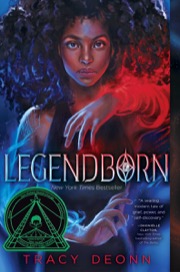
Legendborn
by Tracy Deonn
Harry Potter and the Order of the Phoenix
by J.K. Rowling
Harry Potter and the Goblet of Fire
by J.K. Rowling
Harry Potter and the Deathly Hallows
by J.K. Rowling
Want more picks like this?
Get 5 hand-picked book reviews for your child's age — one email a month.