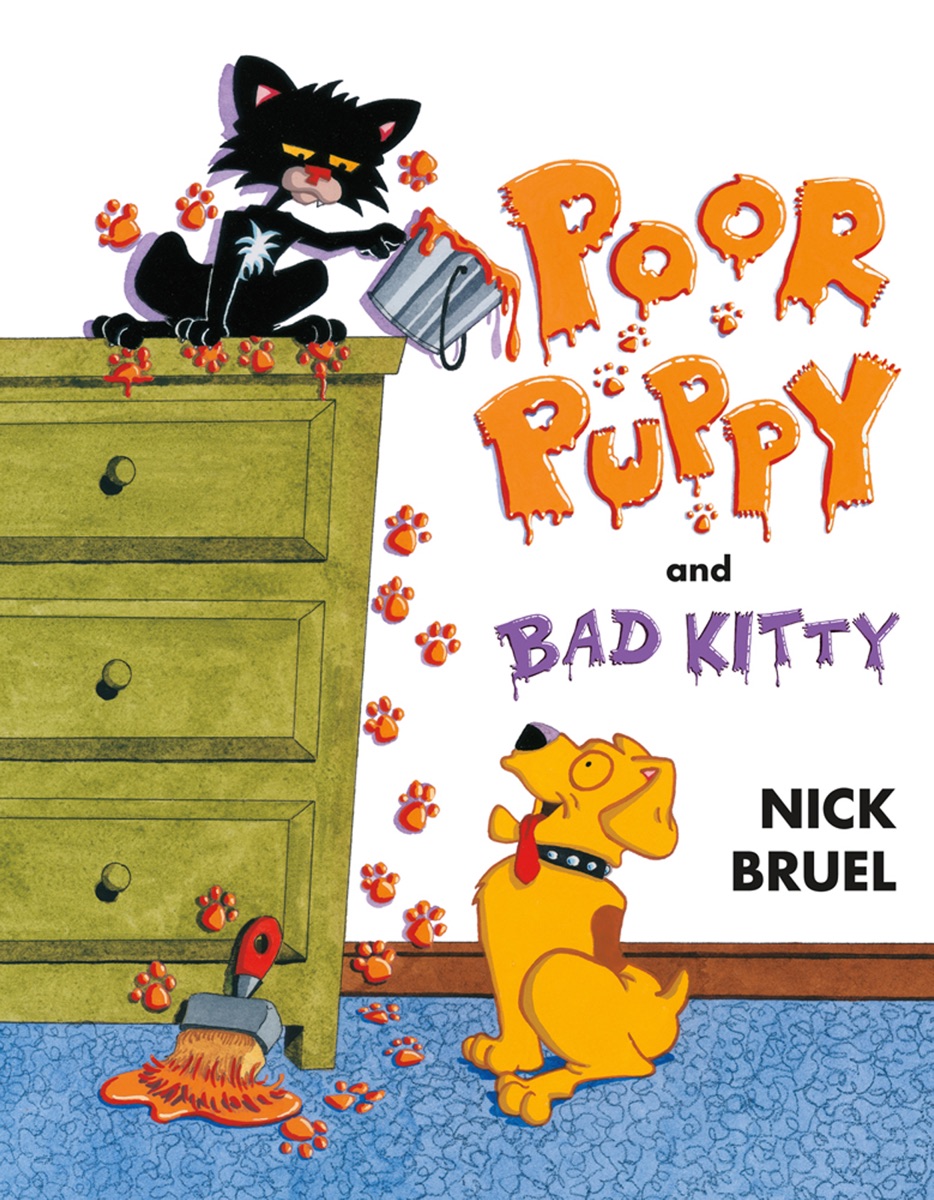
Poor Puppy and Bad Kitty
by Nick Bruel · Bad Kitty Picture Books
A charming alphabet picture book about friendship, patience, and the power of imagination
The story
When Kitty refuses to play, Puppy finds himself alone with 26 alphabetized toys — from airplanes to zoo animals. After exhausting his playthings, Puppy naps and dreams of globe-trotting adventures with Kitty, from apple bobbing in Antarctica to zigzagging in Zimbabwe. A warm, funny exploration of what happens when friends want different things.
Age verdict
Best for ages 3-6. The alphabet and counting structure engages preschoolers educationally, while the friendship theme resonates emotionally through early elementary. Safe for sensitive readers — no scary content.
Our take
A picture book that teaches more than it thrills — strong classroom utility and reading gateway value exceed its entertainment ceiling, making it an educator's tool with genuine charm.
What stands out
Each audience's top 3 dimensions. Out of 30 scored per book.
Kids love
- Mental movie Strong
Comparable to Lunch Lady and the Cyborg Substitute — Fully illustrated picture book (42 illustrations, 40 pages) in expressive, colorful cartoon style. Sits at because Bruel's visual work carries narrative weight independently while maintaining text partnership.
- Ending satisfaction Strong
Comparable to Fantastic Mr Fox , triangulated with Mercy Watson — Resolution is swift, visually celebratory, honors both characters' autonomy. Sits below because payoff is complete but emotionally simpler than Fantastic Mr Fox's feast sequence.
Parents love
- Reading gateway Exceptional
Comparable to Frog and Toad Together — Picture-dominant format means non-readers follow entirely through images. A-Z alphabet structure + counting = reading scaffolding. Minimal repetitive text supports emergent readers. Sits at because emotional gateway and visual engagement match Frog and Toad's effectiveness for ages 3-6.
- Re-read durability Strong
Comparable to Alma and How She Got Her Name — Visual details across illustrations reward repeated viewings. Repetitive structure supports memorization. Sits at because emotional arc holds up through identification, similar to how Alma rewards close re-reading.
Teachers love
- Reluctant reader rescue Exceptional
Hard Luck — Image-dominant format eliminates reading barriers. Alphabet/counting structure provides multiple entry points. Engaging visual style + minimal text = full participation in shared reading. Sits at because reluctant-reader rescue is comparable for picture book format.
- Read-aloud power Strong
Comparable to Sylvester and the Magic Pebble — Text has natural performative rhythm. 'Poor, poor, POOR Puppy!' invites vocal escalation. Alliterative country-game pairings flow naturally in speech. Sits at because emotional arc works beautifully in group listening while maintaining teacher-led delivery focus.
✓ Perfect for
- • Ages 3-6 who love counting and alphabet books
- • Kids who enjoy animal characters with big emotions
- • Read-aloud sessions that need built-in participation hooks
- • Classrooms working on alphabet, geography, or social-emotional learning
Not ideal for
Older readers (8+) seeking narrative complexity or chapter-length stories, or kids who need fast-paced action plots.
At a glance
- Pages
- 40
- Chapters
- 4
- Words
- 3k
- Lexile
- 301L
- Difficulty
- Easy
- POV
- Third Person Omniscient
- Illustration
- Fully Illustrated
- Published
- 2007
- Illustrator
- Nick Bruel
Mood & style
You'll know it worked when…
A child who finishes this book and asks to read it again, or starts inventing their own A-Z lists, has gotten the full experience.
More like this
Same genre, similar age range. Ranked by kid score.


Want more picks like this?
Get 5 hand-picked book reviews for your child's age — one email a month.