
Of Mice and Magic
by Ursula Vernon · Hamster Princess #2
A warrior-princess hamster tackles a Twelve-Dancing-Princesses mystery with pragmatic logic and paint-can weapons.
The story
When a fairy arrives with a mystery — twelve mouse princesses are wearing out their dancing shoes every night and no one knows why — Princess Harriet Hamsterbone rides her battle quail into a color-coded mouse kingdom to investigate. What she finds is a cursed underground cavern, a rigid mouse king who likes the curse, and a mole witch who may be bigger trouble than the curse itself. Harriet's pragmatic, trope-questioning approach to fantasy problems turns a classic fairy tale inside out, and the integrated cartoon panels provide visual humor throughout.
Age verdict
Strongest fit at ages 8-11. Read-aloud works as young as 6-7 for confident listeners; upper-end readers (12+) may find the pacing and humor light.
Our take
Kid-entertainment dominant, classroom-accessible, parent-growth moderate — humor-first fairy-tale retelling with strong gateway value.
What stands out
Each audience's top 3 dimensions. Out of 30 scored per book.
Kids love
- Laugh-out-loud Strong
Five humor channels fire together: situational irony (color-coding becomes a weapon), absurdist logic (zodiac moles, month-named princesses), voice-driven mockery (Harriet's asides), subtext jokes (August's prescription lead underwear), and physical comedy (paint cans exploding on guards). Stronger than Diary of a Wimpy Kid: Hard Luck (6, cafeteria social-order bits) and approaches Babymouse #20 (8, four humor channels per page) because the integrated cartoon panels add a visual gag layer on top of the prose humor.
- Ending satisfaction Strong
Multiple threads close in the final chapters with a full mystery-solution payoff, individualized futures for each princess, and a comic-button final reversal involving the villain's unexpected pairing. Cleaner resolution than Lunch Lady and the Cyborg Substitute (5) and approaches Mercy Watson: Something Wonky (8, every thread closing) — multi-plot payoff with a humor kicker at the end.
Parents love
- Reading gateway Strong
Strong entry point for reluctant MG readers: 16 short chapters (~2,200-2,800 words each), two-toned cartoon panels on roughly every spread, high-frequency vocabulary, unbroken comedy, and a premise that sells itself in one sentence. Comparable to Clementine, Friend of the Week (7, short chapters + illustrations + conversational first-person) and just below A Bear Called Paddington (8, episodic structure allowing natural stopping points) since the hamster-princess frame lands faster than Paddington's quieter charm.
- Creative spark Strong
Fuel for imitation is concrete: design your own color-coded kingdom, draw your own hamster-princess quest, invent paint-can weapons. Multiple visual gags are easy to imitate. Comparable to The Boy at the Back of the Class (8, children's escalating ideas) and Lunch Lady (7, food-themed gadget designs) — the cartoon-integrated format makes the book feel generative. Kids who read this tend to start drawing.
Teachers love
- Read-aloud power Strong
Harriet's voice and the dialogue-heavy structure perform well aloud — the shrew fairy's exasperation, the mouse king's pedantic color rules, and the paint-can sequences all have timing that reads. Short chapter lengths make read-aloud sessions plan-friendly. Comparable to The Golem's Eye (7, Bartimaeus's sarcastic asides with dramatic timing) and approaching A Bear Called Paddington's oral-delivery strengths — but below Interrupting Chicken (10) or Sylvester (9) because the book isn't built to be performed, only to be read aloud well.
- Reluctant reader rescue Strong
Strong reluctant-reader rescue format: illustrated chapter book with two-toned cartoon panels, short chapters, big fonts, continuous humor, immediate hook, and a premise that sells itself. Comparable to Artemis Fowl (6, irresistible concept for certain reluctant readers) and approaching Babymouse #20 (8, visual storytelling on every page, constant humor). Below Dog Man: The Scarlet Shedder (10, graphic-novel density) because prose still outweighs illustrations in the text economy.
✓ Perfect for
- • kids who love humor-forward fantasy
- • fans of Babymouse and Princess in Black who are ready for longer books
- • reluctant readers who want illustrations but are graduating from graphic novels
- • readers who enjoy fairy-tale retellings and genre subversion
- • readers who prefer funny, active heroines over traditional princesses
Not ideal for
Kids looking for deep emotional storytelling or readers who want straight high-fantasy without comedy; also not ideal for readers who prefer purely text-driven prose without integrated illustrations.
At a glance
- Pages
- 240
- Chapters
- 14
- Words
- 35k
- Difficulty
- Easy
- POV
- Third Person Limited
- Illustration
- Heavy
- Published
- 2016
- Publisher
- Dial Books
- Illustrator
- Ursula Vernon
Mood & style
You'll know it worked when…
High completion likelihood — short chapters, consistent humor, and a strong central mystery sustain engagement for even reluctant readers.
More like this
Same genre, similar age range. Ranked by kid score.
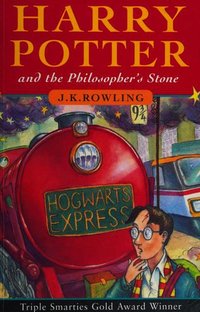
Harry Potter and the Philosopher's Stone
by J.K. Rowling
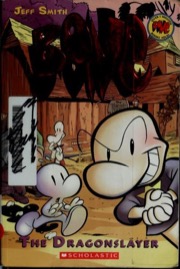
Bone #4: The Dragonslayer
by Jeff Smith
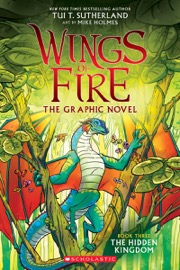
Wings of Fire: The Hidden Kingdom
by Tui T. Sutherland

The Neverending Story
by Michael Ende
Want more picks like this?
Get 5 hand-picked book reviews for your child's age — one email a month.