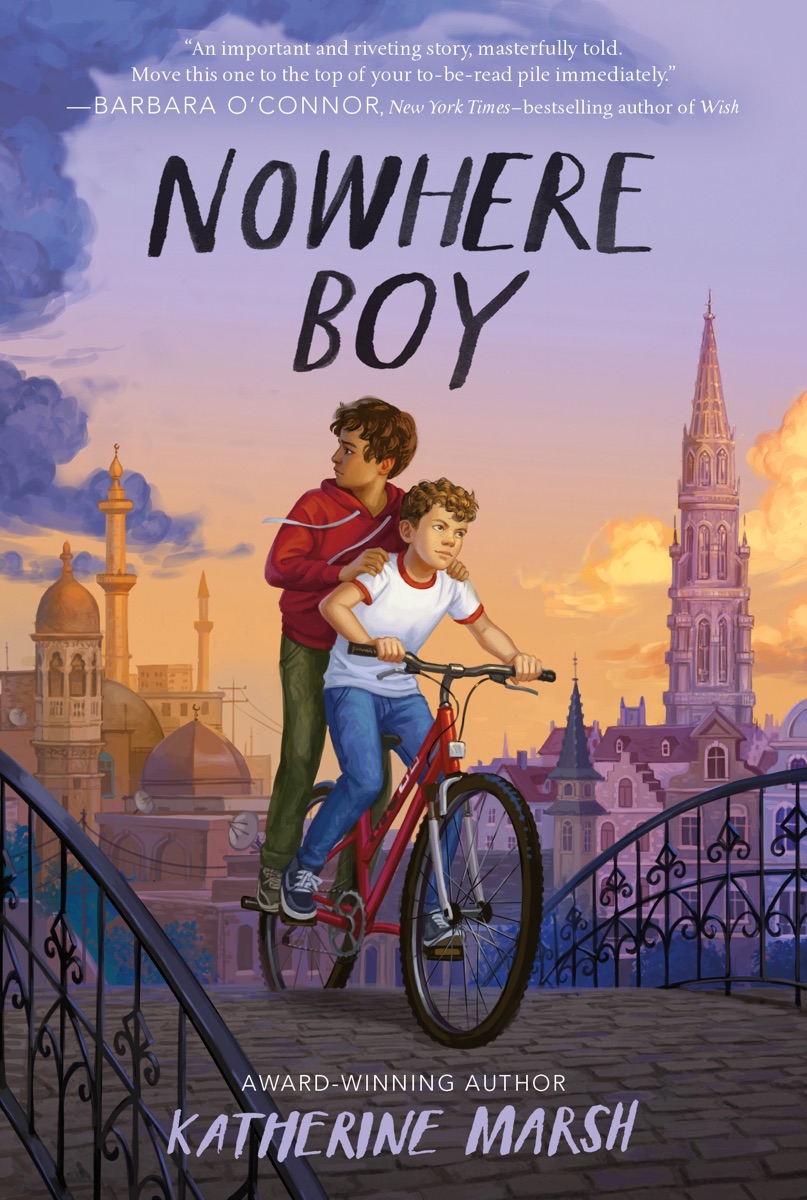
Nowhere Boy
by Katherine Marsh
Two boys — one a Syrian refugee, one an American expat — form an unlikely friendship in the basement of a Brussels townhouse
The story
When thirteen-year-old Max discovers a Syrian boy named Ahmed hiding in his family's basement in Brussels, he faces an impossible choice: report him or help him. As their secret friendship deepens against the backdrop of terrorist attacks and rising xenophobia, both boys discover what it truly means to be brave. A gripping adventure that makes the refugee crisis personal and deeply human.
Age verdict
Best for ages ten to thirteen — the emotional weight of refugee trauma and moral complexity rewards maturity, while the adventure plot and friendship story keep younger teens fully engaged.
Our take
Teachers and parents value this book significantly more than kids do — a powerhouse for classroom use and character development that kids respect deeply but don't find as entertaining as literary alternatives
What stands out
Each audience's top 3 dimensions. Out of 30 scored per book.
Kids love
- Heart-punch Exceptional
Comparable to Tristan Strong Punches a Hole in the Sky — Father-son bond established in opening sinking-boat chapter creates emotional investment across full narrative; grief-focused architecture (orchid tending, trauma disclosure); late reunion delivers gut-punch reframing all prior chapters. Sits at because both place grief as emotional engine; scores 9 vs 10 due to Tristan's more pervasive grief presence on every page.
- First-chapter grab Strong
Comparable to Lunch Lady and the Cyborg Substitute — Opens in-media-res with sinking boat, father's sacrifice, visceral survival terror from page 1 matching the cafeteria-line engagement. Sits at because both deliver immediate physical danger and high emotional stakes that grip readers instantly.
Parents love
- Real-world window Exceptional
Comparable to Blended — Syrian refugee crisis, European immigration policy, religious prejudice, post-terror-attack fear, Belgian culture/history, asylum detention systems, daily displacement reality woven into story that makes global headlines feel like personal experiences. Child finishes understanding refugees not as news but as two boys they care about. Sits at because both fully achieve the highest real-world window depth.
- Moral reasoning Exceptional
Should children break laws to protect endangered strangers? Are parents wrong prioritizing family safety? Is intellectual compassion meaningful without action? Gap between values and action explored without simplification. Sits at because both present persistent moral complexity across the full narrative without resolution.
Teachers love
- Cross-curricular value Exceptional
Tier 3: Comparable to A Wolf Called Wander — Connects to social studies (immigration, refugee policy, European politics), geography (Syria, Belgium, Hungary, train routes), history (Belgian resistance, WWII parallels), art (Magritte Museum), language (French/Arabic), current events. Teacher can bridge to 5+ subject areas with lesson-ready content. Sits below Wander because Wander's ecological content feels more naturally integrated into K-12 curriculum standards.
- Discussion fuel Exceptional
Tier 3: Comparable to Breakout — Generates genuine student disagreement on substantial questions: Is breaking laws justified when institutions fail? Should children take risks adults refuse? Are parents' concerns selfish or responsible? Every major plot point opens debatable question where students arrive at different answers based on values. Sits below because Breakout's three-POV structure generates slightly more multi-perspective disagreement.
✓ Perfect for
- • Readers ages 10-13 who are ready for emotionally rich stories about friendship
- • moral courage
- • and the real world. Especially powerful for kids curious about current events
- • different cultures
- • or what it means to do the right thing when it's hard.
Not ideal for
Very sensitive readers who may be distressed by descriptions of war trauma, family loss, and the refugee experience, or reluctant readers who need shorter, lighter fare to stay engaged.
⚠ Heads up
At a glance
- Pages
- 368
- Chapters
- 73
- Words
- 78k
- Lexile
- 810L
- Difficulty
- Moderate
- POV
- Alternating
- Illustration
- None
- Published
- 2018
- Publisher
- Roaring Brook Press
- ISBN
- 9781250307576
Mood & style
You'll know it worked when…
Most readers will finish — the seventy-three short chapters create constant momentum, and the dual perspective generates a persistent need to find out what happens to both boys. The second half accelerates into an adventure that makes the book genuinely hard to put down.
More like this
Same genre, similar age range. Ranked by kid score.
Lu
by Jason Reynolds

The Absolutely True Diary of a Part-Time Indian
by Sherman Alexie
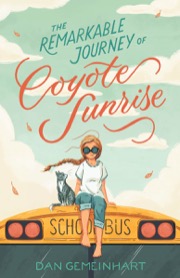
The Remarkable Journey of Coyote Sunrise
by Dan Gemeinhart
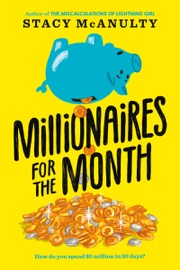
Millionaires for the Month
by Stacy McAnulty
Want more picks like this?
Get 5 hand-picked book reviews for your child's age — one email a month.