
Not Now, Bernard
by David McKee
A deadpan dark-comedy classic about a boy nobody listens to — and what happens when a monster shows up and still nobody looks.
The story
Bernard tries twice to tell his distracted parents something important. Both times they're too busy. He goes out to the garden anyway — where, it turns out, a monster is waiting — and the rest of the evening unfolds without his parents quite catching up to what's happening under their own roof. David McKee's 1980 picture book uses a single four-word refrain, some of the most economical prose in the British picture-book canon, and his trademark pattern-and-solid-colour illustrations to deliver a quietly devastating meditation on the cost of not really listening.
Age verdict
Best at ages 4-7, rewards re-reading through age 10+; preview once before the first read if your child is a sensitive 3-4.
Our take
classroom-and-parent-craft-exemplar: read-aloud and mentor-text strengths carry the teacher score, while parent-scored literary quality and conversation-starter value anchor strong craft signals; kid enjoyment is real but capped by the deliberately unresolved ending
What stands out
Each audience's top 3 dimensions. Out of 30 scored per book.
Kids love
- Mental movie Strong
McKee's visual design is engine-level memorable — pattern-saturated interiors against solid-colour figures produce images that imprint on first reading. Each caption is one short sentence; the mental movie is generated entirely by the illustration-page pairing, much like Don't Let the Pigeon Drive the Bus! (9, 'illustrations ARE the story'). Not quite the painted worldbuilding of 5 Worlds (10), but in a picture-book register the visual uniqueness lands at that tier's edge.
- Playground quotability & cool factor Strong
The phrase 'Not now, Bernard' has entered British parenting vocabulary as shorthand for the distracted adult — adults quote it at each other, cite it in essays, repurpose it on social media. That is cultural currency stronger than Knuffle Bunny's 'Aggle flaggle klabble!' (7) because the phrase is used by both kids and adults outside the book. Not at the political-protest-symbol level of Mockingjay (10) or the universal kid-concept of Artemis Fowl (8, 'about a twelve-year-old criminal mastermind'), but solidly in the catchphrase-has-left-the-book band.
Parents love
- Writing quality Strong
Masterful economy: every caption is one short sentence, every repeated phrase is exactly the same, the single out-of-pattern line ('But I'm a monster') lands with disproportionate force precisely because the pattern was held with such rigour. Studied in UK writing courses as a craft exemplar. Sits alongside Interrupting Chicken (8, mastery of register at the sentence level) in picture-book craft; the dual-audience operation is unusually strong for the form. Not the novel-length voice achievement of Illuminae (9) or Narwhal (10, 'mastery of dialogue at the sentence level').
- Reading gateway Strong
Exceptional entry point: 26 pages, one short caption per spread, a refrain pre-readers can chant along to, humour that rewards a second reading. On UK book-fair lists and classroom primary reading lists for four decades. Comparable to A Bear Called Paddington (8, short illustrated chapters, accessible vocabulary, episodic structure) and below Frog and Toad Together (9, 'designed as an I Can Read Level 2 book') and 5 Worlds (10, 'graphic novel format eliminates reading barriers') — those are engineered-for-gateway with larger page-budgets; NNB is gateway by virtue of economy and cultural reach.
Teachers love
- Read-aloud power Exceptional
Read-aloud gold: flat captions deliver easily, the refrain invites a pause for the group to chant along, and the single-sentence-per-spread rhythm is perfectly sized for 4-6-year-old attention. UK primary schools use it as a whole-class reading text for EYFS and Year 1. Sits at the same tier as Sylvester and the Magic Pebble (9, 'designed for oral delivery — the prose rhythm is naturally speakable'); just below Interrupting Chicken (10, 'best-in-class picture-book read-aloud — built explicitly for performance with two voices').
- Discussion fuel Strong
An exceptional discussion-fuel engine for 180 words: 'Was Bernard really eaten?' 'Do the parents ever notice?' 'Is the monster really Bernard?' 'Whose fault is this?' Sits alongside Blended (8) and above Fantastic Mr Fox (7, 'genuine disagreement among students') — the ambiguous ending is a controlled detonation of classroom discussion. Below Breakout (10, 'nearly every theme generates student disagreement'), but delivered in a fraction of the pages.
✓ Perfect for
- • kids who like absurd or slightly dark humour in picture books
- • parents who appreciate craft and a grown-up layer under a children's book
- • families wanting a conversation starter about really listening
- • teachers building early literacy through repetition and rhythm
- • ESL beginners and reluctant early readers
Not ideal for
very young or easily unsettled children who need a reassuring reunion at the end of every book; the ending is deliberately unresolved and a small boy is eaten on-page (bloodless but genuine)
⚠ Heads up
At a glance
- Pages
- 32
- Chapters
- 6
- Words
- 0k
- Difficulty
- Easy
- POV
- Third Person Omniscient
- Illustration
- Fully Illustrated
- Published
- 1980
- Publisher
- Andersen Press
- Illustrator
- David McKee
Mood & style
You'll know it worked when…
A 26-page main story in about 180 words — roughly a 5-minute read-aloud. Completion is never the question; re-reads are the norm, and many families return to it for years.
More like this
Same genre, similar age range. Ranked by kid score.
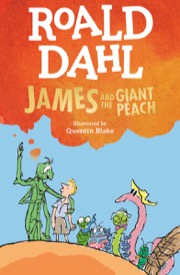
James and the Giant Peach
by Roald Dahl
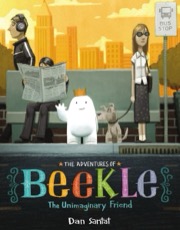
The Adventures of Beekle: The Unimaginary Friend
by Dan Santat
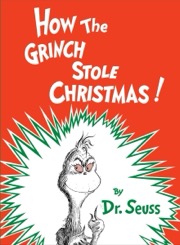
How the Grinch Stole Christmas!
by Dr. Seuss
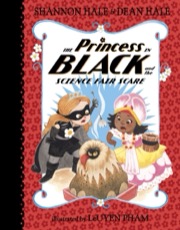
The Princess in Black and the Science Fair Scare
by Shannon Hale and Dean Hale
Want more picks like this?
Get 5 hand-picked book reviews for your child's age — one email a month.