
Little House on the Prairie
by Laura Ingalls Wilder · Little House #2
A frontier adventure that opens a window into pioneer America — rich in sensory detail, moral complexity, and family warmth
The story
When Pa decides the Big Woods of Wisconsin are getting too crowded, the Ingalls family packs their covered wagon and heads west to Indian Territory. Laura, her parents, sister Mary, and baby Carrie face creek crossings, wolf packs, and prairie fires as they build a new home from scratch on the vast Kansas prairie. Through it all, Pa's fiddle and Ma's steady presence hold the family together.
Age verdict
Best for ages 8-11, works as read-aloud for younger children with parent guidance
Our take
Classroom classic: strongest for teachers (77) and parents (69), with moderate kid appeal (60). A book adults value more than children choose independently.
What stands out
Each audience's top 3 dimensions. Out of 30 scored per book.
Kids love
- Mental movie Strong
Wilder's sensory economy creates extraordinarily vivid mental images — the creek crossing with rushing water and Ma's sharp command, the infinite prairie stretching in every direction, the wall of prairie fire with thousands of fleeing rabbits. Few MG novels achieve this level of visual immersion through prose alone, approaching Lunch Lady (8) despite having no illustrations.
- New world unlocked Strong
For most modern children, this book opens a genuinely unknown world — covered wagons, log-cabin building from scratch, Indian Territory, prairie fires, and frontier survival without neighbors or stores. Pa's step-by-step house construction teaches readers how frontier structures are made, rivaling Earthquake in the Early Morning (8) for historical world-unlocking.
Parents love
- Real-world window Exceptional
The entire book IS a real-world window into 1870s frontier life — every chapter teaches how houses were built, how families traveled by covered wagon, how settlers interacted with Native Americans, how prairie fires were fought. The historical content is extraordinarily dense and specific, surpassing Brian's Winter (7) in breadth and approaching Lafayette\! (9) in comprehensive historical window.
- Re-read durability Strong
Generations of readers have returned to this book and found it holds up — different details emerge on each reading, emotional moments gain depth with maturity, and the historical context becomes richer as understanding grows. The sensory passages reward closer attention, and the moral complexity reveals new layers over time, matching A Deadly Education (8) in reread rewards.
Teachers love
- Cross-curricular value Exceptional
Exceptionally rich connections across subjects — US History (westward expansion, Indian removal policy, Homestead Act), geography (Great Plains, Kansas Territory), science (prairie ecology, fire behavior), social studies (settler-Native relations, frontier economics), and art (Garth Williams illustration study). Approaching A Wolf Called Wander (10) in cross-curricular density.
- Read-aloud power Strong
Wilder's prose reads beautifully aloud — the retrospective opening is naturally performable, the prairie passages have rhythmic repetition that creates oral musicality, and dialogue is conversational and natural. Short declarative sentences create natural pause points for young listeners, comparable to Gathering Blue (8) in prosodic quality.
✓ Perfect for
- • readers who love adventure and survival stories
- • children interested in American history and pioneer life
- • families looking for rich read-aloud material with discussion potential
- • kids who enjoy learning how things are built and made
Not ideal for
Readers seeking fast-paced action, humor-driven stories, or contemporary settings may find the measured pacing and historical language challenging. Parents should be aware of the book's portrayal of Native Americans, which reflects settler prejudices of the era.
⚠ Heads up
At a glance
- Pages
- 335
- Chapters
- 26
- Words
- 52k
- Lexile
- 760L
- Difficulty
- Moderate
- POV
- Third Person Limited
- Illustration
- Sparse
- Published
- 1935
- Publisher
- Harper & Brothers
- Illustrator
- Garth Williams
Mood & style
You'll know it worked when…
The family's covered wagon rolls forward under a wide starlit sky, Pa's fiddle playing a gentle lullaby as Laura drifts to sleep — a warm, forward-facing close that feels like coming home.
More like this
Same genre, similar age range. Ranked by kid score.
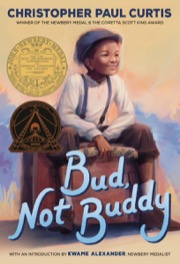

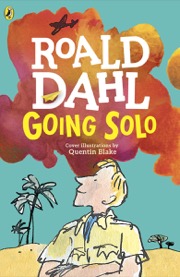
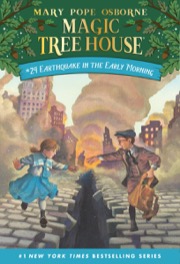
Want more picks like this?
Get 5 hand-picked book reviews for your child's age — one email a month.