
Lauren Ipsum: Uma história sobre ciência da computação e outras coisas improváveis
by Carlos Bueno
An Alice in Wonderland for the computer age — teaches computational thinking through story, not textbook
The story
When Laurie gets lost in a fantastical land called Userland, she must solve a series of puzzles to find her way home. Along the way, she meets eccentric characters who teach her about algorithms, encryption, probability, and the power of naming things — all without ever mentioning computers. With her loyal companion Xor (a color-changing creature with delusions of invisibility), Laurie discovers that the most important lesson is knowing when to follow the map and when to think for yourself.
Age verdict
Best for ages 9-11. Younger readers can enjoy the adventure; older readers will appreciate the CS concepts more fully.
Our take
A STEM-education powerhouse that excels as a teaching tool (T4=9, T2=8, T7=8, T10=8) while delivering moderate kid engagement through its whimsical quest structure. The teacher scorecard significantly outpaces kid and parent scores, reflecting a book designed to educate through narrative.
What stands out
Each audience's top 3 dimensions. Out of 30 scored per book.
Kids love
- New world unlocked Strong
This is the book's standout kid attribute. It opens genuine doors to computational thinking — algorithms, encryption, probability, abstraction, heuristics, infinite series — all through story rather than textbook. A curious kid will emerge with new mental tools for problem-solving. Comparable to Earthquake in the Early Morning (8) — introduces a specific knowledge domain that changes how kids think about the world.
- Ending satisfaction Strong
The ending on Abstract Island delivers a satisfying thematic payoff — Laurie realizes she was pursuing the optimal path algorithm for the wrong reasons and chooses to become Ganhalgo's assistant instead. The resolution is intellectually earned through the entire journey, rewarding readers who followed the conceptual thread. Comparable to A Deadly Education (7) — a climax that uses the book's entire premise.
Parents love
- Vocabulary builder Strong
Rich vocabulary introduced naturally through context — heurística, parameterização, convergência, abstração. The CS terminology becomes comprehensible through story mechanics rather than definitions. For Portuguese-language readers, the technical vocabulary is introduced alongside everyday Brazilian Portuguese. Comparable to Amal Unbound (7) — domain-specific vocabulary woven organically into narrative.
- Stereotype-breaker Strong
A female protagonist who solves CS problems through logic and persistence, mentored by diverse characters including Epônima (elderly eccentric female inventor) and Ganhalgo (tough-but-nurturing female pirate-figure). The book actively subverts the 'girls don't code' stereotype without ever mentioning it. Comparable to A Snicker of Magic (7) — quietly subverts multiple conventions through character rather than message.
Teachers love
- Cross-curricular value Exceptional
Outstanding cross-curricular value — the strongest attribute for this book. Direct connections to computer science (algorithms, encryption, probability, abstraction, optimization), mathematics (infinite series, binary search, probability), logic (syllogisms, formal reasoning), and philosophy (naming, abstraction, pragmatism vs. perfectionism). Each chapter maps to a specific CS concept with real-world applications. Comparable to A Reaper at the Gates (9) for breadth of cross-curricular reach.
- Classroom versatility Strong
Exceptionally versatile in classroom use: read-aloud for individual chapters, novel study for the full arc, literature circles with CS cross-references, independent reading for advanced readers. Each chapter works as a standalone lesson. The episodic structure allows teachers to use selected chapters without committing to the full book. Comparable to Eyes That Kiss (8) — works across multiple grade levels with different entry points.
✓ Perfect for
- • Curious kids who love puzzles and brain teasers
- • Young readers interested in how computers and coding work
- • Kids who enjoy Alice in Wonderland-style fantasy adventures
- • STEM-oriented families looking for fiction that sparks analytical thinking
Not ideal for
Readers seeking action-driven adventure, emotional depth, or character-driven drama. The intellectual puzzle format may frustrate kids who prefer fast-paced plots or strong emotional arcs.
At a glance
- Pages
- 192
- Chapters
- 15
- Words
- 40k
- Lexile
- HL540L
- Difficulty
- Moderate
- POV
- Third Person Limited
- Illustration
- Sparse
- Published
- 2015
- ISBN
- 9788575224717
Mood & style
You'll know it worked when…
Complete standalone adventure with a satisfying thematic resolution.
More like this
Same genre, similar age range. Ranked by kid score.
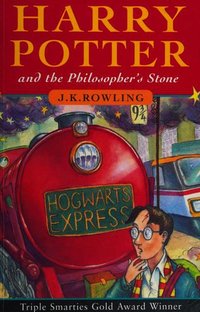
Harry Potter and the Philosopher's Stone
by J.K. Rowling
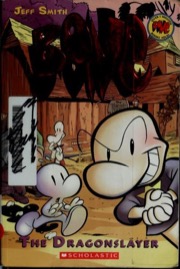
Bone #4: The Dragonslayer
by Jeff Smith
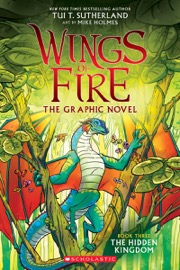
Wings of Fire: The Hidden Kingdom
by Tui T. Sutherland

The Neverending Story
by Michael Ende
Want more picks like this?
Get 5 hand-picked book reviews for your child's age — one email a month.