
Jasmine Toguchi, Drummer Girl
by Debbi Michiko Florence · Jasmine Toguchi #3
A spirited Japanese-American girl discovers taiko drumming and learns that practice, joy, and kindness matter more than perfection
The story
When a talent show is announced at school, eight-year-old Jasmine Toguchi feels left out — all her friends already have special talents. Her mom introduces her to taiko, a traditional Japanese drum, and Jasmine discovers she loves the powerful sounds and rhythms. But learning a new skill takes practice, and performing on stage takes courage. Along the way, Jasmine learns that the most important talent might be knowing how to be kind.
Age verdict
Best for ages 7-9. The performance anxiety and peer comparison themes hit hardest for kids navigating similar school dynamics. Clean content with no concerns beyond mild embarrassment and self-doubt.
Our take
A well-crafted early chapter book that excels as a classroom tool — rich in cross-curricular connections, discussion fuel, and project potential — while delivering solid kid engagement through a relatable talent-show arc and genuine emotional beats. Parent value centers on cultural representation and conversation-starting themes rather than literary ambition.
What stands out
Each audience's top 3 dimensions. Out of 30 scored per book.
Kids love
- Middle momentum Strong
Every chapter ending either escalates stakes or shifts direction — from exhilaration to doubt, from failure to solution — so the middle never sags despite a learning-montage structure. Dual timing clocks (Friday dress rehearsal, Saturday show) create urgency comparable to Breakout's (7) 22-day manhunt ticking clock, with escalating complications (cannot practice without a drum, Ch8) preventing any lull.
- Ending satisfaction Strong
Multiple threads resolve cleanly: Jasmine performs successfully with the real taiko, finishes with her signature Flamingo Pose, and then pivots from personal triumph to reaching out to Maggie — reframing what 'winning' means. The resolution is emotionally complete without being simplistic, comparable to A Deadly Education (7) where the climax delivers a thrilling payoff while the aftermath adds emotional complexity.
Parents love
- Stereotype-breaker Strong
Jasmine is a fully realized Japanese-American protagonist defined by her agency, emotions, and growth — never reduced to cultural markers or model-minority stereotypes. The book embeds specific cultural practices (taiko, mochi-pounding, hachi-maki, obi-chan/onee-chan honorifics) as natural family life rather than explanatory set pieces. Taiko is presented as a legitimate art form requiring discipline and joy, not exoticized. Maggie transcends the one-dimensional rival archetype when her failure reveals insecurity. Stronger than A Snicker of Magic (7) because cultural identity is integral rather than incidental — recognized by Cybils Award and CCBC Choices for authentic representation. Comparable to A Wolf Called Wander (8) for systematically presenting a subject against stereotype through accumulated specific detail.
- Real-world window Strong
Provides an authentic, unforced window into Japanese-American family life: omusubi with nori and pickled radish, taiko as cultural tradition, the hachi-maki as a badge of courage, and Mom's college taiko history. The school talent show captures realistic third-grade dynamics (peer comparison, performance anxiety, the politics of who has what talent). Comparable to Brian's Winter (7) for depth of real-world content, though cultural rather than ecological.
Teachers love
- Read-aloud power Strong
Built for oral performance: the opening xylophone sound effects, the taiko counting sequences ('Ichi, ni, san, SO-RE!' and 'HA!'), and the performance scenes all have natural rhythm and opportunities for class participation. Sentence-length variation mirrors emotional pacing — short bursts during anxiety, flowing sentences during calm — making this engaging to read aloud. Comparable to The Golem's Eye (7) for highly performable voice with dramatic timing and multiple tonal registers.
- Classroom versatility Strong
Works across multiple classroom contexts: independent reading for grades 2-4, read-aloud for grades 1-3, novel study or literature circles for grades 2-3, and thematic units on cultural identity, growth mindset, or performing arts. The talent show framework adapts easily to classroom talent shows or performance units. Multiple character talents (piano, yo-yo, ballet, violin, taiko) provide diverse entry points. Comparable to A Deadly Education (7) for strong multi-format classroom use.
✓ Perfect for
- • Kids who worry about not being good enough
- • Readers interested in Japanese culture and traditions
- • Children preparing for their own performances or talent shows
- • Families looking for growth-mindset stories without preachiness
Not ideal for
Readers seeking action, fantasy, or humor-driven stories — this is a quiet, character-driven realistic fiction book about emotions and personal growth
At a glance
- Pages
- 128
- Chapters
- 13
- Words
- 13k
- Lexile
- 560L
- Difficulty
- Easy
- POV
- Third Person Limited
- Illustration
- Moderate
- Published
- 2018
- Publisher
- Farrar, Straus and Giroux
- Illustrator
- Elizabet Vukovic
Mood & style
You'll know it worked when…
Short chapters and consistent pacing make this a great choice for newly independent readers looking to finish a whole book
More like this
Same genre, similar age range. Ranked by kid score.
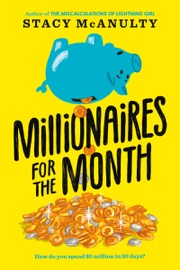
Millionaires for the Month
by Stacy McAnulty
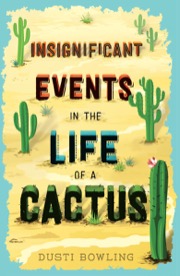
Insignificant Events in the Life of a Cactus
by Dusti Bowling

The Season of Styx Malone
by Kekla Magoon

EllRay Jakes Is Not a Chicken
by Sally Warner
Want more picks like this?
Get 5 hand-picked book reviews for your child's age — one email a month.