
Hop on Pop
by Dr. Seuss
The foundational phonics classic that has taught generations of children to read through silly rhymes and Seussian absurdity.
The story
A collection of short rhyming vignettes organized by word families, each pairing simple phonetic patterns with absurdist illustrations. Characters named Pat, Red, and Mr. Brown appear briefly in self-contained scenarios that teach sound-letter relationships through humor and repetition.
Age verdict
Best for ages 4-6 as an independent reading tool. Works as a read-aloud for ages 3-4. May bore readers over 7 unless used for specific phonics instruction.
Our take
A foundational literacy tool that excels as a classroom and teaching resource while offering genuine entertainment value for kids, but with limited depth for parent growth priorities.
What stands out
Each audience's top 3 dimensions. Out of 30 scored per book.
Kids love
- Laugh-out-loud Strong
Multiple absurdist humor channels fire across the book: Pat sitting on progressively inappropriate objects (hat, cat, bat) builds escalating slapstick, fish living in a tree delivers surreal nonsense, and Mr. Brown going upside down creates visual comedy. Stronger than Diary of a Wimpy Kid: Hard Luck (6, MG) in laugh density per page, though less inventive than Don't Let the Pigeon's (9, PICTURE) escalating persuasion comedy because each vignette resets rather than building cumulative absurdity.
- Playground quotability & cool factor Strong
The title phrase is one of the most recognized in children's literature, and individual lines like the fish-in-a-tree question have entered the cultural vocabulary of early childhood. The book's brand recognition gives it enormous cultural currency at preschool and kindergarten level. Stronger than Knuffle Bunny's (7, PICTURE) catchphrase because the title itself has become shorthand for beginner reading, though it lacks Artemis Fowl's (8, MG) concept-driven cool factor.
Parents love
- Reading gateway Exceptional
This is one of the most effective reading gateways ever created for emergent readers. Zero reading barrier, immediate pattern-recognition success, and the progressive difficulty from simple pairs to multi-word clusters builds confidence with each page turn. The book is subtitled 'The Simplest Seuss for Youngest Use' and delivers on that promise completely. Stronger than Frog and Toad's (9, EARLY) I-Can-Read design because the entry point is even lower, requiring only letter recognition rather than word-level decoding.
- Re-read durability Strong
Phonics books require repeated reading for mastery, and each re-read strengthens pattern recognition and builds automaticity. The predictability that limits surprise actually enhances re-read value for the target audience. The absurdist humor remains fresh across multiple readings because young children find repetition satisfying rather than boring. Comparable to Alma's (7, PICTURE) layered re-read rewards but through a developmental-mastery mechanism rather than hidden narrative depth.
Teachers love
- Read-aloud power Exceptional
Anapestic rhythm creates a natural bounce that makes oral delivery effortless and pleasurable. Short lines provide breath points, rhyme and sound repetition are orally satisfying, and children can chant along with predictable patterns. Designed for participatory performance. At the level of Sylvester and the Magic Pebble (9, PICTURE) in oral-delivery design, though it lacks Interrupting Chicken's (10, PICTURE) dramatic voice-register variation because there are no distinct character voices to perform.
- Reluctant reader rescue Exceptional
Zero reading barrier: the first line requires recognizing only three simple words, and immediate success builds confidence. Every page delivers a complete, satisfying micro-reading experience. The humor rewards effort, and the short vignette structure means a child never faces an intimidating wall of text. Stronger than Babymouse's (8, GRAPHIC) visual-story format because Hop on Pop's barrier is lower: it works for pre-readers and emergent readers, not just struggling readers who can already decode basic text.
✓ Perfect for
- • Emergent readers ages 4-6 learning to decode
- • Children who respond to silly humor and absurdist scenarios
- • Parents looking for a structured phonics read-aloud
- • ESL beginners needing high-interest low-language entry points
- • Teachers building a classroom phonics library
Not ideal for
Children already reading independently at a first-grade level or above will find the content too simple. Readers seeking narrative or emotional depth will not find it here — this is a phonics tool, not a story.
At a glance
- Pages
- 64
- Chapters
- 15
- Words
- 0k
- Lexile
- 190L
- Difficulty
- Easy
- POV
- Third Person Omniscient
- Illustration
- Fully Illustrated
- Published
- 1963
- Illustrator
- Dr. Seuss
Mood & style
You'll know it worked when…
When a child can decode all word families without illustration support and begins generating their own rhyming words, the book has done its job.
More like this
Same genre, similar age range. Ranked by kid score.
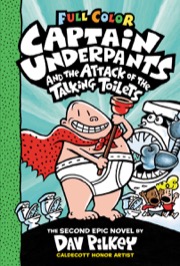
Captain Underpants and the Attack of the Talking Toilets
by Dav Pilkey
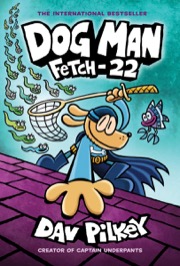
Dog Man: Fetch-22
by Dav Pilkey
Don't Let the Pigeon Drive the Bus!
by Mo Willems
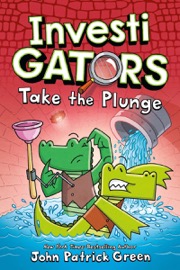
InvestiGators: Take the Plunge
by John Patrick Green
Want more picks like this?
Get 5 hand-picked book reviews for your child's age — one email a month.