
Cattywampus
by Ash Van Otterloo
Two Appalachian girls from rival witch families must team up when their magic goes cattywampus.
The story
Delpha McGill, a hardworking 12-year-old from a poor Appalachian family, finds her grandmother's forbidden spellbook and begins practicing magic in secret. Katybird Hearn, from the rival Hearn witch family, is struggling with magic that hasn't fully emerged and with questions about who she is. When their paths collide and their spellwork goes wrong, the girls must set aside their families' feud and their own self-doubt to fix what they've broken. A warm-hearted fantasy about identity, friendship, and claiming your difference as your power.
Age verdict
Best for 9-12; works for mature 8-year-olds and comfortable 13-year-olds.
Our take
Thoughtful fantasy that adults and educators admire for its restraint and representation; kids enjoy the magic-and-zombies plot but the payoff is quieter than the genre sometimes promises.
What stands out
Each audience's top 3 dimensions. Out of 30 scored per book.
Kids love
- Character voice Strong
Two distinctly-voiced 12-year-old narrators: Delpha's clipped Appalachian directness ('dad-blasted,' 'ain't,' 'Yep.') contrasts Katybird's longer introspective sentences. Swap test passes cleanly. Stronger than Percy Jackson (7, one strong voice) but below Bridge to Terabithia (9, achingly specific interiority). Closest match: Out of My Mind (8, layered interiority with consistent voice).
- Ending satisfaction Strong
Lopsided-tree finale explicitly returns to the title word — 'a little cattywampus' becomes the book's thesis about imperfection as power. All four arcs (zombies, friendship, identity, family) land in proportion. Stronger than A Wrinkle in Time (7, abrupt resolution) but below Charlotte's Web (9, devastating perfection). Closest match: Tuck Everlasting (8, thematic closure with image).
Parents love
- Stereotype-breaker Exceptional
Trans girl protagonist whose identity is integrated through magical metaphor rather than treated as tragedy or lesson; Appalachian family portrayed with cultural respect rather than parody; poor girl protagonist (Delpha) written with dignity rather than pity; deaf supporting character (Caleb) is a full participant, not a token. Stronger than The Night Diary (8, dual-identity protagonist) and matches Ghost (9, class and race with dignity). Closest match: Ghost (9, marginalized kid centered with full interiority).
- Writing quality Strong
Prose is precise and image-led — 'a crack in the ceiling blinked out a tear' is a small but characteristic moment where an unexpected verb earns its place. Metaphor (wasp-swarm soul, universe-shaped hole) is specific and restrained; author trusts the reader. Stronger than Maze Runner (7, serviceable propulsive prose) but below Tuck Everlasting (10, literary-grade craft). Closest match: The Girl Who Drank the Moon (8, lyrical but accessible).
Teachers love
- Empathy & self-awareness Exceptional
Empathy is the book's central mechanism — Katybird realizes Puppet is 'lonely,' the girls move from rivalry to mutual recognition, Delpha's isolation is lovingly exposed by the narrator, and the trans-identity thread asks readers to expand their understanding of 'different.' Stronger than Wonder (9, sustained empathy building) — essentially tied. Closest match: Wonder (9, empathy as central pedagogy).
- Discussion fuel Strong
Dual narrators invite perspective-and-bias discussions (Ch. 1-12); the theft reversal (Ch. 11) is an ethics case study; Katybird's public declaration (Ch. 24) anchors discussions about courage, disclosure, and identity; the magic-as-metaphor structure opens interpretive conversations. Stronger than Dog Man (4, limited discussion surface) but below The Giver (10, philosophy-dense). Closest match: Wonder (8, identity and empathy discussions).
✓ Perfect for
- • readers who loved The Girl Who Drank the Moon or Small Spaces
- • kids drawn to magic-and-friendship stories with real emotional weight
- • families looking for a gentle, respectful trans representation in middle grade
- • readers interested in Appalachian settings and regional voice
Not ideal for
Readers wanting fast-paced pure-action fantasy or laugh-out-loud comedy; dialect may slow the most reluctant readers.
⚠ Heads up
At a glance
- Pages
- 288
- Chapters
- 30
- Words
- 65k
- Lexile
- 810L
- Difficulty
- Moderate
- POV
- Alternating
- Illustration
- None
- Published
- 2020
- Publisher
- Scholastic Press
Mood & style
You'll know it worked when…
Readers who engage with the opening voice and accept the dialect will almost certainly finish; the zombie-crisis midpoint pulls reluctant readers across the finish line.
More like this
Same genre, similar age range. Ranked by kid score.
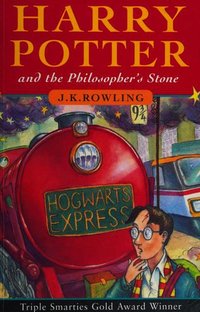
Harry Potter and the Philosopher's Stone
by J.K. Rowling
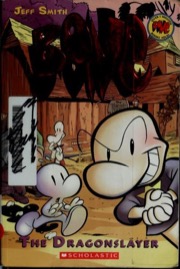
Bone #4: The Dragonslayer
by Jeff Smith
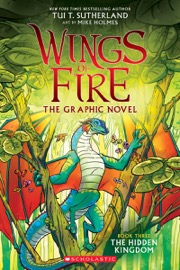
Wings of Fire: The Hidden Kingdom
by Tui T. Sutherland

The Neverending Story
by Michael Ende
Want more picks like this?
Get 5 hand-picked book reviews for your child's age — one email a month.