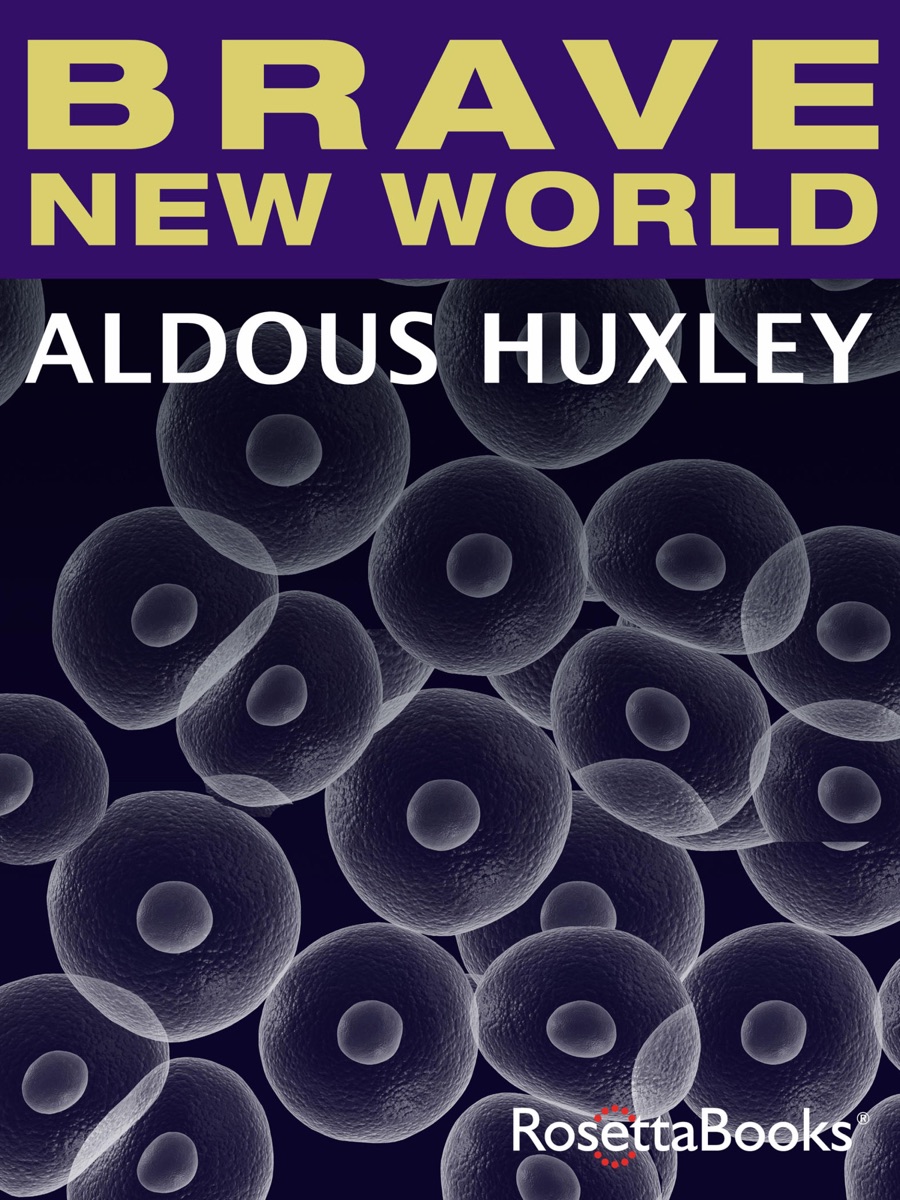
Brave New World
by Aldous Huxley
A brilliant, provocative dystopian classic that challenges teens to question everything about freedom, happiness, and what makes life meaningful.
The story
In a gleaming future society where humans are engineered in bottles, sorted into castes, and kept content through a perfect pleasure drug, everyone is happy — and no one is free. When an outsider raised on Shakespeare and ancient values encounters this world of manufactured bliss, the collision between authentic human feeling and engineered contentment forces the most profound question in literature: is a life without suffering worth living?
Age verdict
Best for ages 15-18. Works at 13-14 with teacher guidance and discussion. Contains drug use, casual sexuality, and philosophical darkness that require emotional maturity to process constructively.
Our take
Literary classic with exceptional educational and intellectual value but limited kid-engagement appeal — a book adults love assigning more than kids love reading, though it profoundly rewards those teens who engage with it.
What stands out
Each audience's top 3 dimensions. Out of 30 scored per book.
Kids love
- Heart-punch Strong
a mother's deterioration across two worlds, a young man's recognition that his values cannot exist in this society. Multiple genuine emotional peaks earned through careful accumulation. Sits at this level because the restraint makes feeling sharper, not weaker.
- Character voice Strong
Comparable to The Golem's Eye — John's Shakespearean passion, Bernard's hesitant irony, Lenina's shallow directness, and Mond's urbane authority are wildly distinct. Sits above because readers can identify speakers without tags and each voice is philosophically consistent, not just a verbal tic.
Parents love
- Moral reasoning Exceptional
Comparable to Gathering Blue (P4=9, escalated via Tier 3) — The philosophical debate between John and the World Controller is one of literature's great moral arguments. Is stability worth freedom? Can happiness without suffering be meaningful? The novel refuses easy answers, forcing readers to hold contradictory truths. Sits above because the Controller's position is genuinely partially convincing.
- Parent-child conversation starter Exceptional
Would you take soma? Is social media conditioning? Can you be happy without suffering? These questions bridge naturally from the novel to a teen's real life. Sits at the anchor because the book's refusal to provide easy answers makes conversations genuinely collaborative.
Teachers love
- Discussion fuel Exceptional
Is Mond right? Is John's resistance noble or futile? Students bring experiences with social media, conformity, and pharmaceutical culture to questions that feel personal and urgent. Sits at the anchor because discussions are intrinsically motivated by student real-world experience.
- Critical thinking development Exceptional
Comparable to Gathering Blue — The novel is essentially a critical thinking exercise. Students must evaluate competing philosophical claims, distinguish comfort from genuine wellbeing, question assumptions about progress and technology, and hold contradictory positions simultaneously. Sits at the anchor because passive readers miss the point entirely.
✓ Perfect for
- • Teens who love philosophical questions and moral debates
- • Readers ready for challenging literary classics
- • Fans of dystopian fiction who want the genre's intellectual origin point
- • Students preparing for AP Literature or college-level reading
Not ideal for
Readers who need action-driven plots, hopeful endings, or lighter emotional content. The philosophical density and tragic conclusion require intellectual maturity and tolerance for unresolved moral questions.
⚠ Heads up
At a glance
- Pages
- 288
- Chapters
- 12
- Words
- 63k
- Lexile
- 870L
- Difficulty
- Challenging
- POV
- Third Person Omniscient
- Illustration
- None
- Published
- 1932
- Publisher
- Longman
- ISBN
- 9780060850524
Mood & style
You'll know it worked when…
Teens who finish this book want to argue about it — with parents, teachers, and friends. If your teen starts asking whether social media is a form of conditioning or whether comfort is the enemy of meaning, the book has done its work.
More like this
Same genre, similar age range. Ranked by kid score.
Want more picks like this?
Get 5 hand-picked book reviews for your child's age — one email a month.