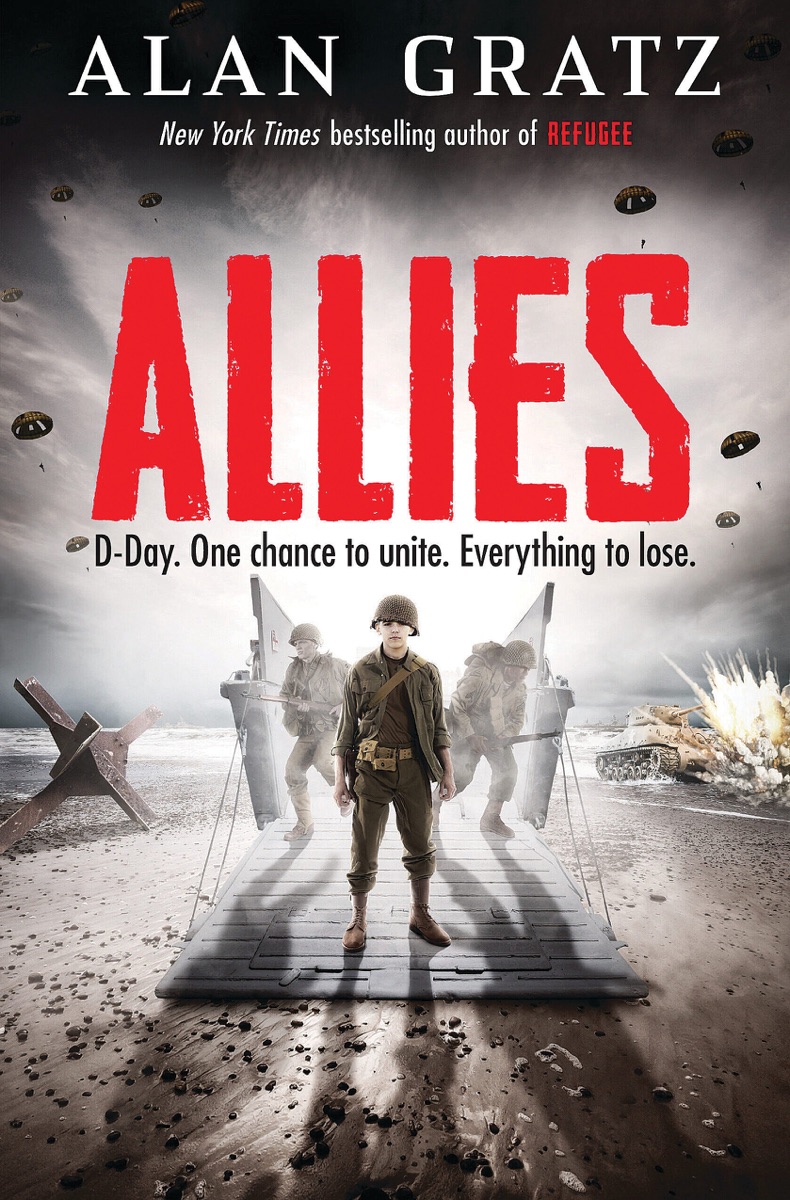
Allies
by Alan Gratz
A D-Day epic told through seven perspectives that shows war's human cost and the power of choosing who you fight alongside.
The story
On June 6, 1944, Allied forces storm the beaches of Normandy. Through the eyes of seven characters — an American soldier hiding his German heritage, a French spy working for the Resistance, Canadian paratroopers, a Black American medic, a British tank crew, and a French girl caught in the crossfire — this novel captures the chaos, courage, and moral complexity of the most important day of World War II.
Age verdict
Publisher says 8-12, but the combat violence and emotional weight of prejudice and identity themes make this best for mature 10-14 year-olds. A strong companion to WWII history curriculum for grades 5-8.
Our take
Teacher-favored historical fiction with exceptional cross-curricular value and moral depth, but limited humor and playground appeal reduce kid engagement relative to classroom utility.
What stands out
Each audience's top 3 dimensions. Out of 30 scored per book.
Kids love
- Middle momentum Strong
ticking-clock engagement sustained throughout.
- Heart-punch Strong
Comparable to A Court of Mist and Fury — Moment when Sid discovers Dee's German heritage and aims a rifle at him delivers devastating emotional blow earned through genuine friendship chapters. Sits below anchor: single major emotional climax rather than continuous architecture. Sits at 8: one earned peak rather than multi-chapter saturation.
Parents love
- Real-world window Exceptional
Comparable to Blended — D-Day invasion rendered with historical accuracy across multiple national perspectives. Military segregation, antisemitism, gender barriers, French Resistance, and occupied territories' political dynamics central to narrative, not decorative. Sits at 9: exceptional historical window (more specific scope than Blended's contemporary family realism).
- Stereotype-breaker Strong
German-born American fights for Allies (not enemy), Black medic demonstrates competence defying racist army, woman reporter disguises self to witness history, teenage girl discovers agency amid chaos. Sits at anchor: systematic stereotype-breaking matches.
Teachers love
- Classroom versatility Exceptional
read-aloud with performable voices, novel study with thematic depth, literature circles with debatable questions, mentor text for craft, assessment-ready prompts, independent reading. Sits at 9: versatile with scaffolding needs. Below Wolf: teachers can use all ways but complexity requires support.
- Cross-curricular value Exceptional
Comparable to A Wolf Called Wander , triangulated with Earthquake in the Early Morning — WWII history, Normandy geography, French Resistance, military strategy, racial segregation in armed forces, women's wartime roles, occupied-territory politics create natural cross-curricular bridges. Sits at 9: robust specialist-event coverage matches Earthquake. Below Wolf: D-Day-specific vs diffuse wilderness-survival reach.
✓ Perfect for
- • history enthusiasts ages 10-14
- • readers who enjoy multi-perspective narratives like Ground Zero and Refugee
- • kids ready for mature themes about war, prejudice, and identity
- • students studying WWII or D-Day in school
Not ideal for
Sensitive readers uncomfortable with graphic combat violence and soldier deaths, or younger readers not ready for sustained emotional intensity and themes of prejudice and betrayal.
⚠ Heads up
At a glance
- Pages
- 325
- Chapters
- 30
- Words
- 59k
- Lexile
- 780L
- Difficulty
- Moderate
- POV
- Alternating
- Illustration
- None
- Published
- 2019
- Publisher
- Scholastic, Incorporated
- ISBN
- 9781338245745
Mood & style
You'll know it worked when…
Most readers finish within 2-4 days — the short chapters and multi-perspective cliffhangers create a page-turner effect despite the serious subject matter.
More like this
Same genre, similar age range. Ranked by kid score.

Want more picks like this?
Get 5 hand-picked book reviews for your child's age — one email a month.