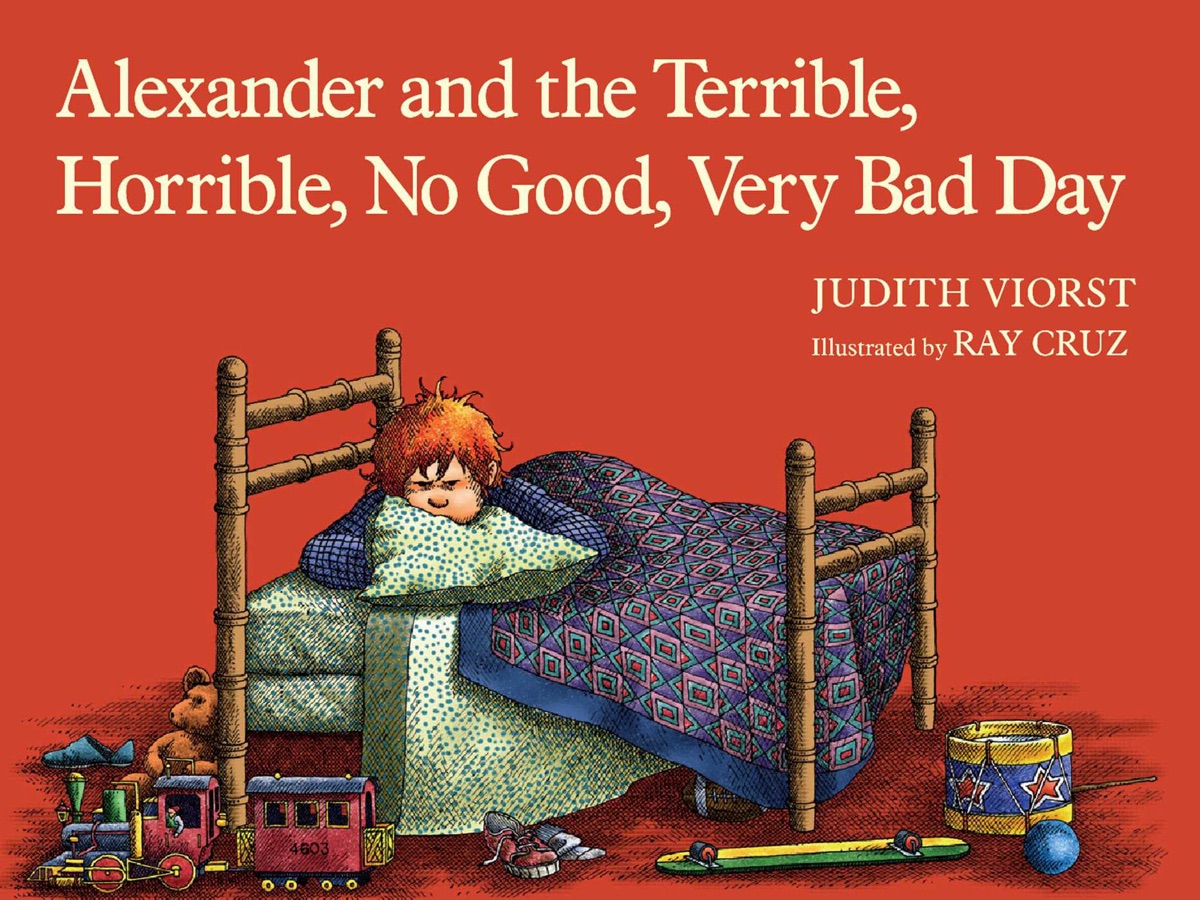
Alexander and the Terrible, Horrible, No Good, Very Bad Day
by Judith Viorst
The definitive bad-day book that validates every child's worst morning-to-bedtime experience with humor, honesty, and a perfect closing line.
The story
Alexander wakes up with gum in his hair and knows immediately: this is going to be a terrible day. From breakfast disappointments through school frustrations, dentist visits, and bedtime indignities, everything goes wrong. His mother's closing wisdom reframes the entire experience with one unforgettable sentence.
Age verdict
Best for ages 5-8. Preschoolers enjoy the rhythm; elementary students connect with the emotional truth. Works beautifully as a read-aloud through age 10.
Our take
A classroom staple that teachers love for its versatility and read-aloud power. Kids enjoy it but the predictable structure and brief format keep scores moderate. Parents appreciate the emotional honesty and conversation value but find limited academic growth potential.
What stands out
Each audience's top 3 dimensions. Out of 30 scored per book.
Kids love
- First-chapter grab Strong
Opens with three cascading crises in three sentences — gum in hair, skateboard trip, sweater in sink — that establish voice, conflict, and emotional tone before the second page. A child recognizes the feeling of a bad morning instantly and keeps reading to see how much worse it gets.
- Ending satisfaction Strong
The mother's response transforms the entire book: 'Some days are like that. Even in Australia.' The refrain, which has been a complaint, becomes validated truth. One sentence reframes frustration as universal experience without dismissing Alexander's feelings. The ending feels inevitable and complete — a perfect landing for a day of turbulence.
Parents love
- Reading gateway Strong
Picture book format with repetitive refrain, short text, and emotional engagement removes virtually all barriers to reading. The relatable subject matter hooks children who see themselves in Alexander's frustrations. Effective for ages 4-8 as both read-aloud and early independent reading, with illustration support throughout.
- Parent-child conversation starter Strong
The ending explicitly opens conversation: the mother's 'Some days are like that' bridges into questions about the child's own bad days. A parent reading this aloud naturally asks 'Have you ever had a day like Alexander's?' The book validates emotional experience and creates a safe space for discussing frustration, disappointment, and resilience.
Teachers love
- Read-aloud power Exceptional
The refrain is rhythmically perfect for oral performance — four descriptors building to a landing phrase that children naturally join in on. List structures beg to be read with escalating emphasis. One of the most-read-aloud picture books in English-language classrooms for over fifty years, with pacing and voice calibrated for group listening.
- Classroom versatility Strong
Functions across multiple formats: read-aloud, guided reading, SEL instruction, writing workshop model text, discussion catalyst, and independent reading. Effective across K-5 with different instructional focuses at each level — feelings vocabulary for K-1, character analysis for 2-3, perspective and exaggeration study for 4-5.
✓ Perfect for
- • Children who need their bad-day feelings validated
- • Classroom read-alouds about emotions and resilience
- • Bedtime reading with built-in conversation about difficult days
- • Reluctant readers who connect with relatable, humorous situations
Not ideal for
Children seeking adventure, fantasy, or plot-driven stories. The book is entirely about everyday frustrations with no magical or exciting elements. Older readers (10+) may find it too simple unless approaching it as craft study.
At a glance
- Pages
- 32
- Chapters
- 2
- Words
- 1k
- Lexile
- 840L
- Difficulty
- Moderate
- POV
- First Person
- Illustration
- Fully Illustrated
- Published
- 1972
- Illustrator
- Ray Cruz
Mood & style
You'll know it worked when…
Single-sitting read (10-15 minutes). The refrain signals how much of the day remains.
More like this
Same genre, similar age range. Ranked by kid score.

Want more picks like this?
Get 5 hand-picked book reviews for your child's age — one email a month.