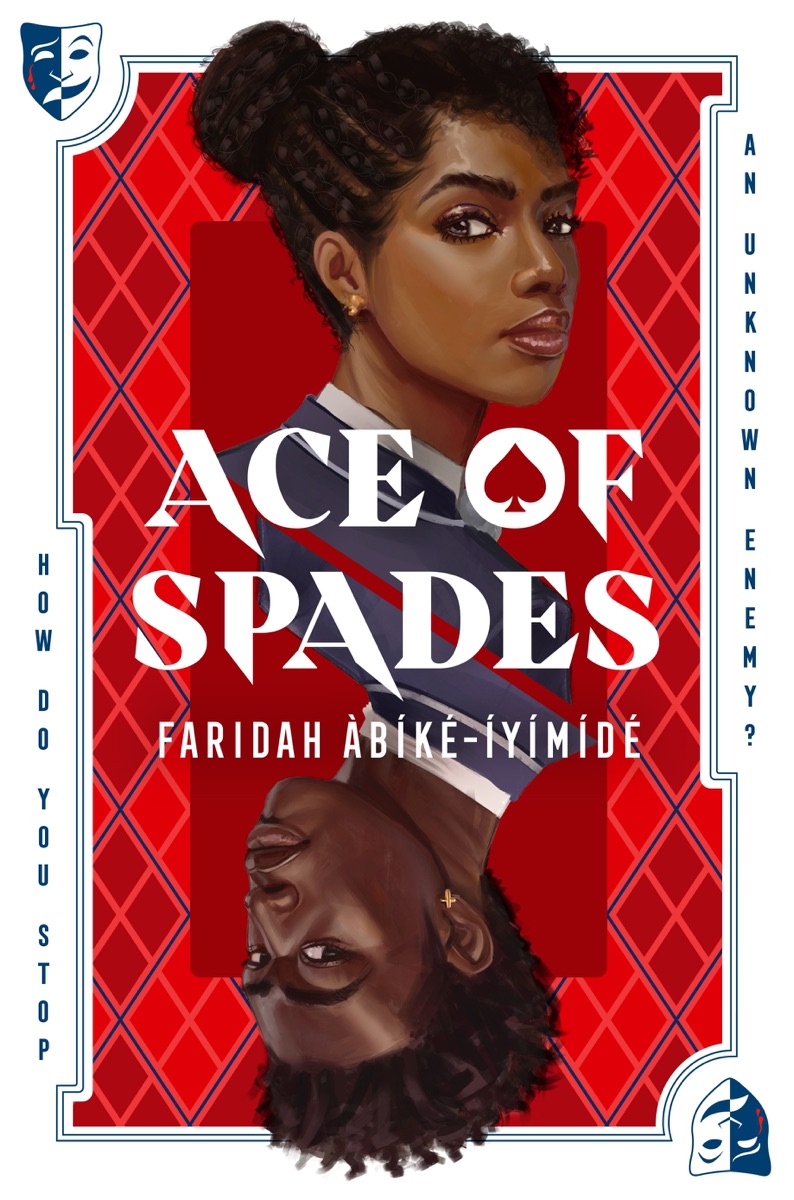
Ace of Spades
by Faridah Àbíké-Íyímídé · Ace of Spades #1
A gripping YA thriller about two Black students fighting back against systemic racism at an elite prep school
The story
When Devon and Chiamaka, the only two Black seniors at prestigious Niveus Academy, are targeted by an anonymous bully who knows their deepest secrets, they must uncover the truth behind the attacks — and discover that the threat goes far deeper than any one person. A fast-paced thriller with sharp social commentary that earned the Edgar Award and NAACP Image Award.
Age verdict
Best for ages 15-17. Mature 14-year-olds with parental guidance can engage meaningfully. The content intensity (violence, racial slurs in context, a sex tape subplot) and emotional weight make this too heavy for most readers under 14.
Our take
A teacher-favored YA thriller that excels in emotional depth, social commentary, and classroom utility. The gap between kid and teacher scores reflects the book's literary and pedagogical richness outpacing its entertainment-first appeal — strong for engaged readers, less accessible for reluctant ones.
What stands out
Each audience's top 3 dimensions. Out of 30 scored per book.
Kids love
- Heart-punch Exceptional
Comparable to A Court of Mist and Fury — emotional architecture is devastating and earned. Ch13 (Devon's beating interspersed with memories of "I love you") and Ch36-37 (Chiamaka's realization of complicity) deliver emotional peaks that linger across chapters. The epilogue's earned peace validates the entire emotional journey. Sits at because both books deliver emotional complexity through layered, earned moments rather than plot-driven sentimentality.
- First-chapter grab Strong
Comparable to Lunch Lady and the Cyborg Substitute — Devon's opening voice immediately establishes alienation and character while the mysterious playing card on-screen creates "what is that?" tension. Both deliver immediate engagement through kid-grounded setup. Sits at because both anchor and this book hook through character + visual mystery in opening chapters.
Parents love
- Writing quality Exceptional
Tier 3: Comparable to Illuminae — controlled, lean prose where description earns its place and every sentence serves plot, character, or theme. Author modulates sentence rhythm to match emotional state: short, clipped fragments during crisis, longer flowing passages during reflection. Ch13 beating sequence demonstrates craft control at the sentence level. An Edgar Award-winning debut with genuine literary craft. Sits at because both deliver sentence-level mastery without ornamentation.
- Stereotype-breaker Exceptional
Tier 3: Comparable to Legendborn , triangulated with Gathering Blue — Devon is a queer Black teen who plays classical piano and writes music, defying multiple stereotypes simultaneously. Chiamaka is brilliant and ambitious without being villainized for her drive; her complexity includes both admirable initiative and morally questionable manipulation. Neither protagonist is redeemed through individual moral awakening but through systemic recognition. Sits at Gathering Blue because both deliver stereotype-breaking complexity; Legendborn's fantasy setting may afford slightly more visible breaks.
Teachers love
- Cross-curricular value Exceptional
Tier 3: Comparable to A Wolf Called Wander , triangulated with A Reaper at the Gates — bridges to social studies (institutional racism, systemic power structures), psychology (trauma response, identity formation), media literacy (the role of journalism in accountability), history (civil rights, educational segregation), and ethics (whistleblowing, complicity). A natural hub for interdisciplinary units where each connection is substantial rather than superficial. Sits at Reaper level because both support deep cross-curricular connections; Wolf's ecosystem depth is more focused.
- Discussion fuel Exceptional
Tier 3: Comparable to Breakout , triangulated with Mockingjay — nearly every chapter raises a debatable question: Is going public with allegations always the right choice? What distinguishes complicity from survival? Can an institution be reformed or must it be dismantled? Ch13-20 especially generates genuinely different student answers based on personal experience. Students bring different experiences and arrive at genuinely different conclusions — discussions run long. Sits at Mockingjay level because both deliver sustained discussion fuel; Breakout's multiple threads may offer slightly broader entry points.
✓ Perfect for
- • Teens who loved The Hate U Give or Dear Martin
- • Readers who enjoy mystery/thriller with social commentary
- • Young adults ready to engage with complex questions about race and institutional power
- • Fans of Gossip Girl-style drama with real stakes
Not ideal for
Sensitive readers who may be distressed by scenes of racial violence, physical assault, or sustained psychological harassment. The book does not shy away from depicting the real impact of systemic racism on teenagers.
⚠ Heads up
At a glance
- Pages
- 470
- Chapters
- 47
- Words
- 102k
- Lexile
- 740L
- Difficulty
- Moderate
- POV
- Alternating
- Illustration
- None
- Published
- 2021
- Publisher
- Crossbooks
- ISBN
- 9788408260516
Mood & style
You'll know it worked when…
Most readers who connect with Devon's or Chiamaka's voice in the first two chapters will finish the book — the thriller pacing keeps pages turning even through heavy emotional content.
More like this
Same genre, similar age range. Ranked by kid score.


Want more picks like this?
Get 5 hand-picked book reviews for your child's age — one email a month.