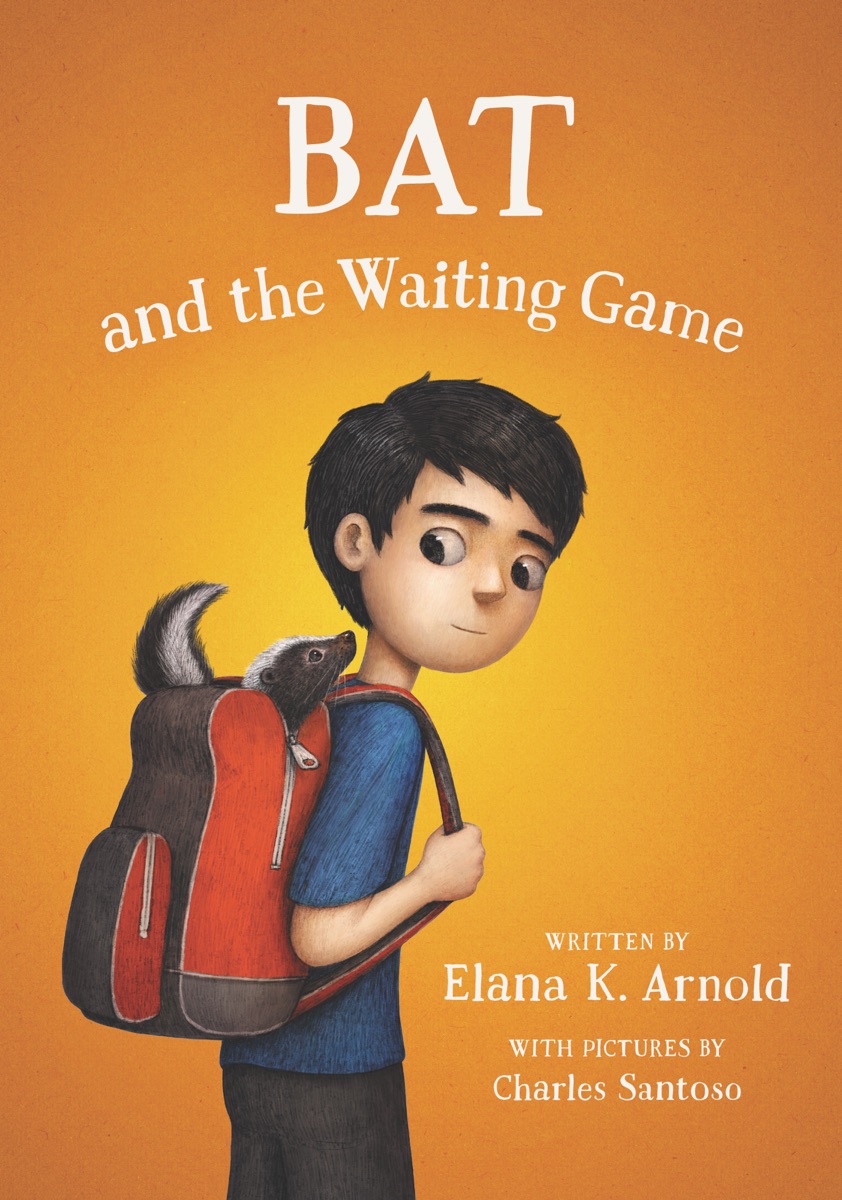
Bat and the Waiting Game
by Elana K. Arnold · A Boy Called Bat #2
A gentle, beautifully written story that helps children understand autism from the inside — through the eyes of a boy who cares deeply about a baby skunk and the people in his life.
The story
Bat is adjusting to changes: his sister Janie has joined the school play and can't be home after school anymore, a new friend is slowly becoming part of the family, and the baby skunk he's been raising is growing up. As Bat navigates schedule disruptions, a complicated sleepover, and the fear of losing what he loves most, he learns that change doesn't have to mean loss — and that a real apology can heal even the biggest hurt.
Age verdict
Best for ages 7-9. The emotional complexity rewards readers who are developing social awareness, while the short chapters and animal content keep younger readers (6+) engaged. Older readers (10-11) may connect if they appreciate character-driven stories.
Our take
A warm, empathy-rich book that parents and teachers value highly for its autism representation and emotional depth, while kids enjoy it more gently — strong on voice and heart but quieter on humor and cool factor.
What stands out
Each audience's top 3 dimensions. Out of 30 scored per book.
Kids love
- Character voice Strong
Bat's voice is immediately distinctive — short declarative sentences, literal interpretations, sensory precision, and a logic that makes perfect sense from inside his head. Mom, Janie, Israel, and Dad all sound different in dialogue. A child can 'hear' Bat thinking and talking, making him feel like a real person rather than a character.
- Heart-punch Strong
The quiet realization that Thor growing stronger means Thor growing closer to leaving creates an ache that accumulates across chapters — like Anne of Green Gables, the warmth builds until specific moments release it as genuine emotion. The sibling reconciliation in the final chapters, earned through real hurt and a meaningful apology, delivers the kind of emotional payoff that stays with a child after the book closes.
Parents love
- Stereotype-breaker Strong
Bat is a boy protagonist defined by emotional sensitivity, sensory awareness, and caring — qualities rarely centered in boys' stories without being treated as weaknesses. His autism is neither his superpower nor his problem; it's simply how he experiences the world. Divorced parents are presented as normal, and no character fills a conventional role.
- Parent-child conversation starter Strong
Nearly every chapter opens a conversation: How would you feel if your schedule changed suddenly? What's the difference between Bat's experience and yours? How do you apologize when you've really hurt someone? The autism representation alone provides conversation material that bridges naturally from the book to the child's real-world classmates and experiences.
Teachers love
- Empathy & self-awareness Exceptional
This is the book's teaching superpower. Students experience the world through Bat's sensory lens — understanding how a flickering light or a schedule change can feel overwhelming. The sustained first-person intimacy builds genuine empathy for neurodivergent classmates. Teachers report students referencing Bat when discussing classroom inclusion months after reading.
- Read-aloud power Strong
Short chapters fit class periods perfectly, Bat's distinctive voice is naturally performable, and the emotional moments land well in group settings. The sensory descriptions invite dramatic reading, and natural chapter-ending hooks keep students asking for one more. Works best in grades 2-4 where the emotional content matches developmental readiness.
✓ Perfect for
- • Children who love animals and want to learn about unusual pets
- • Families looking for authentic, respectful autism representation
- • Readers who enjoyed A Boy Called Bat and want to continue Bat's story
- • Kids navigating changes in routine, divorced family schedules, or new friendships
- • Parents seeking conversation starters about neurodiversity and empathy
Not ideal for
Readers seeking fast-paced adventure, laugh-out-loud comedy, or fantasy. The pace is gentle and the emotional stakes are domestic — children who need action-driven plots may find the story too quiet.
⚠ Heads up
At a glance
- Pages
- 192
- Chapters
- 24
- Words
- 20k
- Lexile
- 840L
- Difficulty
- Moderate
- POV
- Third Person Limited
- Illustration
- Sparse
- Published
- 2018
- Illustrator
- Charles Santoso
Mood & style
You'll know it worked when…
Most children finish in 2-4 sittings. The short chapters create natural stopping points, and the animal-care thread provides gentle pull-forward motivation.
More like this
Same genre, similar age range. Ranked by kid score.
Millionaires for the Month
by Stacy McAnulty
Insignificant Events in the Life of a Cactus
by Dusti Bowling

The Season of Styx Malone
by Kekla Magoon

EllRay Jakes Is Not a Chicken
by Sally Warner
Want more picks like this?
Get 5 hand-picked book reviews for your child's age — one email a month.