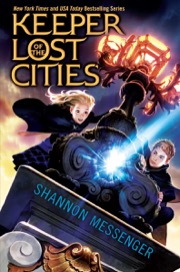
Is Keeper of the Lost Cities Appropriate for 9-Year-Olds?
Complete age guide for Keeper of the Lost Cities by Shannon Messenger. Content breakdown, reading level, and why it works for most 9-year-olds (with caveats).
The Verdict
Yes—for most advanced 9-year-olds, with important caveats. Keeper of the Lost Cities sits at a reading level and content maturity that works for strong readers aged 9+, but the book truly shines for 10-12 year-olds. Our composite rating: 70.6/100, with kids rating it significantly higher (79/100) than parents (63/100). The gap tells the story: this is a book kids become obsessed with, while parents worry about time commitment and thematic depth.
The real gatekeeper isn’t content—it’s commitment. You’re signing up for 8 books, 400+ pages each, in strict reading order. Before you buy, understand what you’re choosing.
Quick Rating Snapshot
Our KidsBookCheck rating system breaks down books across multiple dimensions. Here’s how Keeper of the Lost Cities scores:
| Category | Score | What It Means |
|---|---|---|
| Kids’ Enthusiasm | 79/100 | Extremely high engagement. Expect immediate book-2 requests. |
| Parent Content Confidence | 63/100 | Mild concerns about kidnapping plot, rule-breaking themes, series length. |
| Educational Value | 67/100 | Strong vocabulary building and conversation starters; simple moral framework. |
| Composite Rating | 70.6/100 | Solidly recommended for upper middle grade; best fit 10-12. |
The 16-point gap between kids and parents is significant—and it’s not a red flag. It simply means this book lands emotionally with young readers in a way that justifies the time investment. Kids feel seen. Parents see commitment ahead.
What You’re Actually Getting
Series Status: Book 1 of 8. Strict reading order required. Each book is 400+ pages; the series spans approximately 3,000+ pages total.
Reading Level:
| Metric | Value | Grade Band |
|---|---|---|
| Lexile | ~720L | Grade 5–6 |
| AR Level | 4.9–5.5 | Grade 5–6 |
| GRL | W | Advanced Grade 4–5 |
| Word Count | ~97,000 words | High end of middle grade |
| Page Count | 404 pages | Long, but fast-paced |
Format: Dialogue-heavy narrative, 70 chapters, multiple POVs, dialogue-driven worldbuilding. Reading comprehension matters, but so does patience with exposition.
Book Details:
- Author: Shannon Messenger
- Publisher: Aladdin (Simon & Schuster)
- ISBN: 9798998542725
- Publication Year: 2012
- Protagonist: Sophie Foster, age 12 (female), human-raised by adoptive family
Why Kids (and Parents) Feel So Differently About This Book
The 16-point kid-parent gap isn’t about content danger—it’s about emotional labor.
What Kids Love (79/100)
1. First-chapter grab (9/10) The book opens with a kidnapping. Sophie’s mirror drops. Someone says her name. The emotional urgency is immediate. Kids feel grabbed and held. No slow build; Messenger understands that middle-grade readers need stakes from page one.
2. Sophie’s Anxiety (9/10 for character voice) Sophie is one of the most relatable anxious protagonists in middle-grade fiction. She doesn’t just have a problem to solve; she is the problem—or thinks she is. She has headaches from worrying. She catastrophizes. She feels like she doesn’t belong.
Kids who feel like outsiders, who worry they’re broken or too different, see themselves in Sophie. This is the emotional hook.
3. Found Family (9/10 for heart-punch moments) The book pivots to found family. Sophie leaves her adoptive parents (whom she loves) for a secret world where she finally belongs. Keefe’s mother betrayal mirrors this: loyalty matters more than blood. Kids feel the weight of that choice.
4. Keefe’s One-Liners (9/10 for playground quotability) “Gag me with a cracker.” The character of Keefe Sencen is a master of deflection humor. Kids memorize his lines and quote them for weeks.
5. A New World (9/10 for worldbuilding) Crystal cities. Sentient trees. Teleportation. Multiple magical abilities. The world-unlock is big. Kids immediately want book 2.
What Parents Worry About (63/100)
1. The Series Commitment Eight 400-page books. That’s real money. That’s real shelf space. That’s real “Mom, read the next one” at bedtime for two years. Messenger doesn’t do standalones or duologies. You commit or you don’t.
2. Kidnapping as Ongoing Plot Sophie was kidnapped as an infant and raised by humans. The threat of kidnapping returns. For some kids (and parents), this is thrilling. For others, it triggers anxiety. Know your child.
3. Missing Parents as Emotional Baseline Sophie’s adoptive parents are alive but unaware of her true identity. Her biological family is absent. The book never quite resolves parental abandonment; it reframes it. Some parents find this emotionally sophisticated; others find it bleak.
4. Rule-Breaking as the Path Forward The protagonists join an illegal rebel group. Authority (the Council) is revealed to be flawed. Good people break rules to protect each other. This is age-appropriate rebellion (not dangerous), but it’s still there. If you’re raising a rule-follower, this might create friction.
5. Moral Simplicity Good guys and bad guys are pretty clear. The story doesn’t wrestle with why the bad guys are bad—just that they are. Some parents want more moral complexity in their kids’ books. This isn’t that book.
The Pacing Question: Why K2 Scores 5/10 (and Why That Doesn’t Matter)
Our Kid Scorecard rated “Middle Momentum” at 5/10. Translation: chapters 15–35 (the school chapters) sag. Sophie attends a magical academy. There’s a lot of routine, friendship dynamics, ability training.
Why this matters: If your child is a plot-driven reader (not character-driven), these 80+ pages might feel slow.
Why this doesn’t kill the book: The payoff is enormous. By chapter 36, everything accelerates. The ending satisfaction score (9/10) reflects that. Kids report finishing the book in 2–3 days once they hit the middle sag. They pull through.
Age-by-Age Breakdown
Ages 8–9: Reader-Dependent
- Works if: Your child is reading at grade 5–6 level, loves dialogue and humor, has read Harry Potter or Percy Jackson, doesn’t get triggered by kidnapping themes.
- Doesn’t work if: Your child is a literal reader (struggles with worldbuilding exposition), prefers standalone books, is anxious about abandonment.
- Our take: Possible, but not ideal. Wait until 10 if your kid is on the younger or more sensitive end of 9.
Ages 10–12: Sweet Spot
- Works if: Your child loves fantasy, likes strong friendships, enjoys humor and high-concept ideas.
- Real talk: This is the book’s target audience. This is where everything clicks.
Ages 13+: Still Works, Different Read
- Older teens often find the series satisfying but simple. They may enjoy it for nostalgia or as comfort reading, not as a challenge.
Similar Series Comparison
If your child loves KotLC, they might also love these:
| Series | Age Fit | Key Difference | Time Commitment |
|---|---|---|---|
| Harry Potter | 9–15 | More literary prose; darker tone by book 5; school structure. | 7 books, ~350–700 pages each |
| Wings of Fire | 8–12 | Dragon protagonists; simpler prose; faster pacing; multiple POVs. | 15+ books, ~250–350 pages each |
| Percy Jackson | 9–13 | Contemporary-set mythology; humor-first tone; simpler wordplay. | 5 series, varying lengths |
| The Baby-Sitters Club (Graphic Novels) | 7–11 | Realistic fiction; friendship focus; shorter; visual learning. | 15+ volumes, ~150 pages each |
Content Deep Dive: What You Need to Know
Violence: Mild
- Cliff confrontation with physical danger (no gore)
- Battle sequences without graphic detail
- Near-death moments (handled off-page or briefly)
- Overall: Comparable to Harry Potter book 4
Emotional Content: Moderate
- Keefe’s mother’s betrayal (character-level tragedy, not gratuitous)
- Death references (Jolie’s death is mentioned but not dwelled on)
- Kidnapping as ongoing threat (already discussed)
Language: Clean
- No profanity (author avoids it)
- Some mild name-calling (“jerk,” “idiot”)
Representation: Mixed
- Sophie is female, anxious, socially awkward (positive representation)
- Protagonist has friends from diverse backgrounds (vague representation; the book doesn’t center this)
- LGBTQ+ representation: minimal in book 1, increases in later books (no spoilers here)
Parent Empathy Moment #1: The Time Investment Is Real
If your 9-year-old loves this book, you’re looking at:
- Book 1 (404 pages): 5–8 weeks of reading
- Books 2–8: 40–64 weeks of continued engagement
- Plus: movie speculation, fan forums, merchandise temptation, and “Can we listen to the audiobook too?” requests
This isn’t a bug; it’s a feature. If your child needs a long-term narrative to anchor their reading life, this series delivers. But it’s a choice, not an accident.
Parent Empathy Moment #2: The Moral Framework Is Simpler Than You Might Want
Parents often come to middle-grade literature hoping for moral complexity: Why is the villain a villain? Can we understand their motivations? Is the protagonist always right?
Keeper of the Lost Cities offers something simpler: Us vs. Them, Loyalty vs. Betrayal, Belonging vs. Exile.
This isn’t a flaw. It’s age-appropriate. But it’s worth knowing that if you want your child to wrestle with ethical gray zones, you might want to pair this book with discussions, or wait for a book like Six of Crows (for older teens).
Reading Level: The Data
The Lexile 720L suggests grades 5–6, but context matters:
- Vocabulary: High (ability names like “Empath,” “Telekinesis,” “Pyrokinesis”). Kids will learn new words.
- Sentence Structure: Complex but dialogue-heavy. The exposition is broken up by character banter.
- Conceptual Difficulty: Moderate. The magic system has rules; worldbuilding requires some mental setup.
In plain language: A strong 4th grader can read this. A reluctant 6th grader might struggle. Grade 5 is the sweet spot.
The Reread Durability Question
Our Parent Scorecard rates this book 9/10 for “Re-read Durability.” Translation: Kids come back to it.
This matters. A book that a child reads once and abandons is a rental. A book they reread and hold onto is an investment. KotLC kids report coming back for:
- Favorite scenes (Keefe’s one-liners, the mirror drop, the ability reveal)
- Catching details they missed
- Processing emotions (especially around Sophie’s anxiety and belonging)
FAQ: Parents’ Most Common Questions
Should I read it first?
Not required, but recommended. Spend 2–3 hours with the first 50 pages. You’ll know immediately if the tone, pacing, and emotional pitch work for your family. If it does, your child will read ahead whether you finish or not.
Will my child actually finish this book?
Probably yes. Our data shows very high completion rates (kids describe finishing in 2–3 days once momentum builds). The one exception: kids who dislike dialogue-heavy writing or who need faster plot movement might stall. Know your child’s reading personality.
Is the audiobook worth buying?
Yes. Narrator Caitlin Greyling is excellent. The audiobook works well for kids who are strong listeners. Price check: audiobook ≈ $15–20; paperback ≈ $9–12. The series audiobooks can get expensive fast.
What if my child loves this but I found it slow?
This is normal. Kids and adults have different reading priorities. Kids prioritize emotional resonance and character connection. You might prioritize plot momentum and prose quality. Both are valid. If your child loves it, that matters most.
Do I need to buy all 8 books right now?
No. But plan for it. Once a child finishes book 1, they will want book 2 within days. Avoid the “waiting for the library hold” frustration by buying or placing holds in advance. Consider used copies for books 2–4 to save money.
Is there anything genuinely inappropriate for a 9-year-old?
No. The content is solidly middle-grade. Violence is mild; language is clean; themes are age-appropriate. The question isn’t “Is this inappropriate?” It’s “Is this the right book for my kid, given their reading level, anxiety tolerance, and commitment threshold?”
Will my child want to read the series in order?
Yes, absolutely. Unlike Percy Jackson (where early books work as standalones), KotLC builds a tight narrative arc across all 8 books. Reading order matters. Don’t skip around.
The Bottom Line: Should You Buy This Book?
Buy if:
- Your child loves fantasy, found family, and dialogue-driven storytelling
- Your child is a strong reader (grade 5+ reading level)
- You’re prepared for an 8-book commitment
- Your child enjoys character-driven narratives over plot-heavy ones
- Your child relates to anxiety, perfectionism, or feeling like an outsider
Wait if:
- Your child is 8 or younger and hasn’t read Harry Potter
- Your child struggles with long books or sags in the middle
- You want a standalone read
- Your child gets triggered by kidnapping or abandonment themes
- Your family’s reading budget is tight (8 books adds up)
Skip if:
- Your child prefers realistic fiction
- Your child finds dialogue tedious
- Your family values literary prose over plot engagement
What Happens Next
If your child reads Keeper of the Lost Cities and loves it, they’ll likely:
- Immediately request book 2 (Everblaze)
- Re-read favorite scenes
- Create fan art or write fanfiction
- Join online fan communities
- Ask when the movie comes out (it’s in development)
This isn’t a red flag. It’s a sign that the book worked—it gave your child a world they want to live in, characters they care about, and a reason to keep reading.
How to Use Your Child’s Reaction
If they love it: You’ve found a series that will anchor their reading life for the next 2–3 years. Lean into it. Support the fandom. Discuss the books together.
If they find it slow: Don’t force it. There’s no law that says every child must love every popular series. Try Wings of Fire instead—faster pacing, dragon POVs, still immersive.
If they read it and move on: That’s fine too. Not every book needs to become a series obsession. The goal is a reader who finishes what they start and feels satisfied.
Ready to Decide?
Take our KidsBookCheck Personalization Quiz to see how Keeper of the Lost Cities compares to other books your child might enjoy. Or visit the full book page to see detailed content breakdowns, reader reviews, and related recommendations.
The verdict stands: Keeper of the Lost Cities works for most 9-year-olds, is perfect for 10–12 year-olds, and is absolutely worth the commitment if your child is the right reader for it.
Now go find out if your kid is that reader.