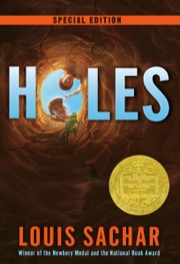
Is Holes Appropriate for 9-Year-Olds? An Honest Parent's ...
Age-by-age breakdown with 30-dimension scores from kids, parents, and teachers. Find out if this book is right for your child. Trusted picks. Trusted picks.
The Short Answer
Yes, Holes is appropriate for most 9-year-olds—especially those who are confident readers and emotionally mature. However, this book asks younger readers to handle sophisticated themes about injustice, homelessness, and inherited pain. You know your child best.
Our KidsBookCheck scorecard rates Holes at 67.4 out of 100 overall, with particular strength in emotional depth (Parent Score: 9/10 for heart-punch moments) and readability (Parent Score: 9/10 as a gateway book). The gap between what kids enjoy and what parents value reveals something important: Holes resonates more deeply with older readers and adults than with kids reading it purely for fun.
The Real-Talk Parent Moment #1: Before You Buy
You’re standing in the library or scrolling through an online store, and you see Holes recommended everywhere. Your 9-year-old has heard classmates talking about it. You’re wondering: Is this the right book for my kid right now?
Here’s the honest truth: Holes isn’t a problem book. It won’t harm your child. But it’s also not a light, fun adventure story. It’s an emotionally sophisticated tale about a boy wrongfully punished by the system, a homeless friend, and a family curse spanning generations. The mystery is genuinely compelling, but the emotional weight is real.
Ask yourself these three questions:
-
Can your child sit with sadness without becoming overwhelmed? There are moments of quiet pain in this book—Stanley’s loneliness at camp, Zero’s backstory of abandonment, the knowledge that Stanley is innocent but imprisoned anyway. Kids who need constant positivity or light tone might find these passages heavy.
-
Is your child ready for sophisticated two-timeline narratives? The book alternates between present-day camp and historical flashbacks about Stanley’s ancestors. Some 9-year-olds sail through this; others find it confusing. If your child struggled with books that jump timelines, this might be a challenge.
-
Does your child have experience with longer books (375+ pages)? The length isn’t the reading difficulty—it’s the stamina and sustained investment. Holes typically holds readers’ attention due to the mystery, but if your child rarely finishes long books, this is a consideration.
Content Profile: What’s Actually In This Book?
Themes
Holes weaves six major themes throughout its 375 pages:
- Friendship as redemption: Stanley and Zero’s bond is the emotional core. They save each other not through heroic action but through genuine care and presence.
- Wrongful conviction and injustice: Stanley is innocent. He’s punished anyway. The book doesn’t resolve this injustice tidily; it explores how a person builds character despite unfair circumstances.
- Family legacy and inherited patterns: Historical chapters reveal how Stanley’s great-grandfather’s choices echo across generations, raising the question: Are we bound by our ancestors’ mistakes, or can we break the pattern?
- Curse, fate, and personal agency: Is the family curse magical or psychological? The book intentionally leaves this ambiguous, letting readers draw their own conclusions.
- Perseverance in harsh conditions: Extreme heat, dangerous animals, hard labor—Stanley endures through friendship and hope.
- Redemption through character: The ending reveals that transformation happens not through external rescue but through becoming a better person.
Content Heads-Up
According to our analysis, parents should know about:
-
Themes of injustice and systemic failure: Stanley’s wrongful conviction is not a misunderstanding quickly cleared up. He spends most of the book imprisoned for a crime he didn’t commit. This raises real questions about fairness and authority that may spark important conversations.
-
Homelessness and poverty: Zero has been homeless and abandoned. His backstory is told with dignity, but it’s not cheerful. Some sensitive children may be emotionally affected.
-
Harsh conditions and danger: The depiction of Camp Green Lake’s extreme heat, dangerous yellow-spotted lizards, starvation-level food portions, and hard labor is realistic but not gratuitously graphic. It’s presented matter-of-factly, which some kids find scarier than explicit violence.
-
Historical racism: In flashback chapters, a town threatens violence against a Black man for kissing a white woman. This is not detailed or exploitative; it’s treated as historical context. Still, it’s present and worth discussing.
-
References to death and killing: Multiple deaths occur in the book, including shootings in historical sections. None are described graphically, but the reality of death is present.
Age-by-Age Breakdown: Where Does Your 9-Year-Old Fit?
Ages 8-9: Possible But Requires Support
Reading Confidence Level: Advanced reader status
At 8-9, your child may be ready for Holes, but they’re at the younger edge. Success depends heavily on:
- Reading fluency: Can they comfortably read 250+ words per page and sustain focus for 30+ minutes?
- Emotional maturity: Have they discussed injustice, homelessness, or loss before? Are they OK with sad characters in good stories?
- Interest in mysteries: Does the premise genuinely excite them, or are they reading it because it’s assigned/popular?
What they’ll enjoy: The mystery structure pulls readers forward. Many 9-year-olds are genuinely surprised by plot twists and invested in Stanley and Zero’s friendship.
What might be hard: 375 pages is long. If momentum stalls (often around chapters 15-20 when the historical timeline begins), younger readers may lose interest. The sophisticated dual-narrative structure can be confusing.
Recommendation: Read it aloud together, or read alongside them. You can gauge their emotional responses and pause for conversations about the harder themes.
Ages 10-11: Sweet Spot
Reading Confidence Level: Solid to advanced reader
This is where Holes truly shines. Most 10-11 year-olds have the reading stamina, emotional sophistication, and narrative comprehension to engage fully. They understand that Stanley is wrongfully punished AND that the experience changes him. They grasp the family curse as both literal and metaphorical. They cry at the ending.
What they’ll love: Everything. The mystery, the friendship, the twist that recontextualizes the entire story. Many kids in this age range read Holes independently and finish feeling deeply satisfied.
Potential challenges: Some emotionally sensitive kids may find the injustice theme troubling. If your child gets very upset about unfairness or has anxiety about being blamed for things they didn’t do, preview the wrongful-conviction element first.
Recommendation: This age group can typically handle the book independently, though discussing it afterward enriches their understanding.
Ages 11+: Rewarding Sophistication
By 11-12, readers catch layers that younger kids miss: the careful foreshadowing, the dual-timeline structure as craft, the metaphorical depth of the curse. They appreciate the quiet character development and may understand the book’s commentary on justice systems.
Reading Level Breakdown
| Metric | Score | Notes |
|---|---|---|
| Lexile | 750L | High for grades 4-6; accessible with sustained focus |
| Grade Level | 5-6 | Scholastic rates it for grades 4-8 |
| Guided Reading Level | W-X | Advanced for grade 5; on-level for grade 6 |
| AR (Accelerated Reader) | 4.6 | Often assigned in grades 5-6; doable for advanced 4th graders |
| Word Count | ~46,000 | Substantial but not overwhelming; strong forward momentum |
| Average Chapter Length | ~600 words | Bite-sized but meaty; good stopping points |
| Vocabulary Tier | Intermediate | 78% high-frequency base words; 10-15 tier-2 academic words per chapter |
| Sentence Complexity | Moderate | Mix of short, punchy sentences and longer reflective passages; dual-timeline structure requires active reading but is clearly marked |
Translation for Parents: If your child reads at grade level or above, they can decode Holes without significant struggle. If they’re a reluctant reader or below grade level, the 375-page length may be intimidating, even though the forward-moving mystery often keeps them engaged.
Holes: Book vs. Movie
Many parents wonder: Should we read the book first or watch the movie? Can we do both?
| Aspect | Book | Movie (2003) |
|---|---|---|
| Rating | N/A | PG (Violence, mild language, thematic elements) |
| Age Recommendation (by sources) | 9-12 (younger with support) | 10+ (Common Sense Media); 12+ (Parent Previews) |
| Emotional Tone | Serious, introspective, character-driven | Lighter, more adventure-focused |
| Violence Depiction | Indirect references (deaths in backstory) | Visible but non-graphic (shootings, animal threat, fire) |
| Pacing | Slow build with dual timelines | Fast-moving, more action-oriented |
| Historical Timeline | Major plot driver | Simplified and compressed |
| Humor | Dry, situational | More overt, comedic tone |
| Runtime | Varies (typically 8-10 hours read-aloud) | 119 minutes |
Parent Guidance:
- Book first: Reading the book builds investment in the story before visual details take over. Kids often prefer this path.
- Movie first: Watching the film can help reluctant readers visualize the setting and hook them into the book’s mystery. Just know the movie is lighter in tone.
- Both: Many families read the book, then watch the movie as a celebration. The movie is not a spoiler-heavy adaptation; it streamlines but stays true.
Movie content note: The 2003 film includes more visible violence (gun use, a character being attacked by a lizard) than the book describes. Scenes may frighten kids under 10. Violence and mild language are present but not excessive. The film respects intelligent young viewers and avoids talking down to them.
Reading Level Comparison: Similar Books
If you’re trying to gauge whether Holes is right for your child, here are comparable titles:
| Book | Lexile | Best Age | Tone | Key Difference |
|---|---|---|---|---|
| Holes | 750L | 9-12 | Serious, mysterious | Sophisticated two-timeline structure |
| The Wollstonecraft Detective Agency | 740L | 8-11 | Lighter, humorous | More comedy; less emotional depth |
| Wonder | 740L | 8-12 | Hopeful despite challenges | Easier emotional entry point |
| The One and Only Ivan | 750L | 8-11 | Emotional, animal perspective | Sadder; animal narrator |
| Hatchet | 730L | 9-12 | Survival-focused, intense | More action; less mystery |
| The Boy Who Harnessed the Wind | 800L | 10-13 | Inspirational, real-world | Nonfiction; African setting |
The Real-Talk Parent Moment #2: The Injustice Question
Here’s something that doesn’t get talked about enough: Holes will make your child think about fairness in ways they may not have before.
Stanley is punished for a crime he didn’t commit. The book doesn’t resolve this by “proving he’s innocent and the authorities admitting they were wrong.” Instead, Stanley builds character while remaining imprisoned for a crime he didn’t commit. The injustice is never officially corrected—it’s transcended through his own choices and friendship.
This is a sophisticated moral idea, and different kids will process it differently:
-
Some children will find it deeply unfair and troubling. They may ask: “But why didn’t anyone help him? That’s not right!” These kids need reassurance that you agree—it isn’t fair—and that the book is exploring how we survive unfairness.
-
Others will see it as empowering—“Stanley didn’t need permission from authority to change his life. He did it through friendship and character.”
-
Some will miss the injustice theme entirely and just enjoy the mystery.
What to do: Read this book with your 9-year-old if possible. After chapters 1-5, pause and ask: “How do you feel about what happened to Stanley? Is it fair?” Their answer tells you if they’re ready for the full emotional journey.
Bottom Line: Is Holes Right for Your 9-Year-Old?
YES, if your child…
- Reads at or above grade level with sustained focus
- Is comfortable with longer books (300+ pages)
- Enjoys mysteries and character-driven stories
- Can handle sad or heavy themes with discussion
- Is ready to think about fairness, friendship, and family patterns
MAYBE, if your child…
- Is an advanced reader but emotionally sensitive
- Struggles with nonlinear narratives
- Gets frustrated with books that don’t “wrap up” injustice quickly
- Has anxiety about wrongful punishment or blame
- Prefers constant action and humor
PERHAPS WAIT, if your child…
- Is a reluctant reader (the 375 pages may feel insurmountable)
- Needs books with consistent lightness and humor
- Hasn’t yet read a book with multiple timelines or complex structure
- Is younger than 8 and still building reading stamina
The KidsBookCheck Recommendation: Holes rates 9/10 for emotional depth and character sophistication, but 6/10 for pure entertainment value. It’s a book that grows with readers. Your 9-year-old may enjoy it; your 12-year-old will understand it differently and love it more deeply.
Learn more about our 30-dimension rating system that evaluates every book from three perspectives.
See our complete analysis for detailed kid, parent, and teacher scores.
Frequently Asked Questions: Common Parent Questions
”Will the yellow-spotted lizards give my child nightmares?”
Possibly, but probably not. The lizards are a plot device and a constant threat, but they’re not described in graphic detail. Kids who watched the 2003 movie might be more affected by the visual image. In the book, it’s more about the fear of the lizard than the lizard itself. Anxious kids should know the lizards are real but handled matter-of-factly, not used for horror-story scares.
”Is the book sexist or racist?”
No, but it includes historical racism authentically. A flashback depicts racism—a town threatening violence against a Black man for kissing a white woman. This is presented as historical context and injustice, not endorsed by the narrative. The Warden is portrayed as a complex authority figure who’s cruel but not villainized simply for being a woman leader. Stanley’s overweight body is treated as incidental to his character, not comedic. Overall, the book respectfully portrays marginalized characters.
”My child is very anxious. Is this book too stressful?”
This depends on what triggers your child’s anxiety. If they become very upset by stories about wrongful punishment, social rejection, or homelessness, Holes may be too heavy. If they manage anxiety through understanding (i.e., knowing the plot helps them feel safer), reading it together where you can discuss chapters might help. Trust your knowledge of your child.
”Can my child read this independently, or should I read it with them?”
Both work. Independent reading is good for building confidence and letting the mystery unfold naturally. Reading aloud or reading simultaneously with discussion enriches understanding and gives you insight into their emotional responses. Many schools assign Holes as independent reading for grades 5-6, and kids successfully navigate it alone. For 9-year-olds, consider a hybrid: they read during the day, you discuss chapters at dinner.
”The book is 375 pages. Isn’t that too long?”
It’s long, but the mystery structure carries readers forward. Many kids who “don’t like long books” finish Holes because they need to know what happens. That said, if your child rarely finishes books over 200 pages, this is a stretch. The short chapters (averaging 600 words) provide natural stopping points, which helps.
”How does this compare to other books my child might read at 9?”
Holes is more emotionally complex and thematically sophisticated than typical 9-year-old reads like Wings of Fire or Percy Jackson, but less plot-driven. It’s closer in tone to Wonder or The One and Only Ivan—books that ask readers to sit with sadness alongside hope. If your child loved those, Holes will resonate.
Next Steps: How to Proceed
Step 1: Honest assessment Ask yourself: Does my child have the reading stamina, emotional readiness, and interest in mysteries? Use the age-by-age breakdown and the “YES/MAYBE/WAIT” guide above.
Step 2: Preview the beginning Read the first chapter aloud or have your child read it to you. Does the premise hook them? Can they follow Stanley’s situation? Their reaction tells you a lot.
Step 3: Set expectations Before diving in, tell your child: “This book is about a boy who’s sent to a desert camp for something he didn’t do. It’s a mystery, and it’s about friendship. It’s serious sometimes, but it has a really satisfying ending.”
Step 4: Choose your reading path
- Independent reading (if age 10-11, confident reader)
- Read-aloud together (best for age 9, builds connection)
- Simultaneous reading with discussion (they read during day, you talk about it together)
Step 5: Create space for conversation Keep the discussion guide handy. After certain chapters, pause and ask: “What do you think is happening? How does Stanley feel?” Don’t lecture; let them lead.
Find Your Perfect Book Match
Not sure if Holes is right for your child? Our Age Recommendation Quiz asks seven questions about reading level, emotional maturity, and interests—then suggests books tailored to your 9-year-old. Take the quiz →
Want to explore similar books in this mystery-adventure range? Browse our collection of adventure books for ages 9-11 →
Reading Holes Online & Getting a Copy
Holes by Louis Sachar is widely available:
- Library: Most public and school libraries have multiple copies. Request it!
- Amazon: Search “Holes Louis Sachar” → (includes audiobook and print options)
- eBook/Audiobook: Available on Kindle, Apple Books, Google Play, and Libby (free via public library)
- Audible: Excellent narration; great for reluctant readers
Sources & Further Reading
- Common Sense Media: Holes Book Reviews
- Holes’ Reading Level & Age Guide - Advance Book Readers
- Common Sense Media: Holes Movie Review
- Scholastic Guide to Holes
- Kids-In-Mind: Holes (2003) Parental Guide
About KidsBookCheck: We evaluate children’s books through three lenses—what kids enjoy (Kid Scorecard), what parents value (Parent Scorecard), and what teachers use in classrooms (Teacher Scorecard)—to give you honest, research-backed guidance. Holes ranks 67.4/100 overall, with particular strength in emotional authenticity and reading accessibility.
Last Updated: March 24, 2026
Have questions about whether Holes is right for your child? Leave a comment below or contact us for personalized guidance.