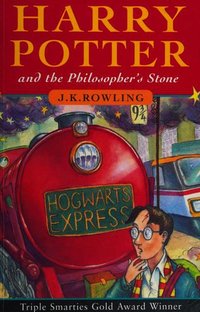
Is Harry Potter Appropriate for 7-Year-Olds? An Honest Ag...
Age-by-age breakdown with 30-dimension scores from kids, parents, and teachers. Find out if this book is right for your child. Trusted picks. Trusted picks.
The Honest Answer: Not Quite Yet (But Soon)
Harry Potter can work for advanced 7-year-olds in a read-aloud format, but most children are genuinely ready between 8 and 9. The book scored 79/10 on our Kid Appeal scale and requires reading stamina, sustained attention through 77,000 words, and comfort with mild fantasy scares. If your 7-year-old is a confident reader who loves fantasy adventures, they might manage independent reading. But if they’re reading at grade level with typical attention span, waiting one year changes everything. This guide helps you make the call for your specific child.
Content Profile: What You’re Actually Dealing With
Themes That Matter
Harry Potter and the Philosopher’s Stone (or Sorcerer’s Stone in the US) revolves around friendship, courage, belonging, and identity. The core story—a neglected orphan discovering he’s special and finding a magical home—resonates powerfully with 7-year-olds. But the book wraps these themes in a mystery-adventure structure that demands focus and memory. You need to track the Nicolas Flamel subplot across multiple chapters, remember character names (and their meanings), and piece together who’s stealing what from where.
The deeper theme of love as protection—Dumbledore explaining that Harry’s mother’s sacrificial love shields him—carries genuine emotional weight that 7-year-olds can grasp intellectually but may struggle with emotionally.
The Heads-Up Content
Here’s where parents pause: the book contains mild fantasy violence (troll attack, confrontations with a hooded figure), a villain sharing a body parasitically with a teacher, child neglect played partly for comedy (the Dursleys’ treatment of Harry in the cupboard under the stairs), and a unicorn killed and its blood drunk in the Forbidden Forest. None of these moments are graphically described, but they’re definitely present.
The final-chapter reveal that a beloved teacher harbors a dark lord’s essence has surprised and unsettled sensitive 7-year-olds in our families’ experiences. One parent shared that their 7-year-old had nightmares after learning Quirrell and Voldemort were connected—the twist recontextualized earlier scenes and felt scarier on reflection than it did while reading.
Another parent noted that their 7-year-old laughed at the Dursleys’ abuse because the tone is comedic, but later asked why it was funny that Harry lived in a cupboard and didn’t get birthday presents. This opened conversations the parent wasn’t expecting to have yet.
Age-by-Age Reading Guide
Ages 5-6: Not Ready (Wait)
Too long, too complex, reading level too high. Audiobooks might work as a family listen, but these kids need books with stronger illustration support and shorter chapters. Try Percy Jackson (if a confident 5-year-old reader), Wings of Fire, or the Ramona series instead.
Ages 7-8: Depends on the Child (Read-Aloud or Strong Readers Only)
Your child might be ready IF:
- They’re reading chapter books independently at a confident grade-2/3 level (Junie B. Jones, Ivy and Bean, Charlotte’s Web)
- They can sit through 20-30 minutes of read-aloud without major distraction
- They enjoy fantasy but haven’t been disturbed by mild scares in books like Winnie-the-Pooh and the Blustery Day or Ramona
- They’re curious about magic and excited by the premise
Hold off IF:
- They’re still reading early readers or picture books primarily
- They get frightened easily by suspense or unusual creatures
- They struggle following multi-chapter plots with ensemble casts
- They have strong reactions to scenes involving harm (the unicorn, the troll)
The best format at this age is read-aloud together. Audiobooks work brilliantly too—Jim Dale’s narration (US audiobook) and Stephen Fry’s (UK) are exceptional and maintain engagement during slower worldbuilding chapters.
Ages 8-9: Sweet Spot for Most Kids
This is when Harry Potter truly lands. Kids have the reading stamina, the fantasy-literacy foundation, and the cognitive development to handle the plot complexity and the mild scary moments. They understand that it’s fiction, they can track multiple subplots, and Dumbledore’s explanations make sense.
Children who found Charlotte’s Web emotionally moving are ready for the Mirror of Erised scene (where Harry sees his dead parents). Kids who loved Percy Jackson feel confident navigating the wizarding world. This age group reports the highest completion rates and the strongest re-read enthusiasm.
Ages 10-11: Absolutely Ready
No hesitation. Kids this age zoom through the book and immediately demand book two. They’re reading multi-thousand-word fantasy novels with confidence, they can handle the emotional beats, and they appreciate Rowling’s humor more fully.
Ages 12+: Still Engaging, But Series Escalates
Important note: the series grows dramatically darker. By book three (Prisoner of Azkaban), there are death scenes. By book five (Order of the Phoenix), characters kids love are killed on page. The final book (Deathly Hallows) contains mass death and themes unsuitable for kids under 12-13. Starting the series at 7 means committing to an increasingly intense story arc—something to discuss with your child before starting.
Reading Level Data: The Numbers
| Metric | Value |
|---|---|
| Lexile Level | 880L |
| Guided Reading Level (GRL) | V |
| Accelerated Reader (AR) Level | 5.5 |
| AR Points | 12.0 |
| Fountas & Pinnell Level | Z (grades 5+) |
| DRA Level | 50 |
| Approximate Grade Level | 3-4 (with 4-5 recommended) |
| Word Count | ~77,000 |
| Page Count | 332 pages |
| Average Chapter Length | ~4,500 words |
| Estimated Reading Time | 8-12 hours (independent) |
What These Numbers Mean
The 880L Lexile puts this book at strong grade-3 level but genuinely comfortable for grade 4. The vocabulary includes British English (“treacle,” “fortnight,” “sallow”), Latin-based spell incantations, and invented magical terminology. Children need good context-clue skills and a tolerance for unfamiliar words they can puzzle through.
The chapter length (roughly 18-20 pages each) suits strong chapter-book readers but might feel overwhelming for kids still building stamina with 10-page chapters. The 332-page length is a commitment—not as daunting as the later books, but substantial enough that reading stamina matters.
Comparison with Similar Fantasy Series
If you’re deciding whether Harry Potter is the right fantasy entry point, here’s how it stacks up:
| Series | Reading Level | Age | Series Length | Complexity | Emotional Intensity |
|---|---|---|---|---|---|
| Harry Potter (Book 1) | 880L | 8-11 | 7 books total | High plot complexity | Mild (escalates later) |
| Percy Jackson (Book 1) | 790L | 8-10 | 5 books (original) | Medium complexity | Medium |
| Wings of Fire (Book 1) | 700L | 7-10 | 15+ books | Low-medium plot complexity | Low-medium |
| The Last Guardians (Book 1) | 820L | 8-11 | 6 books | Medium-high plot | Medium |
| Pendragon (Book 1) | 790L | 10-13 | 10 books | High plot, complex | Medium-high |
The verdict: Percy Jackson is more accessible for 7-year-olds because chapters are shorter (average 3,000 words vs. 4,500) and the reading level is slightly lower. Wings of Fire works for younger fantasy readers because the chapters are shorter and the plot is more straightforward. Harry Potter demands more sustained attention but rewards it with a richer world.
KidsBookCheck Scorecard: How Harry Potter Rates
Kid Appeal: 79/100 Harry Potter scored exceptionally high on “Playground Quotability” (10/10)—house sorting becomes personal identity, and reading HP carries maximum social status—and on “New World Unlocked” (10/10). The virtual Hogwarts world becomes part of children’s identity and imagination. It scored lower on “Laugh-Out-Loud” (5/10; the humor is reliable but not comedic) and “Heart-Punch” (5/10; emotional depth is limited in book 1, though it deepens in later books).
Parent Value: 66/100 Parents appreciate the moral reasoning (8/10—friendship triumphing over individual talent, choosing courage) and the reading gateway effect (9/10—the most successful conversion of non-readers into passionate readers in modern children’s literature). The book scores lower on real-world knowledge (3/10; it’s pure fantasy) and stereotype-breaking (4/10; traditional gender dynamics, stock characters), reflecting its genre focus over literary depth.
Teacher Utility: 63/100 Teachers love the writing prompt potential (8/10; the wizarding world generates endless creative writing springboards) and the reluctant-reader rescue power (9/10). Scores lower on mentor-text quality (4/10; Rowling’s prose is functional, not literary) and cross-curricular connection (4/10; fantasy setting limits real-world learning).
Movie and TV Adaptations: How They Connect
For families considering whether to start the book or watch first, here’s what’s happening in 2026-2027:
2026: Theatre Re-releases All eight original Harry Potter films are returning to theaters to celebrate the 25th anniversary of the film franchise. The Philosopher’s/Sorcerer’s Stone film will include 10 minutes of behind-the-scenes footage. There’s also a “shared reality” version launching through Cosm in early 2026—a new immersive format.
Watching Before Reading The films (especially the first) are a strong preview of whether your child is ready for the book. If your 7-year-old watches the Philosopher’s Stone film comfortably without nightmares, they’re likely ready for the book. If they’re unsettled by the Quirrell reveal or the Forbidden Forest scene, the book’s depth might amplify those concerns. The film is slightly less scary than the book because visual media creates immediate impact, while reading allows children to control pacing and stop if scared.
2027: HBO Series Reboot A new HBO remake is launching in 2027, adapting more faithfully to the books with extended format allowing deeper storytelling. This won’t be simplified for younger viewers—expect book-accurate content that’s more mature than the original films.
The Bottom Line: The Yes/No Decision Framework
Start Harry Potter NOW (Ages 7+) if:
- Your child is reading chapter books at grade 3+ level comfortably
- They love fantasy stories and want “the big book” other kids are reading
- You’re doing read-aloud or audiobook format
- They’ve shown no distress from mild fantasy scares (trolls, scary creatures)
- You’re ready to discuss themes like death, loss, and love as protection
- You’re committed to the series long-term and aware it gets darker
Wait Until 8-9 if:
- Your child is reading at grade 2 level or below
- They have anxiety about scary content or vivid imagination
- They prefer shorter chapters and lighter stories
- You want independent reading to be the format (longer wait may be needed)
- You want to start when emotional comprehension matches plot complexity
Try These Instead if Harry Potter Feels Too Early:
- Percy Jackson and the Olympians (Rick Riordan)—easier reading level, similar adventure appeal
- Wings of Fire series (Tui T. Sutherland)—shorter chapters, fantasy world, slightly younger audience
- Ramona series (Beverly Cleary)—chapter books, humor, shorter commitment before graduating to HP
- The Baby-Sitters Club Graphix series (Ann M. Martin, illustrated)—engagement through art plus text
Frequently Asked Questions
Should I read it aloud or let them read independently?
For ages 7-8, read-aloud is genuinely better. The shared experience builds engagement, you can pause for questions and predictions, and you can adjust pacing if something feels scary. For ages 8-9+, it works both ways. Many kids love the audiobook with Stephen Fry’s or Jim Dale’s narration—it’s like having a theatre production in your ears.
What if my child wants to read it but I’m unsure?
Start with the audiobook for one chapter. If they’re engaged and not frightened, continue. You can always pause if something feels wrong. Listen for emotional reactions—do they get anxious when the troll enters, or are they problem-solving with Harry? That tells you everything.
Will the scariness get worse as the series continues?
Yes. Book 1 is genuinely the lightest—it’s still an adventure. By book 3, there’s a major death. By book 5, beloved characters die on page. By book 7, there’s death on a massive scale. Starting the series means committing to progressively darker content. Have this conversation explicitly with your child.
Can I skip book 1 and start with book 2?
No. Book 1 establishes the world, the rules, and the central relationships. Book 2 assumes you know everything from book 1. You must read them in order.
My child is dyslexic/has ADHD. Will Harry Potter work?
Absolutely, if you adapt format. The audiobooks are exceptional—Jim Dale’s narration is so engaging that kids with attention challenges often stay present. Some dyslexic readers benefit from the large-print edition or ebook format with font adjustments. The series is so motivating that many kids with reading challenges push through for this one book.
Is the book scary compared to the movie?
The movie softens some moments with visual tricks. In the book, you have to imagine the troll, the possessed teacher, Voldemort sharing a body—which can be scarier because imagination is often more frightening than film. For sensitive kids, watching the movie first helps them “see” what’s coming and feel less anxious reading it.
Take the KidsBookCheck Reading Quiz
Not sure if your child is ready for Harry Potter? Take our quick quiz—it factors in reading level, maturity with scary content, attention span, and fantasy experience to tell you whether now is the moment or if waiting six months makes sense.
Ready to Start? Here’s What You Need
Check out Harry Potter and the Philosopher’s Stone on the KidsBookCheck database—we’ve included reading guides, character breakdowns, and discussion prompts to enhance your read-aloud experience.
Learn how KidsBookCheck rates children’s books—understanding our Kid/Parent/Teacher scorecard helps you navigate other age-appropriate choices with confidence.
<!-- Article Schema -->


<!-- Book + Review Schema -->


<!-- FAQ Schema -->


<!-- Breadcrumb Schema -->


<!-- Table Schema for Reading Level Comparison -->