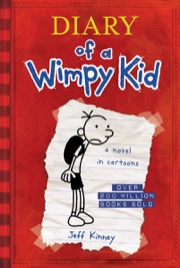
Is Diary of a Wimpy Kid Appropriate for 8-Year-Olds? Pare...
Complete guide to whether Diary of a Wimpy Kid is right for 8-year-olds. Covers content, reading level, parent concerns, and age-by-age recommendations.
Quick Verdict
Yes, Diary of a Wimpy Kid is generally appropriate for most 8-year-olds, though it works best for kids aged 9-11. The book features light comedy and relatable middle school humor, though some 8-year-olds may find the reading level or emotional themes slightly challenging. Check our interactive quiz to see if it’s right for your child.
The Kid-Parent Gap: The Heart of the Diary of a Wimpy Kid Story
Here’s what makes Diary of a Wimpy Kid interesting from a parental perspective: there’s a significant gap between what kids love about it and what parents hope it teaches.
According to KidsBookCheck’s proprietary rating system, kids rate the series at 79/100 (Kids Love Index), while parents rate it at 53/100 (Parent Value Index)—a 26-point gap. Here’s why this matters:
Kids adore the humor, the relatable friendship drama, and Greg’s unfiltered complaints about school life. Greg says and does exactly what they’re thinking—whether that’s selfish, manipulative, or ridiculous.
Parents worry about the character modeling because Greg lies to his parents, manipulates his best friend Rowley, and treats others poorly without much remorse. They wonder: will reading about Greg’s schemes teach their child similar behavior?
The answer is nuanced, and understanding this gap is essential for deciding whether now is the right time for your 8-year-old to pick up this book.
Content Profile: What’s Actually in the Book
Diary of a Wimpy Kid: Hard Luck (Book 8 in the series) centers on Greg’s friendship crisis when his best friend Rowley gets a girlfriend. Greg’s world spirals as Rowley becomes unavailable, leading Greg to execute increasingly ridiculous schemes to win him back.
Themes Your Child Will Encounter
- Friendship and loyalty tested by change – Rowley moves on; Greg must accept he can’t control his friend’s choices
- Growing up and social evolution – Characters navigate romantic interest, changing roles, and peer relationships
- Teenage insecurity and social hierarchy – Greg worries constantly about his social standing and embarrassment
- Family dynamics – Sibling teasing, family stability amid school chaos
- Accepting loss of control – The overarching lesson that trying to manipulate outcomes backfires
Content to Be Aware Of
| Content Type | What’s Present | Severity |
|---|---|---|
| Bullying | Depicted as social awkwardness and exclusion, not physical violence | Mild |
| Bathroom humor | Modest potty references and adolescent embarrassment situations | Light |
| Language | No profanity; age-appropriate throughout | None |
| Violence | Absolutely none; zero physical aggression | None |
| Lying & manipulation | Greg schemes and lies; consequences aren’t always immediate | Moderate concern |
| Disrespect | Greg complains about family; some sibling conflict | Mild |
| Sexual content | Completely absent; no romantic scenes beyond “girlfriend” mention | None |
| Drugs/alcohol | Nonexistent | None |
Key Parent Hesitation #1: “Will reading about Greg lying teach my child to lie?”
The book shows Greg’s schemes and dishonesty without glamorizing them. By the end, Greg learns that even when you don’t get caught, your actions have social consequences. Some 8-year-olds understand this irony; some don’t yet. This is where age and maturity matter.
Key Parent Hesitation #2: “The writing seems too simple—is it actually good for my child?”
According to our data, the book uses Grade 3-4 reading level vocabulary on purpose, making it accessible to emerging readers. But the emotional and social concepts operate at a Grade 5-6 level. This is why reluctant readers love it—they can read successfully while understanding complex friendship dynamics.
Reading Level: Lexile, Grade Level, and What It Means
| Metric | Score | What It Means |
|---|---|---|
| Lexile Level | 950L–1000L | Mid-upper elementary range |
| Grade Level (Guided Reading) | T–W | Upper elementary to early middle school |
| Accelerated Reader (AR) | 5.2 | 5th grade, 2nd month of school year |
| Typical Age Range | 9–11 years old | Sweet spot for independent reading |
| Can Handle If… | 8 years old | Strong reader, interested in humor and friendship stories |
The illustrations are crucial. Approximately one image appears per page, which breaks up the text and aids comprehension. This hi-lo design (high interest, lower reading level) is exactly why the series works so well for reluctant readers and early independent readers across grades 3–7.
How Diary of a Wimpy Kid Compares to Similar Books
| Book | Lexile | Age Range | Main Difference |
|---|---|---|---|
| Diary of a Wimpy Kid | 950L | 8–12 | Comedy-focused, heavy illustrations, diary format |
| Junie B. Jones | 500L–600L | 5–8 | Simpler reading level, younger protagonist, more innocent |
| Ramona series | 650L–750L | 6–10 | More emotional depth, lighter humor, classic prose |
| Percy Jackson | 670L–750L | 9–12 | Adventure plot, mythology, more complex narrative |
Age-by-Age Breakdown: What to Expect
Ages 7–8: Tread Carefully (With Caveats)
- Reading ability needed: Strong independent reader or read-aloud candidate
- Comprehension: Can enjoy the illustrations and basic humor
- Concern: May not understand the irony of Greg’s selfishness or the subtle messaging about consequences
- Recommendation: Best as a read-aloud at this age. You can narrate, pausing to discuss why Greg’s choices backfire or what he learns. Some mature 8-year-olds with advanced reading skills might handle it independently, but most benefit from adult scaffolding.
- Red flag: If your 8-year-old mimics Greg’s manipulative behavior without understanding it’s wrong, the book isn’t the right fit yet.
Ages 9–10: The Sweet Spot
- Reading ability: Independent reader (most are ready)
- Comprehension: Understand friendship drama intimately; laugh at the humor; grasp that Greg’s schemes fail
- Emotional fit: Navigating their own friendship changes, social anxiety, and identity—this book validates those feelings while making them laugh
- Recommendation: Perfect. This is the intended audience. Expect them to devour it and beg for the next book in the series.
- Bonus: Excellent conversation starter about friendship, loyalty, and making better choices
Ages 11–12: Still Works, Different Appeal
- Reading ability: Well above the level; reading for entertainment
- Comprehension: Recognize the comedic critique of middle school behavior
- Fit: Some will think it’s “too young” now; others will appreciate the humor and nostalgia
- Recommendation: Still appropriate but may feel juvenile. If they loved it at 10, they might outgrow it by 12. Bridge to more sophisticated middle-grade titles.
Ages 7 and Below: Not Yet
- Why: Requires understanding of written text, humor beyond slapstick, and social concepts still developing
- Alternative: Picture books about friendship or early readers like Junie B. Jones are better fits
The KidsBookCheck Scorecard: Understanding the Ratings
Our three-perspective rating system reveals why opinions on this book differ so dramatically:
Kids’ Perspective (79/100) — What Kids Love
| Aspect | Score | Why Kids Rate It High |
|---|---|---|
| First-chapter grab | 9/10 | Hooks with friendship conflict kids understand instantly |
| Middle momentum | 8/10 | Escalating embarrassment and failed schemes keep pages turning |
| Character voice | 9/10 | Greg’s authentic, selfish, relatable inner monologue |
| Laugh-out-loud | 9/10 | Abundant physical humor and awkward social observations |
| Playground quotability | 10/10 | Peak meme-ability; kids quote these moments constantly |
| Visual storytelling | 9/10 | Illustrations are integral to the humor and pacing |
Kids don’t care that Greg is a poor role model. They care that he’s real—he thinks the thoughts they think, says the things they’d never say aloud, and somehow survives the social chaos. That authenticity is magnetic.
Parents’ Perspective (53/100) — What Concerns Parents
| Aspect | Score | Parent Concerns |
|---|---|---|
| Vocabulary builder | 4/10 | Simple vocabulary by design; not challenging kids linguistically |
| Writing quality | 4/10 | Intentionally simple prose; literary sophistication isn’t the goal |
| Moral reasoning | 4/10 | Greg learns minimal lessons; growth is subtle, not transformative |
| Emotional sophistication | 3/10 | Comedy requires keeping feelings surface-level |
| Real-world window | 7/10 | Authentically shows middle school but doesn’t challenge stereotypes |
| Parent-child conversation starter | 7/10 | Great talking points about friendship and choices |
| Reading gateway | 8/10 | Proven series for reluctant readers; builds confidence and love of reading |
Parents appreciate the book’s utility—it gets reluctant readers excited about reading, sparks conversations, and legitimizes their kids’ feelings about friendships. But they worry about character modeling and wish for more literary depth.
Illustration: Why It Matters
The illustrations aren’t decorative—they’re load-bearing structural elements. Author-illustrator Jeff Kinney draws approximately one cartoon per page, which:
- Reduces cognitive load for emerging readers
- Amplifies humor (the visual gags land harder when you see them)
- Provides pacing breaks (visual rest points between text chunks)
- Aids comprehension (kids with decoding challenges can use images as anchors)
This makes the book accessible to a wider age range than the reading level alone suggests. An 8-year-old who struggles with dense paragraphs can still succeed because the illustrations carry meaning.
Movie Adaptations: Should They Watch First?
Current film landscape: Four live-action films (2010–2017), plus four animated films on Disney+, including Diary of a Wimpy Kid (2021), Rodrick Rules (2022), Christmas: Cabin Fever (2023), and upcoming releases The Last Straw (2025) and The Getaway (2026).
Book vs. Movie Question
Read the book first. Here’s why:
- The book provides the emotional foundation for why Greg’s behavior matters
- The movie streamlines and softens Greg’s more problematic choices
- Kids who’ve read the book laugh at details the movie can’t include
- Reading builds confidence before watching a visual adaptation
Movie-first kids sometimes struggle with the book’s subtlety and the slower pacing. The movie works as a gateway if your child resists reading, but the book deepens understanding and retention.
Before You Buy: Two Specific Parent Moments to Watch For
Our analysis identified two moments in the series that give parents pause:
Moment #1: The blame-shifting scheme (varies by book) Greg gets Rowley to take the fall for something Greg did. Parents worry: Is the book saying this is okay?
The book’s answer: No, but not immediately obvious. Kids see the short-term “win” (Greg avoided trouble) before the social consequence (Rowley’s hurt, their friendship ruptures). By the end, Greg realizes that getting away with lying isn’t the same as getting away with harm.
Moment #2: Greg’s family disrespect Greg complains constantly about his parents and siblings, sees them as obstacles to his social goals, and rarely shows gratitude. Parents wonder if their kids will internalize this attitude.
This one requires a maturity threshold. Older kids recognize the humor (his complaints are exaggerated, underscore his immaturity). Younger kids might miss the critique and just absorb the disrespect modeling.
Reading Level & Accessibility Table
| Reader Profile | Best For? | Modifications Needed |
|---|---|---|
| Strong 8-year-old reader | Yes, independently | None; illustrations help |
| Average 8-year-old reader | Read-aloud | Adult can explain humor, discuss choices |
| Reluctant 8-year-old reader | Yes, read-aloud | Take breaks, discuss illustrations, pause for humor |
| Advanced 7-year-old reader | Yes, with discussion | Scaffold understanding of consequences |
| 9-year-old reader (any level) | Absolutely | Perfect independent or group read |
| ESL/Second-language reader (intermediate) | Yes | Repetition, everyday vocabulary, illustrations aid meaning |
Frequently Asked Questions: Parents’ Most Common Questions
Is Diary of a Wimpy Kid better to read in the series order?
No. While later books reference earlier events, Hard Luck and other books work as standalones. New readers won’t feel lost, though familiarity with earlier books enriches the experience. If your child loves the first book, they’ll naturally want to read them in order. Starting anywhere in the series is fine.
My 8-year-old is a weak reader. Should we wait or do the book together?
Do the book together if your child shows interest. This is the sweet spot for read-alouds. You control pacing, explain humor, and model expression. Plus, discussing the friendship drama is exactly what 8-year-olds need. The goal isn’t independent reading prowess—it’s building confidence and love for stories.
The book has no explicit inappropriate content, so why do some parents dislike it?
The concern isn’t sexual content, violence, or language—it’s character modeling. Greg is selfish, manipulative, and disrespectful without immediate, dramatic consequences. Some parenting philosophies prioritize protagonists who embody virtues. Others believe seeing realistic (flawed) characters helps kids understand complexity. This is a values question, not a content question.
Should I be concerned about bathroom humor?
No. The potty humor is mild (“cheese touch,” bathroom embarrassment moments, typical adolescent grossness). It’s not crude or excessive. This is standard for the age group and serves the comedy.
What if my child isn’t into humor?
This book won’t work. If your child prefers adventure, fantasy, emotion, or serious plots, try Percy Jackson, Wings of Fire, or Ramona. Diary of a Wimpy Kid is comedy-first; without that appeal, it drags.
How long does it take to read?
Average read time: 3–7 days for an independent 9-11-year-old reader. 2–3 weeks for a read-aloud with an 8-year-old (depending on pacing and discussion). The book has 217 pages and 12 chapters, so it’s manageable without being a quick finish.
Movie Adaptations: Full Viewing Guide
The film franchise has evolved significantly. Here’s what to know:
Live-Action Films (2010–2017)
- Diary of a Wimpy Kid (2010): Adapts the first book; stays close to the source
- Rodrick Rules (2011): Focuses on sibling conflict
- Dog Days (2012): Summer break shenanigans
- The Long Haul (2017): Family road trip, more sentimentality
All rated PG; appropriate for ages 8+. The humor is similar to the books but broader, more visual. Parents generally approve; kids enjoy them but find the books funnier.
Animated Films (Disney+, 2021+)
- Diary of a Wimpy Kid (2021): Reimagines the first book with animation; more polish, slightly softer characterization
- Rodrick Rules (2022): Expands the sibling dynamic
- Christmas: Cabin Fever (2023): Original story (not based on a book)
- The Last Straw (2025): Upcoming
- The Getaway (2026): Upcoming
Verdict: Kids love both versions. The animated films are higher production quality and offer fresh takes. Some fans prefer the book’s subtlety; others prefer the movie’s visual comedy. They complement each other.
Internal Reading Pathway
Once your child finishes Diary of a Wimpy Kid, here’s where to go:
-
Stay in the series: All 18+ books in the Diary of a Wimpy Kid franchise work well. Each stands alone, though reading in order deepens appreciation.
-
Similar comedy-adventure books:
- Percy Jackson series – Adventure + humor, slightly older protagonist and more complex world-building
- Hilo series by Judd Winick – Sci-fi comedy with slightly more story depth
- Dog Man series by Dav Pilkey – Comics-style humor for slightly younger readers
-
Friendship-focused books without the comedy:
- Ramona series by Beverly Cleary – Emotional depth, warm family dynamics, softer humor
- From the Mixed-Up Files of Mrs. Basil E. Frankweiler – Friendship adventure with growth
-
Books addressing social anxiety and belonging:
- Wonder by R.J. Palacio – Acceptance, social dynamics, deeper emotional resonance
Use our interactive quiz to find the next perfect book for your child’s reading level and interests.
Reading Level Comparison by Series
| Series | Lexile | Age Range | Tone | Text Density |
|---|---|---|---|---|
| Diary of a Wimpy Kid | 950L | 8–12 | Comedy-first | Low (heavy illustrations) |
| Percy Jackson | 670L–750L | 9–12 | Adventure + humor | Medium |
| Wings of Fire | 640L–780L | 8–12 | Fantasy adventure | Medium |
| Hilo | 730L–800L | 7–11 | Comedy sci-fi | Medium (graphic elements) |
| Ramona | 650L–750L | 6–10 | Contemporary realism | Medium |
| Wonder | 770L | 8–12 | Contemporary + emotion | Medium-high |
The takeaway: Diary of a Wimpy Kid prioritizes accessibility and humor over reading challenge. If your child reads at grade level, they’ll find it easy but entertaining. If they read above grade level, they might finish it quickly but still enjoy the humor.
The Bottom Line: Should Your 8-Year-Old Read It?
The answer depends on three factors:
1. Reading Level
- Strong independent reader or read-aloud candidate? Go for it.
- Emerging reader who struggles with chapter books? Yes, as a read-aloud; the illustrations and humor will engage them.
- Struggling reader? Better as a read-aloud or wait one more year.
2. Maturity & Social Awareness
- Does your child understand social irony and consequences? (e.g., they get that Greg’s schemes fail) Excellent candidate.
- Do they understand friendship dynamics? (e.g., they know why Rowley being unavailable hurts Greg) Perfect match.
- Are they easily influenced by negative role models? (e.g., they’d copy Greg’s lying without understanding why it’s problematic) Wait and revisit at 10.
3. Interest Profile
- Does your child love humor and relatable stories? This book is perfect.
- Do they prefer adventure, fantasy, or action? Try something else.
- Are they navigating their own friendship changes? This book will feel validating and maybe cathartic.
The Verdict
For most 8-year-olds: YES, but with caveats. Best enjoyed as a read-aloud, with discussion about why Greg’s behavior doesn’t reflect good choices. For 9-11-year-olds: ABSOLUTELY. This is the intended audience; they’ll love it independently. For reluctant readers of any age in the 8-12 range: HIGHLY RECOMMENDED. The illustrations and accessibility make it a confidence-builder.
Ready to Decide? Take Our Quiz
Not sure if now’s the right time for your child? Take our 2-minute book-fit quiz to get personalized recommendations based on your child’s reading level, interests, and maturity. We’ll tell you whether Diary of a Wimpy Kid is ideal, suggest timing if you want to wait, or recommend similar books that might be a better fit right now.
Your child’s age is just one data point. Their specific reading level, sense of humor, and social awareness matter more. Let us help you find the perfect book for them.
Citation
Kinney, Jeff. Diary of a Wimpy Kid: Hard Luck. Illustrated by Jeff Kinney, Amulet Books, 2013.
Last Updated: March 24, 2026
Have questions or disagree with our assessment? Email our team or leave a comment. We read and respond to every message.