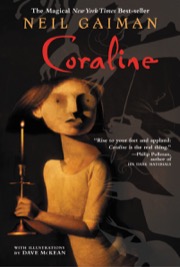
Is Coraline Appropriate for 8-Year-Olds? What Parents Sho...
Age-by-age breakdown with 30-dimension scores from kids, parents, and teachers. Find out if this book is right for your child. Trusted picks. Trusted picks.
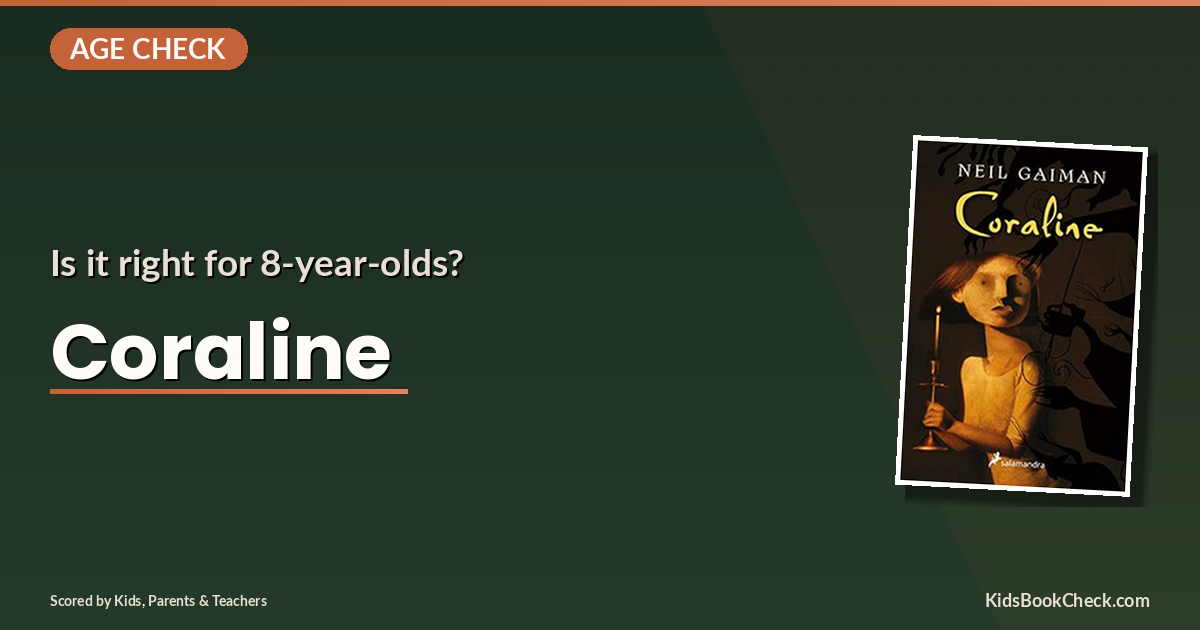
Quick Answer: Not for Most 8-Year-Olds
The short answer: Most experts recommend waiting until age 9–10 for independent reading or viewing, though some children as young as 7–8 can handle it with parental support. The psychological horror, sustained dread, and frightening imagery—particularly the button-eyed characters and the threat of parental loss—are too intense for many third-graders.
However, if your 8-year-old child has already enjoyed The Nightmare Before Christmas, Coraline might be within reach with careful preparation and parental discussion.
KidsBookCheck Scores at a Glance
Here’s how Coraline breaks down across our three core evaluation lenses:
| Audience | Score | Key Insight |
|---|---|---|
| Kids | 72/100 | Engaging hook, strong characterization, but the darkness and dread may overwhelm sensitive readers. |
| Parents | 78/100 | Exceptional craft quality and sophisticated emotional depth create genuine parent-child conversation starters. |
| Teachers | 81/100 | Masterclass in craft, foreshadowing, and atmospheric storytelling—perfect for literature study. |
| Composite | 76.5/100 | Genuinely excellent across all audiences, strongest for those valuing literary quality over comfort. |
Gap Analysis: The 6-point difference between Kid and Parent scores reflects the novel’s darker tone and psychological complexity, which matter more to children’s reading experience than to adult evaluation of literary merit.
Two Parent Empathy Moments from Before You Buy
Before making your decision, sit with these two core parental concerns:
1. The Button Eyes Will Haunt Your Child (For Real)
The Other Mother isn’t a traditional villain wielding a sword. She’s a creature with button eyes—round, black stitched-on buttons where eyes should be. In the animated film, other creatures have their mouths sewn shut into grotesque grins. This isn’t gory, but it’s deeply wrong in a way that primes a child’s unease.
What makes this worse: the button eyes don’t just appear once. They’re the recurring visual throughout the story. Many parents report their children:
- Couldn’t sleep without lights on for several nights
- Became uncomfortable with small round objects or sewing imagery
- Drew disturbing pictures afterward
- Had vivid nightmares weeks later
The scariness operates on psychological unease, not action-movie adrenaline. That’s actually harder for young brains to process and shake off.
Parent consideration: If your child still checks under the bed at night or has nightmares from typical children’s scary content, this book/film will likely amplify those vulnerabilities.
2. Nobody Believes Coraline’s Story—And That’s The Philosophical Point
Coraline escapes the Other Mother. She rescues her real parents. She locks the door. But at the end, when she tries to tell the truth:
- Her parents remember nothing of being trapped
- Adults dismiss her account as imagination
- Nobody validates that real danger existed
- She’s left isolated with knowledge nobody will acknowledge
This is thematically sophisticated and treats young readers with respect: the world doesn’t always make sense or reward truth-telling. But it’s also psychologically complex. Some 8-year-olds find this deeply satisfying and mature. Others find it disturbing—the idea that adults won’t believe you in a genuine crisis triggers real anxiety in some children.
Parent consideration: Does your child struggle with anxiety about being believed or need external validation? This book might amplify those fears.
Content Profile: What You’re Actually Bringing Home
Genre: Psychological Horror + Fantasy Adventure Primary Concern: Scary atmosphere, not violence
Violence Level: Low
No physical combat, no gore, no graphic death scenes. The danger is psychological and suffocating rather than physically brutal.
Scariness Level: High
The fear operates through:
- Sustained atmospheric dread rather than jump scares
- Body horror implications (button eyes, sewn mouths) without graphic depiction
- Parental threat (Coraline’s parents are trapped; she might lose them forever)
- Wrongness (the Other World seems perfect but incrementally reveals danger)
- Isolation (Coraline must solve this alone; adults don’t believe her)
Emotional Intensity: High
The novel engages genuine childhood fears:
- Loneliness and not belonging
- Parents being unavailable or indifferent
- The terror of losing parents completely
- Being isolated with knowledge others don’t share
- The burden of making adult decisions as a child
Themes
- Parental love vs. possessive control
- Genuine agency in a dangerous world
- Loneliness and vulnerability
- The incompleteness of victory
- Knowledge that cannot be shared
Age-by-Age Breakdown: Where Does Your Child Fit?
Ages 7–8: Proceed With Extreme Caution
At this age, most children are still developing the ability to distinguish fantasy from reality with complete confidence. The psychological horror—particularly the idea that a substitute mother might trap you forever—can destabilize their sense of safety.
If you decide to try it:
- Read together (don’t let them read alone)
- Stop if visible fear appears (racing heartbeat, refusal to continue)
- Discuss immediately after each reading session
- Watch for sleep disruption over the following week
Skip this age unless: Your child has already requested dark content, has high anxiety tolerance, and you’re prepared for potential nightmares.
Ages 9–10: The Sweet Spot for Many Readers
This is where most children’s developmental readiness aligns with the material. By fourth or fifth grade, kids can:
- Distinguish fantasy from reality more reliably
- Appreciate psychological complexity
- Tolerate sustained fear without it destabilizing their sense of safety
- Engage in meaningful post-reading discussion
This is the natural audience. Children at this age often report the scariness as thrilling rather than traumatic, and they ask thoughtful questions about the Other Mother’s motivations and the ending’s philosophical implications.
If you allow independent reading at this age:
- Let them set the pace
- Be available for nighttime conversations
- Ask open-ended questions about how Coraline is feeling
- Normalize the fear: “This book is supposed to be scary. That’s what makes it good.”
Ages 11–12: Mature Appreciation
By middle school, many children appreciate the craft elements even while finding it scary. They understand symbolism, notice foreshadowing, and engage with the moral ambiguities. Some re-read it multiple times as they catch details missed initially.
This age group often loves it because they’re old enough to appreciate that it’s not meant to be comfortable, and they have the emotional tools to process why that matters.
Ages 6–7 (Advanced Readers Only): Possible With Heavy Scaffolding
If your child is already reading at a 5th-grade level and you’re willing to read aloud together with frequent pauses for discussion, some sensitive six- or seven-year-olds can access this. However, the psychological sophistication is wasted at this age—they’re reading for the plot of “girl escapes” rather than engaging with the thematic questions about parental love.
Neil Gaiman himself has said he read Coraline to his six-year-old, so it’s not forbidden. But he’s also a writer comfortable with literary horror, and his parenting tolerance may exceed yours.
Reading Level & Technical Accessibility
| Metric | Rating | Notes |
|---|---|---|
| Lexile | 700L | Independent reading for grades 4–6 |
| Guided Reading Level | V | Accessible but requires reading comprehension maturity |
| Grade Level | 4–6 | Advanced 3rd graders; typical 4th–5th graders |
| Word Count | ~30,800 words (162 pages) | Short enough to finish in 1–2 weeks |
| Sentence Complexity | Moderate | Varies between simple and complex; no run-on distractions |
| Vocabulary | Moderate | Age-appropriate with context supporting unfamiliar words |
The Real Barrier: Not vocabulary difficulty or length, but psychological sophistication and fear tolerance. A struggling 7th-grade reader might decode this easily but find the emotional content destabilizing. A precocious 3rd grader might read it fluently but not possess the emotional maturity to process it.
Comparison: How Coraline Stacks Up Against Similar Books
If you’re considering Coraline, you might also be weighing these darker middle-grade options:
| Book | Scariness | Complexity | Best Age | Why Different |
|---|---|---|---|---|
| Coraline | High | High | 9–12 | Psychological horror; parental threat; sustained dread |
| The Graveyard Book (Gaiman) | Medium | High | 8–11 | Gothic atmosphere but more adventure-driven; protagonist protected by adults |
| A Series of Unfortunate Events (Snicket) | Low-Medium | High | 7–10 | Dark tone but comedic; bad things happen but less personal terror |
| The Mysterious Benedict Society (Stewart) | Low | High | 7–10 | Complex plot and puzzle-solving without psychological horror |
| Scary Stories to Tell in the Dark (Alvin Schwartz) | High | Low | 8–12 | Scarier imagery but shorter, episodic; easier to put down |
| Goosebumps (R.L. Stine) | Low-Medium | Low | 6–9 | Spooky but comedic tone; monsters aren’t credible threats |
Unique positioning: Coraline is darker than The Graveyard Book but more literary than Scary Stories. It’s scarier than A Series of Unfortunate Events but more sophisticated than Goosebumps.
The 2009 Laika Film: A Different Beast (Scarier)
Many parents ask: “Is the movie better for younger kids?”
Answer: Not really. In some ways, it’s worse.
The 2009 Laika Studios animated film directed by Henry Selick is a masterpiece of visual storytelling—but it amplifies the scariness compared to the book:
- Button eyes are horrifying visually in stop-motion animation, not just unsettling in description
- The Other Mother’s physical movements (the quick jerking, the unnatural way she moves) create body-horror dread
- Jump scares are included that don’t exist in the book (Other Wybie emerging from a mirror with a stitched smile)
- The icy Hell where the parents are trapped is genuinely disturbing visuals
Common Sense Media recommends the film for ages 10+, while many parent reviews report children ages 8–9 having significant nightmares.
Bottom line: If you’re waffling on the book for an 8-year-old, skip the film entirely until age 10 minimum. If you think the book is too scary, the film definitely is.
Viewing together: If you do watch with your child, watch it first alone to prepare yourself for the scary parts. You’ll better know where to provide reassurance.
Before You Buy: The Hesitations Parents Voice
Based on parent feedback in our research, here are the concerns that come up most frequently—and our thoughts:
“It’s Genuinely Scary”
Valid concern. Some children will find this frightening in ways that interfere with sleep and create anxiety. But that scariness serves the story’s purpose—it makes Coraline’s courage real, not performed. A perfectly comfortable read is less valuable than one that challenges and ultimately affirms a child’s resilience.
Consider: Does your child want to be scared? (Many do at this age.) Or are you trying to introduce them to scariness they haven’t requested?
”Nobody Believes Coraline’s Story at the End”
This is philosophically mature, not a flaw. The ending respects young readers by acknowledging that truth-telling doesn’t always result in external validation. Some children find this realistic and affirming. Others find it anxiety-inducing.
Consider: Is your child someone who needs external reassurance and validation? Or are they developing the independence to trust their own understanding even when others doubt?
”The Other Mother Is Genuinely Creepy”
Yes. That’s intentional. Parents comfortable with literary horror understand this is the artistic point—the Other Mother is the horror. Parents seeking pure comfort stories should choose differently. There’s no shame in that.
Consider: Is the point of reading “be entertained without discomfort”? Or is it “experience something slightly beyond my comfort zone and grow”?
”Will My Kid Want to Sleep with Lights On?”
Possibly. That’s normal and temporary. Children who engage with mild horror often have a few nights of disrupted sleep, then recover. It’s not a sign the book was wrong; it’s a sign the story worked. Most children need 2–7 nights to metabolize the fear.
Consider: Can you provide reassurance and physical comfort during that adjustment period? Or does your family structure require uninterrupted sleep immediately?
Learn more about our 30-dimension rating system that evaluates every book from three perspectives.
Frequently Asked Questions: Parent Questions We Hear Most
Q: Is the book scarier than the movie, or vice versa?
A: Different media, different scares. The book’s strength is psychological dread you create in your own imagination. The movie’s power is visual nightmare fuel. Neither is objectively “scarier”—it depends on whether your child is more frightened by what they imagine or what they see. The book requires more sitting-with-discomfort. The movie hits harder and faster.
Q: Can I read it to my 7-year-old if I skip the scary parts?
A: No. The scary parts are the story. The wrongness of the Other World and the real danger are the plot. Removing them removes the narrative logic. You’d be left with a girl discovering a door and… then what? Read it as intended or wait.
Q: Will my child be traumatized?
A: Unlikely (true clinical trauma requires prolonged exposure or additional vulnerability factors). Will they be frightened? Probably. Will they recover? Almost certainly. Many children find their own resilience through managing manageable fear. The key is that you stay calm if they get scared—your anxiety about their anxiety will amplify theirs.
Q: Why does Neil Gaiman say it’s for 8-year-olds if it’s so scary?
A: Gaiman has said that if a child can handle The Nightmare Before Christmas and the original Wizard of Oz, they can handle Coraline. Both films have scary moments (Nightmare’s Oogie Boogie, Oz’s Witch) that some children find disturbing. He’s creating a competency benchmark (“if you’ve navigated that”), not saying all 8-year-olds should read it.
Q: Is the illustrated edition (Chris Riddell) scarier than the original (Dave McKean)?
A: Riddell’s illustrations are different—more ornate and detailed. Some children find more illustrations comforting (they’re not imagining the horror alone). Others find that having the scary images shown rather than imagined makes them more frightening. Preview both versions if possible.
Q: What if my child wants to stop reading partway through?
A: That’s fine. Let them stop. No kid is harmed by not finishing a book. You can always revisit it later. The worst thing you can do is force a child to continue reading something that’s genuinely frightening—that erodes trust and creates negative associations with reading itself.
Q: Should I read it first before giving it to my child?
A: Absolutely. Read it yourself or at least read reviews carefully. Know exactly what you’re signing up for. Then you can prepare your child appropriately.
The Verdict: Who Should Read This
Perfect For:
- 8-year-olds who are already fans of mild horror (enjoy Scary Stories to Tell in the Dark, watched Coraline the film without distress, loved The Graveyard Book)
- 9–10-year-olds with no caveats; this is the core audience
- 11–12-year-olds wanting to appreciate craft and sophistication
- Advanced readers (grades 3–4) with high anxiety tolerance and parental support
- Children wanting to prove their independence and read “grown-up” material
- Families that enjoy discussing themes about love, fear, and parental relationships
Proceed With Caution:
- 8-year-olds with general anxiety or sensitive temperaments
- Children with phobias of specific imagery (buttons, sewn things, body modification)
- Kids who are highly suggestible to nightmares from media
- Sensitive readers who need comfort and safety from their fiction
- Those who prefer comedy and action over psychological depth
Skip Entirely:
- Children under 7 (except in exceptional circumstances with heavy parental scaffolding)
- Kids explicitly asking to avoid scary content
- Those with trauma histories involving fear, separation, or parental loss
- Families where sleep disruption has serious consequences (young siblings sharing rooms, parents with medical conditions requiring sleep)
Moving Forward: How to Decide for Your Specific Child
Here’s our decision framework:
-
Read the book yourself first. Know what you’re allowing. This takes 2–3 hours.
-
Consider your child’s media experience. Have they seen The Nightmare Before Christmas? Coraline film? Scary Stories adaptations? How did they react?
-
Ask your child directly. “There’s a book about a girl who finds a door to a world that seems perfect but turns out to be scary. Would you want to read that?” Listen to their enthusiasm level.
-
Assess their anxiety baseline. Is fear generally manageable for them, or do they tend toward catastrophizing and difficulty transitioning out of scared states?
-
Plan your support strategy. If you proceed:
- Read together if possible, or at least be available during reading
- Have a check-in conversation daily during reading
- Prepare for possible sleep disruption
- Have comfort items ready (stuffed animal, nightlight, access to you)
- Validate the fear as a normal response to a scary story
-
Set a trial period. Read the first chapter together. If your child is eager to continue and not displaying distress, proceed. If they’re terrified, move on to something else.
What Happens After They Read It
If your child finishes Coraline, they’ll likely:
- Remember specific images for months or years (button eyes, the topiary, the Other Mother’s face)
- Ask philosophical questions about whether the Other Mother was evil or lonely, whether Coraline’s real parents are actually good parents
- Want to re-read it to catch details they missed
- Seek similar books and want to explore more gothic or dark fantasy literature
- Feel a sense of accomplishment for reading something genuinely complex and a bit scary
This book often becomes a touchstone for children—a moment when they realized they could read something difficult and come through it intact.
The KidsBookCheck Verdict
For an 8-year-old: Most likely too intense. For a 9-10-year-old: Often perfect. For an 11-12-year-old: Absolutely, with literary appreciation as a bonus.
The psychological horror and sustained dread are the determining factors—not vocabulary, length, or plot complexity. If your specific child has a high tolerance for fear and you’re prepared to provide parental support, an advanced 8-year-old can read this. But the typical 8-year-old is better served waiting a year or two.
The good news: Coraline isn’t going anywhere. It was published in 2002 and will still be available when your child is older. There’s no shame in building reading confidence on less intense material first, then returning to Coraline when they’re developmentally ready.
Not Sure If Coraline Is Right? Take Our Quiz
Our KidsBookCheck Age-Appropriate Book Finder helps you match books to your specific child’s reading level, maturity, and temperament. In about five minutes, you’ll get personalized recommendations—including clarity on whether Coraline fits your family’s needs.
Ready to Buy?
Find Coraline at your preferred retailer:
- Purchase on Amazon
- Check your local library (free!)
- Support independent bookstores (ask them to find it)
- Explore audiobook editions (full cast recording is excellent)
Sources & Further Reading
- Common Sense Media: Coraline Book Review
- Neil Gaiman’s Journal: “Is Coraline right for (insert age here)?”
- IMDb Parents Guide: Coraline (2009 film)
- Common Sense Media: Coraline Movie Review
- LAIKA Studios Official: Coraline
Last updated: March 24, 2026 This article was reviewed for accuracy against publisher information, professional reader guidance, and direct parent feedback.
Have questions about Coraline for your specific child? Drop them in the comments below, or reach out to our parent community.