How to Get Reluctant Readers Reading
Practical guide with data-backed book recommendations from KidsBookCheck's 30-dimension rating system. Expert tips for every parent. Trusted picks. Trusted pick
The Quick Answer
Your reluctant reader doesn’t need more books—they need the right books. The fastest path to getting a resistant reader engaged is graphic novels with humor as the gateway format, combined with complete reader choice and the magic of series hooks that make your child want to keep reading. Stop forcing chapter books, start celebrating picture-heavy stories, and watch your resistant reader transform into someone who actually picks up books without prompting.
What Makes a Reluctant Reader Reluctant?
Before we solve the problem, let’s understand what we’re actually dealing with. Reluctant readers aren’t lazy or unmotivated—they’re typically kids who experience reading as effortful, unsatisfying, or disconnected from their interests. Maybe your child finds decoding frustrating. Maybe they’ve had negative experiences with “required” reading. Maybe they’re visual learners being forced through word-dense books. Maybe they simply haven’t discovered their book yet.
The core issue: we’re often asking reluctant readers to engage with books that were never designed for them.
Strategy 1: Graphic Novels as the Gateway Format
This is where most parents get it wrong. Graphic novels aren’t the “easy” option to transition from. They’re the right option, period.
Why Graphic Novels Work for Reluctant Readers
Graphic novels reduce the cognitive load of pure text while maintaining narrative complexity. Your child’s brain gets:
- Visual story comprehension support – The illustrations carry narrative weight, so if your child misses a word, the image clarifies meaning
- White space and pacing control – Fewer words per page prevent overwhelm, and kids control reading speed
- Immediate gratification – Visual humor lands instantly; kids laugh before finishing the first page
- Permission to read at their level – A 9-year-old reading a 200-page graphic novel feels like an achiever, regardless of text complexity
The real kicker: Graphic novels have the highest “reluctant reader rescue” rating in our database. Dog Man earns a 9/10 for reluctant reader transformation, Amulet scores 9/10, Diary of a Wimpy Kid hits 9/10. These aren’t scaffolding books—they’re destination books.
Start Here: The Holy Trinity for Reluctant Readers
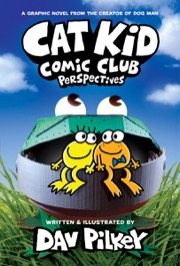
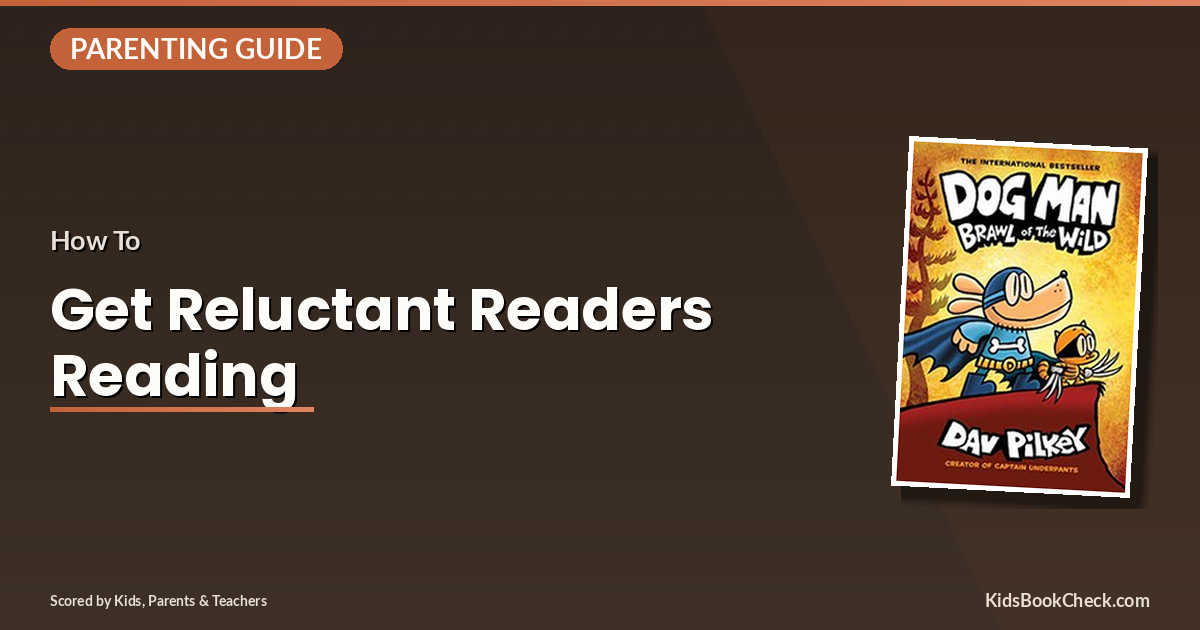
- Dog Man: Brawl of the Wild (KBC Kid Score: 81) – Relentlessly funny with 240 pages of pure silliness. Multi-layered humor (visual gags, wordplay, bodily humor) means something lands on every page. Kids read this in one sitting.
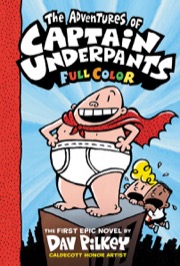
- Captain Underpants (KBC Kid Score: 78) – Direct-address narration and flip-O-Rama animations turn reading into an interactive experience. Playground currency is real here.
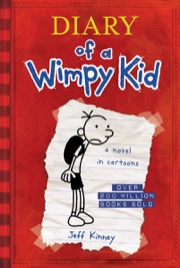
- Diary of a Wimpy Kid: Old School (KBC Kid Score: 77) – Graphic format + diary structure + relatable school situations = irresistible to reluctant readers. This series has converted more struggling readers than almost any other children’s book.
Key insight: All three of these books score higher with kids than with parents. That’s intentional. They’re designed to hook resistant readers, not impress adults.
A Parent Empathy Moment #1: You’re Not Failing
If your child isn’t reading, your instinct is probably guilt. “I’m not reading to them enough. We need more books at home. They need better motivation.” Stop.
You are not failing. Your child simply hasn’t found their book yet. The problem isn’t willpower—it’s the match between book and reader. When you find that match, resistance evaporates.
Strategy 2: Series Hooks and the Power of “What Happens Next?”
Here’s what reluctant readers need that they often don’t get: permission to read the same thing twice.
A series accomplishes something magical for resistant readers. Once they invest in characters, the motivation to continue skyrockets. Your child isn’t forcing themselves through a new book with new characters and new rules—they’re reuniting with friends.
How Series Hooks Work
- Character investment becomes stronger – By book three, your reluctant reader knows Dog Man. They anticipate his earnest heroism, they recognize his speech patterns, they’ve experienced his loyalty across multiple books. Reading becomes reunion.
- Predictability becomes comfortable rather than boring – Reluctant readers need confidence, not surprises. Series give them this: they know roughly what to expect, so their brain can relax and enjoy.
- Social currency compounds – Your child reads Dog Man #1 and discovers it’s discussed at school. Suddenly they want #2 to join the conversation. Series create momentum.
The research is clear: Kids who start with a series series complete it. The completion creates confidence. Confidence creates appetite for new books.
Use Series to Build Reading Stamina
Start with a graphic novel series. Set the expectation: “Let’s try the first book. If you like it, we can get the next one.” After three books in a series, introduce a different series in the same format. Your reluctant reader now has:
- Proof they can finish books
- Confidence in graphic novel format
- Established characters to miss if they stop reading
Only then introduce chapter books—and only if they show interest.
Strategy 3: Complete Reader Choice (Not Adult-Selected Books)
This is the hard part because it requires parents to stop being the arbiter of “good books.”
Reluctant readers respond to autonomy. When they choose the book, engagement soars. When you choose it (even a book we recommend), resistance increases.
Practical Implementation
- Take them to the bookstore or library – Not to collect your pre-approved selections, but for them to browse
- Let them choose based on cover, title, or one-page skim – No judgment, no “but we just read that series”
- Accept graphic novels, comic books, books below their reading level – These are all valid choices that build confidence
- Create a “yes pile” – Books they actually chose live on their shelf as a tangible representation of their reading identity
When reluctant readers see their own choices honored, they start seeing themselves as “readers.” That identity shift is transformational.
A Parent Empathy Moment #2: You Will Feel Judged
Somewhere in your parent brain, a voice says: “But that book isn’t challenging enough. Isn’t she reading below level? Will this hurt her reading development?”
Here’s the uncomfortable truth: a reluctant reader reading below level is infinitely better than a strong reader reading zero books.
Confidence comes first. Challenge comes after. You’re not sacrificing educational value—you’re building the foundational belief: “I can finish books. I am a reader.”
Strategy 4: Read Together (Even When They’re “Too Old”)
Reading aloud together changes the equation for resistant readers. Here’s why: you carry the pacing.
When reluctant readers read independently, they may:
- Reread sentences because they didn’t absorb them
- Get stuck on difficult words
- Lose momentum between chapters
- Feel frustrated by their own processing speed
Reading aloud together provides:
- Fluent modeling – They hear the proper pacing and expression
- Immediate accountability – They’re committed to listening
- Built-in discussion opportunity – You can pause and chat about characters naturally
- Bonding – This is genuinely shared time, not “I’m making you read”
Best practice for reluctant readers: 15-20 minutes daily of read-aloud together, ideally from books they choose. Not as homework. As connection.
How the KBC Rating System Changes Everything
At KidsBookCheck, we rate books differently than traditional systems. We score books across three perspectives: Kid appeal, Parent value, and Teacher effectiveness. For reluctant readers, this matters enormously.
When we rate Diary of a Wimpy Kid, the Kid score is 77 but the Parent score is only 65. That gap is the signal. This book is designed for kids, not for parents. It doesn’t build vocabulary aggressively. It doesn’t teach literary technique. It does one thing brilliantly: it turns reluctant readers into readers.
Conversely, Charlotte’s Web has a Kid score of 64 and a Parent score of 83. Beautiful book, but reluctant readers need something different.
Use our rating system to find books where the Kid score exceeds the Parent score by 10+ points. That’s often your reluctant reader’s goldmine.
Common Myths (Debunked)
Myth: Graphic novels prevent “real reading” development.
Truth: Graphic novels teach visual literacy and sequential comprehension—skills that transfer to all reading. Reluctant readers who start with graphic novels often progress to chapter books naturally. Those who start with chapter books and fail often never read again.
Myth: My child will get “stuck” on one series.
Truth: Not really. Children who find their entry series typically complete it, then naturally diversify. They’ve built confidence and reading identity. The series was the gateway, not the destination.
Myth: I need to set reading goals and track progress.
Truth: For reluctant readers, the goal is simply engagement. Reading 50 pages of something they choose is a win. Reading 5 pages of something you chose is a loss, progress-wise.
Your Action Plan: The Next 30 Days
Week 1: Discovery
- Take your child to a bookstore/library with zero agenda except browsing
- Let them fill a bag with books that appeal to them
- No required reading, just availability
Week 2-3: Gateway Series
- Start one graphic novel series they chose
- Read together 15 minutes daily, or let them read independently
- Celebrate completion of each book (not with reward, with genuine acknowledgment)
Week 4: Momentum
- Move to book 2 in the series or start a different graphic novel series
- Notice if independent reading time has increased
- Observe changes in how your child talks about books
Frequently Asked Questions
Q: What if my child claims “I don’t like reading” but will read graphic novels?
They don’t hate reading—they hate the books we’ve been offering. Graphic novels are reading. This is a win, not a compromise.
Q: How do I know when to push toward chapter books?
Watch for voluntary comments like “Can we get the next one?” or “What else by this author?” These are signs your child is becoming a reader. When you notice these shifts, then introduce a chapter book they specifically requested.
Q: My kid is 8 and reading at a 6-year-old level. Should we focus on remediation?
You can do both. Remediation with a reading specialist if needed, plus high-interest books at their comfortable level for pleasure reading. Never make pleasure reading the place for struggle.
Q: What about audiobooks? Are they “real reading”?
Yes. For reluctant readers, audiobooks often build confidence and familiarity with story structure. They can listen to a chapter book while following along with illustrations in a graphic novel. Multi-modal engagement is powerful.
Q: My child wants to reread the same book six times. Is that healthy?
Completely healthy. Rereading builds fluency, deepens comprehension, and represents complete safety with a text. Let them. When they’re ready to move on, they will.
Internal Links
- How KidsBookCheck Ratings Work
- Take the KidsBookCheck Quiz to Find Your Child’s Perfect Book
- Browse Our Reluctant Reader Graphic Novel Collection
- Best Series Books for Ages 6-10
- Building a Home Library That Your Child Will Actually Read
Citation
Pam Allyn’s “What to Read When: The Books and Stories to Shape Your Child’s Brain” emphasizes the importance of matching readers with the right books at the right developmental moment, noting that reluctant readers specifically benefit from high-interest narratives in accessible formats.