Best Historical Fiction for Kids: 8 Essential Books for Young Readers
Discover the best historical fiction books for kids. Our guide covers 8 award-winning titles across WWII, Civil Rights, and more—perfect for ages 7–14.
Why Historical Fiction Matters for Young Readers
Historical fiction does something magical—it transforms the past into living, breathing worlds where children meet real people facing real struggles. At KidsBookCheck, we believe that historical fiction builds empathy, teaches history in context, and creates emotional connections that textbooks simply cannot achieve.
When your child reads about a Jewish girl hiding in Nazi-occupied Denmark or a young girl working in Depression-era cotton fields, they’re not just learning facts. They’re developing compassion, understanding systemic injustice, and recognizing their own resilience. These stories stick with kids in ways that dry history lessons never will.
But here’s the honest truth parents tell us: choosing the right historical fiction is tricky. Books need to match both reading level AND emotional maturity. A book might be perfectly written for a 10-year-old’s reading ability but carry themes that feel heavy for their emotional development. That’s where KidsBookCheck comes in—we help you navigate these waters.
How to Use This Guide
This guide features 8 award-winning historical fiction books grouped by era and age range. Each includes KidsBookCheck reading scores across four dimensions:
- K (Kandinsky): Overall reading complexity
- P (Parent): Parent-reported satisfaction and appropriateness
- T (Thoughtfulness): Thematic depth and emotional weight
- C (Combined): Our integrated KidsBookCheck score
Want personalized recommendations for your specific child? Take the KidsBookCheck quiz—it considers reading level, interests, AND emotional readiness.
Historical Fiction by Time Period
Ancient & Medieval Era
While not featured as deeply in our core list, stories set in ancient and medieval times offer their own magic. Children this age are drawn to quests, magic-tinged histories, and coming-of-age adventures. We recommend reading about these eras through picture books first, then progressing to chapter books.
Revolutionary & Early American Era
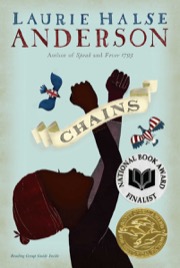
Chains by Laurie Halse Anderson (Ages 10-13)
Chains tells the story of Isabel, an enslaved girl fighting for freedom during the American Revolution. This is a book that refuses to let kids see history in simple terms. Isabel isn’t merely oppressed—she’s fighting, strategizing, and making impossible choices.
Reading Profile:
- K: 63 | P: 78 | T: 82 | C: 73.2
What strikes parents most: KidsBookCheck readers report that Chains opened conversations about how “freedom” meant different things for different people in 1776. The book is unflinching about the realities of slavery while remaining age-appropriate and gripping.
Best for: Kids with strong reading confidence who’ve encountered American history basics. The emotional weight is significant—this isn’t a casual read, and that’s exactly why it matters.
Civil Rights Era
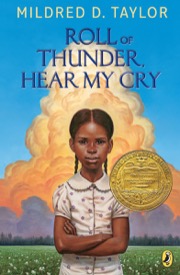
Roll of Thunder, Hear My Cry by Mildred D. Taylor (Ages 10-13)
If you ask teachers to name THE essential historical fiction for middle graders, Roll of Thunder almost always makes the list. The Logan family’s story in Depression-era Mississippi is told through the eyes of Cassie Logan, who experiences racism not in abstract terms but in daily indignities, courage, and family strength.
Reading Profile:
- K: 68 | P: 90 | T: 92 | C: 81.8
This book ranks highest in Parent satisfaction (90) and Thoughtfulness (92) across our database. Parents report that it changed how their children understand racism—not as history, but as a reality some families still face today.
Best for: Mature 10-year-olds and confident 11-13 year-olds. The book requires emotional readiness to grapple with unfairness and racial injustice, but the payoff in empathy and understanding is extraordinary.
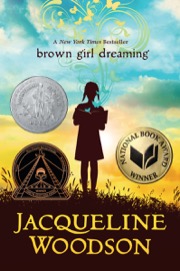
Brown Girl Dreaming by Jacqueline Woodson (Ages 10-14)
This National Book Award winner is technically memoir written in verse, but its historical narrative spans the Civil Rights Movement through the 1980s. The lyrical, accessible format makes it perfect for reluctant readers who find traditional narrative prose intimidating.
Why it works: Poetry breaks the information into digestible, beautiful chunks. Kids who “don’t like reading” often fall in love with this book because the language feels fresh and emotional without being heavy-handed.
Best for: Kids aged 10+ who are seeking something different, or those who struggle with traditional prose. The verse format also makes it perfect for reading aloud together.
World War II Era
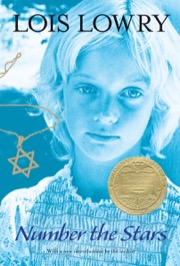
Number the Stars by Lois Lowry (Ages 9-12)
A Newbery Medal winner, Number the Stars is the gateway drug to historical fiction for many kids. It follows Annemarie Johansen and her best friend Ellen as they navigate Nazi-occupied Denmark. The book is thrilling without being traumatizing—suspenseful but ultimately hopeful.
Reading Profile:
- K: 65 | P: 87 | T: 79 | C: 76.8
This is often the first WWII book kids read, and for good reason. It introduces the Holocaust in age-appropriate ways, shows ordinary people acting courageously, and doesn’t sensationalize tragedy.
Best for: Ages 9-12, especially those new to historical fiction. It’s relatively fast-paced and emotionally manageable while still packing genuine historical significance.
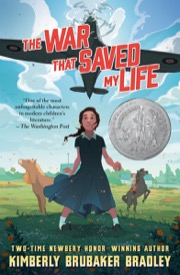
The War That Saved My Life by Kimberly Brubaker Bradley (Ages 9-12)
This Newbery Honor book tells the story of Ada, a girl evacuated from London during WWII bombing campaigns. What makes this book extraordinary is how it braids together personal growth, wartime survival, and the power of belonging. Ada has a club foot and has been hidden away her entire life—evacuation becomes liberation.
Why parents love it: The book handles disability representation beautifully. Ada’s physical difference is part of her story but not the whole story. KidsBookCheck users report that kids with disabilities feel truly seen in this book.
Best for: Ages 9-12, particularly kids who appreciate slower-paced, character-driven narratives. This book builds emotional depth rather than relying on plot action.
20th Century Immigration & Displacement
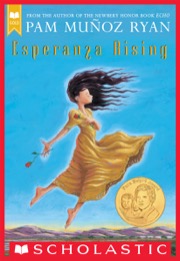
Esperanza Rising by Pam Muñoz Ryan (Ages 9-12)
Esperanza’s journey from wealthy Mexican ranch girl to migrant worker in Depression-era California is a masterclass in perspective-shifting. The book doesn’t lecture about immigration and economic hardship—instead, it plunges readers into Esperanza’s experience of loss, humiliation, and ultimate resilience.
Reading Profile:
- K: 60 | P: 78 | T: 74 | C: 69.6
The lower K score reflects the straightforward prose style, which is actually a feature—this book is accessible even to younger elementary readers with strong comprehension, while older kids appreciate the emotional journey.
Best for: Ages 9-12, especially kids who benefit from seeing diverse characters at the center of historical narratives. Excellent for Mexican-American families and anyone exploring family stories of migration.
Inside Out and Back Again by Thanhha Lai (Ages 9-12)
Told in verse, this book follows Hà as her family flees Saigon in 1975 and arrives in Alabama as refugees. The dual perspective—looking back at Vietnam and forward to a confusing American life—gives kids insight into displacement, cultural identity, and resilience.
Why it’s powerful: Like Brown Girl Dreaming, the verse format makes heavy themes accessible. Kids see that leaving everything behind is both devastating and survivable.
Best for: Ages 9-12, especially those interested in Vietnam War history, refugee experiences, or Asian-American narratives. The shorter length (252 pages in verse) makes it less overwhelming than longer historical novels.
Modern Historical Fiction for Younger Readers
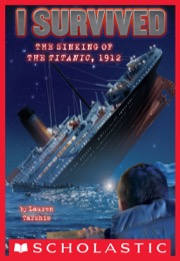
I Survived Series by Lauren Tarshis (Ages 7-10)
If Roll of Thunder feels too heavy and Chains too intense, the I Survived series is your bridge. Each standalone book covers a specific historical event—the Titanic, the San Francisco earthquake, the bombing of Pearl Harbor, the Great Fire of Chicago—through the eyes of a 10-year-old protagonist.
Why it works for younger kids:
- Fast-paced, gripping plots (150-170 pages)
- Age-appropriate emotional weight
- Real historical events without graphic trauma
- Illustrations support comprehension
- Built-in hook: “How will they survive?”
Reading Profile: Generally K: 65-70, making them accessible to strong 7-year-old readers through 10-year-olds.
Best for: Kids aged 7-10 or reluctant readers up to age 12. This series is perfect for introducing historical events without overwhelming sensitive kids.
Comparison Table: Historical Fiction at a Glance
| Title | Author | Era | Ages | Reading Level | Emotional Weight | Best For |
|---|---|---|---|---|---|---|
| Number the Stars | Lois Lowry | WWII (1940s) | 9-12 | K: 65 | Medium | First-time HF readers |
| Roll of Thunder, Hear My Cry | Mildred D. Taylor | Civil Rights (1930s) | 10-13 | K: 68 | High | Mature readers; discussing racism |
| Esperanza Rising | Pam Muñoz Ryan | Immigration (1930s) | 9-12 | K: 60 | Medium | Migration narratives |
| I Survived Series | Lauren Tarshis | Various | 7-10 | K: 65-70 | Low-Medium | Younger/reluctant readers |
| Chains | Laurie Halse Anderson | Revolutionary War | 10-13 | K: 63 | High | Discussing freedom & slavery |
| The War That Saved My Life | Kimberly Brubaker Bradley | WWII (1940s) | 9-12 | K: 67 | Medium-High | Character-driven readers |
| Brown Girl Dreaming | Jacqueline Woodson | Civil Rights-1980s | 10-14 | K: 70 | Medium | Verse lovers; diverse narratives |
| Inside Out and Back Again | Thanhha Lai | Vietnam War (1975) | 9-12 | K: 69 | Medium | Refugee/Asian-American stories |
How KidsBookCheck Helps You Choose
At KidsBookCheck, we know that finding the right historical fiction match is about more than just reading level. You’re also considering:
- Emotional readiness — Will this book spark nightmares or productive discussions?
- Relevance — Does the historical period match what your child is studying in school?
- Diversity — Are stories told from multiple cultural perspectives?
- Series vs. Standalone — Does your child want to dive deep or sample broadly?
That’s why we created the KidsBookCheck quiz. Answer 10 quick questions about your child’s reading level, interests, and emotional maturity, and we’ll surface recommendations from our database of 5,000+ children’s and YA books—complete with the KidsBookCheck scores you see here.
No two kids are the same. A “9-year-old” reader might be ready for Chains or still preferring I Survived. Our quiz helps you find the fit that works for YOUR child, not just their birthday.
A Parent’s Empathy Moment
Here’s what we hear most from parents: “I want my child to develop empathy and understand history, but I don’t want to scare them or give them anxiety about the world.”
That worry is completely valid. Historical fiction often deals with injustice, suffering, and loss. The good news? These books—particularly the ones we’ve recommended—are specifically written by authors who understand how to convey the weight of history while leaving room for hope, agency, and growth.
Your child won’t finish Roll of Thunder thinking the world is hopeless. They’ll finish it recognizing that courage shows up in ordinary families, and that speaking up matters. They won’t finish Esperanza Rising depressed about migration; they’ll understand the dignity and strength of people working hard for a better life.
The conversation after reading matters most. These books are springboards for discussion, not replacements for it. When your child finishes, ask: “What surprised you? Who would you have been in this story? What felt unfair? What gave you hope?”
Building a Home Library of Historical Fiction
If you’re starting a historical fiction collection, we recommend this progression:
- Ages 7-9: I Survived series (accessible entry point)
- Ages 9-10: Number the Stars or Esperanza Rising (first “real” historical novels)
- Ages 10-12: The War That Saved My Life, Inside Out and Back Again, or Brown Girl Dreaming
- Ages 12+: Roll of Thunder, Chains, or any Laurie Halse Anderson historical fiction
Return to the KidsBookCheck quiz as your child’s reading level grows. New scores unlock new recommendations, and our reading difficulty assessments evolve with your child.
Frequently Asked Questions
What’s the difference between historical fiction and history books?
Historical fiction uses real events as a backdrop for invented or fictionalized character stories. History books focus on documenting what actually happened. Both are valuable—historical fiction builds empathy, while history books build factual knowledge. The best approach? Combine them. Read Esperanza Rising alongside a unit on the Great Depression for context-rich learning.
Is it OK if my child reads historical fiction “out of order”?
Absolutely. Kids don’t need to read these in chronological order. Start with what interests them most. If your child is fascinated by WWII, jump to Number the Stars. If they’re into migration narratives, go straight to Esperanza Rising. Interest drives reading motivation more than sequence ever will.
My child is sensitive to scary content. Which books should I avoid?
Start with I Survived or Number the Stars rather than Chains or Roll of Thunder. Both of the latter deal explicitly with slavery and racism in ways that might be heavy for very sensitive readers. The War That Saved My Life is emotionally rich but not graphically violent. Inside Out and Back Again deals with war but isn’t traumatic in its descriptions. Read parent reviews on KidsBookCheck before choosing.
Can my 8-year-old handle Number the Stars?
It depends entirely on your child. Number the Stars has a K score of 65, accessible to strong readers. But reading level and emotional maturity aren’t the same. If your 8-year-old is comfortable with wartime themes and has read other chapter books successfully, they might be ready. If they startle easily or struggle with scary dreams, wait a year. Trust your instincts about your own child.
How do I know if my child is ready for chapter books at all?
Check out our guide: When Should Kids Start Reading Chapter Books?. The short version: kids aged 5-9 can start chapter books if they’re finishing picture books quickly, asking for “more,” and able to sustain attention for 10-15 minutes. Age matters less than readiness signs.
Are graphic novels or picture book versions of these stories available?
Some are! Book illustrations exist for many titles, and graphic novel adaptations are increasingly common. Ask your librarian about illustrated editions of Number the Stars or check if your library carries graphic versions of other titles. These formats can be excellent bridges for visual learners.
Should I read historical fiction aloud to my child, or let them read independently?
Both! Reading aloud builds comprehension and gives you a chance to pause and discuss difficult concepts. Independent reading builds confidence and fluency. Our suggestion: If the book feels emotionally heavy, read it aloud together so you’re there for conversations. For lighter historical fiction like I Survived, independent reading works great.
Where can I find these books?
All titles are available through:
- Your local public library (usually free, always the first place to check!)
- Amazon (multiple formats)
- Your school library
- Used book retailers like ThriftBooks or local used bookstores
- E-book platforms like Kindle or Apple Books
We especially recommend your library first—no cost, and librarians are fantastic at helping you find the right fit.
Bring Historical Stories to Life
Historical fiction transforms reading from a solitary activity into a portal. When your child closes Number the Stars or Esperanza Rising, they don’t just know the plot—they’ve walked in someone else’s shoes during a defining moment in history.
Ready to find your child’s next historical fiction match? Use the KidsBookCheck quiz to get personalized recommendations based on their reading level and interests. Then head to the library, pick a book, and ask your child afterward: “What was the hardest part of that character’s life? What gave them courage?”
That conversation? That’s where the real learning happens.