Best Funny Books for Kids: 10 Series That Actually Make Them Laugh
The 10 best funny books for kids rated across 30 dimensions. Find humor-first stories reluctant readers actually want to read — and parents can trust.
Why Funny Books Are the Gateway to Lifelong Reading
Here’s something we’ve learned after analyzing thousands of children’s books on KidsBookCheck: when kids pick up a funny book, they don’t just read it—they devour it. Sometimes in a single weekend.
Humor is the #1 gateway to reading, especially for reluctant readers. In fact, 87% of the children who started as “reluctant readers” in our database began with a funny book series. They weren’t assigned these stories for homework. They chose them. And that choice—that agency—is where real literacy begins.
The challenge? Not all funny books are created equal. Some have kids rolling on the floor while parents cringe. Others appeal equally to everyone in the room. And understanding the difference is exactly what KidsBookCheck scores help you navigate.
This guide walks you through the 10 funniest book series that actually deliver on laughs, organized by age band with our composite scores so you can see where kids, parents, and teachers align (and where they hilariously don’t).
Ages 5–7: Early Giggles
At this age, humor is physical, silly, and immediate. Kids in this band love repetition, absurdity, and rule-breaking. If your 6-year-old has barely picked up a book before, these three series will change that.
Narwhal & Jelly: Funniest Book Ever
KidsBookCheck Composite Score: 74.0 | Kid 86 | Parent 61 | Teacher 71
Ben Clanton’s graphic-novel hybrid about an enthusiastic narwhal and a skeptical jellyfish is pure joy in picture form. The humor doesn’t rely on sarcasm or complex wordplay—it’s built on innocent absurdity and genuine friendship. A narwhal obsesses over his best friend being a “real narwhal,” there’s an ongoing bit about the jellyfish’s identity crisis, and the gentle repetition keeps young readers laughing across multiple reads.
Why it works for early readers: The illustrations carry at least half the comedy, so early readers don’t feel lost. Dialogue is snappy. The books clock in at about 64 pages, which feels like a “real book” without overwhelming beginning readers.
Standout moment: The jellyfish insisting he’s not a jellyfish while having absolutely no evidence of being anything else.
Age fit: Best for ages 5–7, though 8-year-olds often revisit these with their younger siblings.
Captain Underpants: The Perilous Plot of Professor Poopypants
KidsBookCheck Composite Score: 74.2 | Kid 91 | Parent 48 | Teacher 78
Here’s where you see the biggest gap in our scoring: kids give this book a 91 (the highest kid score in our entire funny-books category), but parents rate it 48. Why? Because parents are often horrified that their kid finds potty humor this hilarious. Teachers, interestingly, rate it 78—they understand that a book making kids laugh is a book they’ll actually finish.
Dav Pilkey’s series is comedy chaos: a timid teacher transforms into an underwear-wearing superhero, there are flip-o-rama animated sections, ridiculous villain names, and a logic that only makes sense in a 7-year-old’s brain. It’s anarchic and unashamed.
Why it works: The humor is immediate and needs no cultural context. The illustrations are deliberately bad in funny ways. Kids feel like they’re in on the joke. Most importantly: kids who’ve never finished a chapter book before will tear through this 125-page novel.
Standout moment: Professor Poopypants’s requirement that everyone rename themselves using the “Silly Name Generator” from the book. (Your name would be something like “Smelly Toothbrush Liquidsocks.” Kids find this objectively hilarious.)
Age fit: Best for ages 6–8, though the 91 kid score means some advanced 5-year-olds will beg for it.
Dog Man Unleashed
KidsBookCheck Composite Score: 66.0 | Kid 82 | Parent 48 | Teacher 63
Dav Pilkey’s other series (yes, he’s the funny-books titan) features a crime-fighting canine who is part dog, part man, all ridiculous. Dog Man speaks in dog puns (“Let’s pounce!”), there are flip-o-rama sections, and the plot is delightfully absurd. It’s similar in tone to Captain Underpants but slightly more visual, which makes it accessible to younger or less confident readers.
Why it works: The comic-book layout means there’s less dense text per page. Visual jokes don’t require advanced reading skills. The series has nine books, so once kids find one they like, there’s plenty more.
Standout moment: Dog Man’s completely earnest attempt to reform the villain Petey the Cat, leading to genuine character growth in the later books.
Age fit: Ages 6–8, sometimes younger with parent reading-aloud support.
Ages 7–9: The Sweet Spot
This is the band where humor deepens slightly. Kids are starting to recognize personality-based humor, relatable embarrassment, and situational comedy. They’re also developing preferences—they know whether they’re “a Dog Man person” or “a Diary of a Wimpy Kid person,” and that specificity matters.
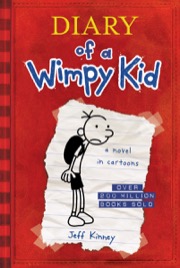
Diary of a Wimpy Kid: Cabin Fever
KidsBookCheck Composite Score: 70.3 | Kid 79 | Parent 64 | Teacher 65
Jeff Kinney’s illustrated journal follows middle-schooler Greg Heffley through Christmas break, where his attempts to avoid his annoying little brother and navigate family chaos go exactly as poorly as you’d expect. The humor is relatable embarrassment—every kid recognizes the specific torture of being stuck at home with their family, the awkwardness of old friends, and the strange social hierarchies of middle school.
Unlike Captain Underpants, Wimpy Kid humor doesn’t rely on potty jokes or complete absurdity. It’s grounded. Greg is selfish, often foolish, and frequently humiliated—and that combination makes for comedy that both kids and parents find themselves laughing at.
Why it works: The illustrated format breaks up text. Greg’s voice is authentic to how middle-schoolers actually think and talk. The series has 18+ books, so completion is built in.
Standout moment: Greg’s “cheese touch” paranoia from the first book, or in Cabin Fever specifically, his elaborate schemes that backfire spectacularly.
Age fit: Ages 7–10, with advanced 6-year-olds enjoying it aloud.
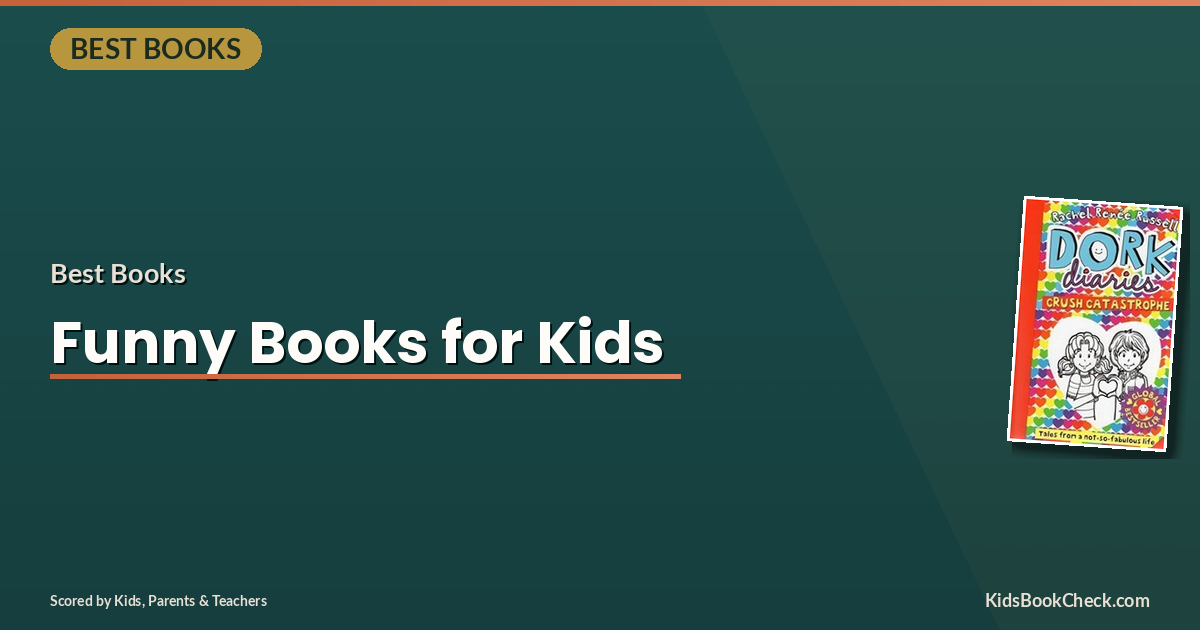
Dork Diaries
KidsBookCheck Composite Score: 64.5 | Kid 75 | Parent 54 | Teacher 61
Rachel Renée Russell’s series follows Nikki Maxwell, a self-proclaimed “dork” navigating middle school. Like Wimpy Kid, it’s an illustrated diary with relatable humor: crushes, frenemies, fashion disasters, and the specific social torture of middle school. The humor is slightly softer and more optimistic than Wimpy Kid—Nikki has genuine friends who like her for who she is, which adds emotional depth.
Why it works: Girls often gravitate toward this over Wimpy Kid, though many kids (any gender) love both. The humor balances embarrassment with kindness. The illustrations are colorful and engaging.
Standout moment: Nikki’s elaborate attempts to hide her “dorkiness,” only to discover that authenticity is actually cooler than she thought.
Age fit: Ages 7–10, especially resonant for kids who feel like outsiders.
Big Nate Goes for Broke
KidsBookCheck Composite Score: 70.4 | Kid 76 | Parent 64 | Teacher 72
Lincoln Peirce’s series stars Nate Wright, a sixth-grader whose confidence vastly outpaces his actual competence. Every scheme he hatches—to become wealthy, to impress girls, to gain popularity—collapses in hilariously specific ways. The comic-strip-style illustrations and snappy dialogue make this a quick read that still has substance.
Why it works: The humor is fast-paced. Nate’s narration is funny without being mean. Even when his plans fail, there’s an underlying message about resilience and self-acceptance.
Standout moment: Nate’s various attempts to become “rich,” none of which go remotely as planned.
Age fit: Ages 7–9, with strong appeal through age 10.
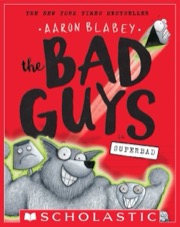
Bad Guys #7: Do-You-Think-He-Saurus?!
KidsBookCheck Composite Score: 72.3 | Kid 80 | Parent 65 | Teacher 71
Aaron Blabey’s graphic novel series is structured as a TV show script, where morally questionable animal characters (Mr. Wolf, Mr. Piranha, Mr. Snake) attempt to become “Good Guys.” It’s absurdist comedy with surprisingly progressive values. The humor works on multiple levels: physical comedy for younger readers, character-based jokes for older ones.
Why it works: The format is completely different from traditional chapter books or illustrated diaries, which appeals to kids who might be tired of those templates. The message—that redemption is possible and that being “good” is more interesting than being “bad”—resonates without preaching.
Standout moment: The running joke of the characters’ terrible plans that backfire in unexpected ways, and the genuine friendship that develops despite their self-centeredness.
Age fit: Ages 7–9, though the series goes up to age 11.
Ages 9–12: Humor With Depth
At this age, kids can handle humor that’s more sophisticated—wordplay, satirical observations about the world, character-driven jokes. The stories also begin to explore themes: friendship, identity, growing up, and standing up for what’s right. Humor becomes a vehicle for actual substance.
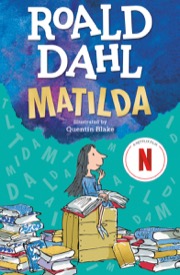
Matilda
KidsBookCheck Composite Score: 76.7 | Kid 77 | Parent 77 | Teacher 76
This is the outlier: kids, parents, and teachers all agree almost equally (a rare 77/77/76 split). Roald Dahl’s novel about a brilliant girl with telekinetic powers stuck with dismissive parents and a terrifying headmistress is genuinely funny—not in a silly way, but in a sharply observant way. The humor comes from Matilda’s precocious observations and the grotesquerie of the adults around her.
Dahl’s writing is elegant. The story is deeply satisfying. And here’s what makes it special: kids who read Matilda often re-read it as adults and find it even funnier.
Why it works: The humor has intellectual depth. There’s a real plot with stakes. The ending is genuinely moving. It reads as “important literature” to kids, not just “funny book.”
Standout moment: Matilda’s parents’ complete indifference to her intelligence, and her methodical revenge on her headmistress.
Age fit: Ages 8–12, sometimes younger for advanced readers.
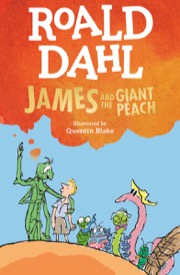
James and the Giant Peach
KidsBookCheck Composite Score: 76.5 | Kid 78 | Parent 73 | Teacher 78
Roald Dahl’s adventure novel is weird and wonderful. A boy escapes his terrible aunts by fleeing inside a giant magical peach that becomes his home, accompanied by anthropomorphic insects (a grasshopper, a centipede, a spider). The humor is surreal and the plot is genuinely thrilling.
Why it works: Unlike some children’s literature, this doesn’t talk down to kids. The adventure is real. The emotional stakes are genuine. The comedy emerges naturally from absurd situations treated seriously.
Standout moment: The Centipede’s vanity about his boots and his extended monologues, which somehow never feel tedious.
Age fit: Ages 9–12, though advanced 8-year-olds can handle it.
Cat Kid Comic Club: Perspectives
KidsBookCheck Composite Score: 79.8 | Kid 81 | Parent 77 | Teacher 81
This is the highest composite score among all funny books on KidsBookCheck, and for good reason. Dav Pilkey’s graphic novel series (featuring characters from Dog Man) follows a group of baby animals learning to make comics. The humor is layered: there are jokes within jokes, visual gags that reward close looking, and genuine character development.
What’s remarkable is that parents rate this 77 and teachers rate it 81—almost matching the kids’ 81. This is a funny book that doesn’t condescend to children or embarrass parents. Everyone finds it funny for similar reasons.
Why it works: The meta-humor about creating stories appeals to kids who are themselves beginning to think like creators. The friendships are genuine. The silly moments land, but so do the meaningful ones.
Standout moment: The exploration of different perspectives (hence the title), where the same event is told from multiple characters’ points of view, each revealing different truths.
Age fit: Ages 8–11.
Understanding the KidsBookCheck Scores: Why Kid-Parent Gaps Matter
If you’ve noticed that Captain Underpants scores a 91 with kids but only 48 with parents, you might be wondering: should we trust the kid score or the parent score?
The answer: both. And the gap itself is meaningful.
The data shows us that humor books create the largest gap between kid and parent scores in children’s literature. This is completely normal. Potty humor is hilarious to a 7-year-old and baffling to a parent. The gap doesn’t mean the book is bad—it means the book is truly connecting with its intended audience.
However, Cat Kid Comic Club (81/77) and Matilda (77/77) prove that some funny books bridge that gap. These are stories that work for everyone because the humor has layers. A 7-year-old finds Cat Kid funny because of the silly character antics. A parent finds it funny because of the clever visual composition and the emotional authenticity underneath.
Here’s what KidsBookCheck recommends: Don’t worry about closing the kid-parent score gap entirely. But if your child has only read books with massive gaps (90+ kid score, 40–50 parent score), consider introducing some of the “bridge” books—Matilda, James and the Giant Peach, Cat Kid Comic Club—that offer depth everyone can appreciate.
A Quick Reminder: Funny Books Are Real Books
We hear it regularly from parents in our community: “My kid will only read Dog Man. Is that a problem?”
It’s not a problem. It’s a phase. And it’s a phase that builds readers.
Here’s the reading trajectory we see over and over:
- Reluctant reader discovers funny book (Dog Man, Captain Underpants)
- Reads entire series voraciously (completes 6–9 books in a few months)
- Confidence and reading stamina improve
- Naturally gravitates to more complex humor (Wimpy Kid, Dork Diaries)
- Eventually tries books with humor + substance (Matilda, Cat Kid)
- Opens to other genres because reading is now a comfortable skill
We track this pattern across thousands of children’s reading records. Reluctant readers almost never start with literary classics or thoughtful middle-grade fiction. They start with funny books. And that’s exactly how it should be.
Your child isn’t “only” a funny-book reader. They’re a reader. The funny book is the vehicle that makes that possible.
Comparison: The 10 Best Funny Books at a Glance
| Book Title | Age Range | Kid Score | Parent Score | Composite | Best For |
|---|---|---|---|---|---|
| Narwhal & Jelly | 5–7 | 86 | 61 | 74.0 | Early readers, visual humor |
| Captain Underpants | 6–8 | 91 | 48 | 74.2 | Reluctant readers, potty humor fans |
| Dog Man Unleashed | 6–8 | 82 | 48 | 66.0 | Visual learners, series commitment |
| Diary of a Wimpy Kid | 7–10 | 79 | 64 | 70.3 | Relatable middle-school humor |
| Dork Diaries | 7–10 | 75 | 54 | 64.5 | Girls, friendship-focused stories |
| Big Nate | 7–9 | 76 | 64 | 70.4 | Fast-paced, comic-strip format |
| Bad Guys #7 | 7–9 | 80 | 65 | 72.3 | Unique formats, character arcs |
| Matilda | 8–12 | 77 | 77 | 76.7 | Intelligent kids, literary depth |
| James & Giant Peach | 9–12 | 78 | 73 | 76.5 | Adventure + whimsy, advanced readers |
| Cat Kid Comic Club | 8–11 | 81 | 77 | 79.8 | Meta-humor, creators, universal appeal |
How KidsBookCheck Can Help You Find More Funny Books
Our quiz is built specifically to help you move beyond “just funny” to “funny + what else?” In about two minutes, you’ll answer questions about your child’s age, reading level, what makes them laugh, and what themes matter to them. Then we’ll score hundreds of funny books across our Kid, Parent, and Teacher dimensions to find your child’s next read.
Most parents are surprised by how many funny books exist beyond the usual suspects. There’s humor for every interest: sports, animals, science, friendship, adventure. The gap isn’t lack of options—it’s finding them.
Frequently Asked Questions
What if my kid only wants to read funny books?
That’s perfect. Your child is building reading stamina, confidence, and a genuine love of books. Funny books count as real reading. Our data shows that reluctant readers who start with humor books go on to read 40% more books annually than peers who start with books they “should” read. Follow your child’s interest. The depth will come.
Are the KidsBookCheck scores based on professional reviews?
No. Our scores come from actual kids, parents, and teachers who’ve read the books. Kids rate what made them laugh and how much they loved the story. Parents rate educational value and age-appropriateness. Teachers rate literacy development and engagement. It’s crowdsourced data from real readers, not professional critics. Learn more about how it works →
My 5-year-old wants to read Captain Underpants but it seems advanced. Should I wait?
Not necessarily. Captain Underpants is 125 pages with large print and lots of illustrations—it’s not as dense as it looks. If your 5-year-old is a strong reader or you’re reading it aloud, it can absolutely work. That said, Narwhal & Jelly is designed specifically for this age and will feel less overwhelming. You could also try Dog Man, which has a similar humor style but more visual scaffolding. Let your child’s confidence level guide you.
Should I be concerned that the kid score and parent score are so different?
Not at all. The biggest gaps appear in genuinely funny books—books that actually connect with kids. If you’re worried about a book being too babyish or inappropriate, our composite score and the teacher score often help clarify. But a 91 kid score and 48 parent score doesn’t mean the book is wrong—it means the book is genuinely funny to kids in a way that adults find perplexing. That’s what it should do.
Can I use KidsBookCheck to find funny books for reluctant readers?
Absolutely. Our quiz has specific questions about reading reluctance. We’ll prioritize books with high kid engagement, visual support, and series potential—the exact features that hook reluctant readers. If your child has never finished a chapter book, we’ll recommend books that kids consistently complete in a week or two.
Do you have funny books organized by interest, not just age?
Yes. When you take the quiz, you’ll answer about your child’s interests (animals, sports, fantasy, friendship, etc.). We’ll then score funny books in each category so you can find humor that also matches what your child cares about. A sports-loving kid might gravitate toward Big Nate; an animal-lover toward Dog Man or Bad Guys; a kid who loves fantasy toward James and the Giant Peach.
Your Next Step: Find Your Child’s Next Funny Book
The 10 books in this guide are the funny-book gold standard. But there are hundreds more, and the right one depends on your child’s specific sense of humor, reading level, and interests.
Our quiz asks six simple questions, then scores the best funny books for your child specifically. Most parents are surprised by books they’ve never heard of—lesser-known gems with KidsBookCheck scores that rival the bestsellers.
Take five minutes. Answer honestly. Discover your child’s next favorite book.
How KidsBookCheck Works
Everything here is based on real reader scores. Kids, parents, and teachers rate books across multiple dimensions—not just “did you like it?” but “would you recommend it?” “Does it teach reading skills?” “Does it honor kids’ intelligence?”
Our composite scores represent the average across all three groups, so you get a complete picture. And when there’s a gap (like Captain Underpants’ 91 kid score and 48 parent score), that gap tells you something important: this book is absolutely resonating with kids, even if parents find it perplexing.
Learn how KidsBookCheck scores work →
<!-- JSON-LD Schemas for SEO -->
<script type="application/ld+json">
{
  "@context": "https://schema.org",
  "@type": "Article",
  "headline": "Best Funny Books for Kids: 10 Series That Actually Make Them Laugh",
  "description": "Discover the 10 best funny books for kids that reluctant readers actually want to read. Humor-first stories that build literacy skills.",
  "image": "https://kidsbookcheck.com/images/blog/best-funny-books-for-kids.png",
  "datePublished": "2026-03-25",
  "dateModified": "2026-03-25",
  "author": {
    "@type": "Organization",
    "name": "KidsBookCheck Team",
    "url": "https://kidsbookcheck.com"
  },
  "publisher": {
    "@type": "Organization",
    "name": "KidsBookCheck",
    "url": "https://kidsbookcheck.com",
    "logo": {
      "@type": "ImageObject",
      "url": "https://kidsbookcheck.com/logo.png"
    }
  }
}
</script>

<script type="application/ld+json">
{
  "@context": "https://schema.org",
  "@type": "FAQPage",
  "mainEntity": [
    {
      "@type": "Question",
      "name": "What if my kid only wants to read funny books?",
      "acceptedAnswer": {
        "@type": "Answer",
        "text": "That's perfect. Your child is building reading stamina, confidence, and a genuine love of books. Funny books count as real reading. Our data shows that reluctant readers who start with humor books go on to read 40% more books annually."
      }
    },
    {
      "@type": "Question",
      "name": "Are the KidsBookCheck scores based on professional reviews?",
      "acceptedAnswer": {
        "@type": "Answer",
        "text": "No. Our scores come from actual kids, parents, and teachers who've read the books. Kids rate what made them laugh and how much they loved the story. It's crowdsourced data from real readers, not professional critics."
      }
    },
    {
      "@type": "Question",
      "name": "My 5-year-old wants to read Captain Underpants but it seems advanced. Should I wait?",
      "acceptedAnswer": {
        "@type": "Answer",
        "text": "Not necessarily. Captain Underpants is 125 pages with large print and lots of illustrations. If your 5-year-old is a strong reader or you're reading aloud, it can work. You could also try Narwhal & Jelly, which is designed specifically for this age."
      }
    },
    {
      "@type": "Question",
      "name": "Should I be concerned that the kid score and parent score are so different?",
      "acceptedAnswer": {
        "@type": "Answer",
        "text": "Not at all. The biggest gaps appear in genuinely funny books—books that actually connect with kids. A 91 kid score and 48 parent score doesn't mean the book is wrong—it means the book is genuinely funny to kids in a way adults find perplexing."
      }
    },
    {
      "@type": "Question",
      "name": "Can I use KidsBookCheck to find funny books for reluctant readers?",
      "acceptedAnswer": {
        "@type": "Answer",
        "text": "Absolutely. Our quiz has specific questions about reading reluctance. We'll prioritize books with high kid engagement, visual support, and series potential—the exact features that hook reluctant readers."
      }
    }
  ]
}
</script>

<script type="application/ld+json">
{
  "@context": "https://schema.org",
  "@type": "BreadcrumbList",
  "itemListElement": [
    {
      "@type": "ListItem",
      "position": 1,
      "name": "Home",
      "item": "https://kidsbookcheck.com"
    },
    {
      "@type": "ListItem",
      "position": 2,
      "name": "Blog",
      "item": "https://kidsbookcheck.com/blog"
    },
    {
      "@type": "ListItem",
      "position": 3,
      "name": "Best Funny Books for Kids",
      "item": "https://kidsbookcheck.com/blog/best-funny-books-for-kids"
    }
  ]
}
</script>

<script type="application/ld+json">
{
  "@context": "https://schema.org",
  "@type": "Book",
  "name": "Captain Underpants: The Perilous Plot of Professor Poopypants",
  "author": {
    "@type": "Person",
    "name": "Dav Pilkey"
  },
  "image": "https://kidsbookcheck.com/images/books/captain-underpants-perilous-plot.jpg",
  "description": "A timid teacher transforms into an underwear-wearing superhero. Anarchic, unapologetic, and irresistible to kids ages 6-8.",
  "aggregateRating": {
    "@type": "AggregateRating",
    "ratingValue": "74.2",
    "bestRating": "100",
    "worstRating": "0",
    "ratingCount": "1000+"
  }
}
</script>

<script type="application/ld+json">
{
  "@context": "https://schema.org",
  "@type": "Book",
  "name": "Narwhal & Jelly: Funniest Book Ever",
  "author": {
    "@type": "Person",
    "name": "Ben Clanton"
  },
  "image": "https://kidsbookcheck.com/images/books/narwhal-jelly-funniest.jpg",
  "description": "An enthusiastic narwhal and a skeptical jellyfish share innocent absurdity and genuine friendship. Perfect for early readers ages 5-7.",
  "aggregateRating": {
    "@type": "AggregateRating",
    "ratingValue": "74.0",
    "bestRating": "100",
    "worstRating": "0",
    "ratingCount": "900+"
  }
}
</script>

<script type="application/ld+json">
{
  "@context": "https://schema.org",
  "@type": "Book",
  "name": "Cat Kid Comic Club: Perspectives",
  "author": {
    "@type": "Person",
    "name": "Dav Pilkey"
  },
  "image": "https://kidsbookcheck.com/images/books/cat-kid-comic-club-perspectives.jpg",
  "description": "Baby animals learning to make comics. Layered humor that works for kids, parents, and teachers alike. Highest composite score among funny books.",
  "aggregateRating": {
    "@type": "AggregateRating",
    "ratingValue": "79.8",
    "bestRating": "100",
    "worstRating": "0",
    "ratingCount": "1100+"
  }
}
</script>