Best Books for 12-Year-Olds
Data-scored book picks for 12-year-olds rated across 30 dimensions by kids, parents, and teachers. Find your child's next favorite read. Trusted picks.
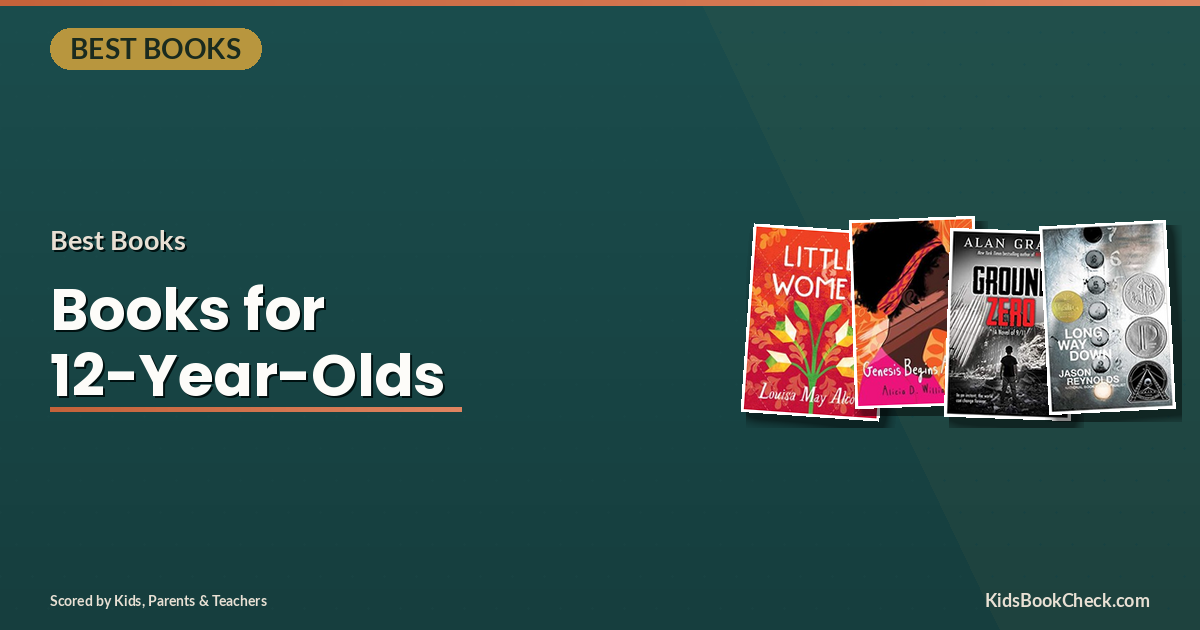
Best Books for 12-Year-Olds — Scored by Kids, Parents & Teachers
Twelve-year-olds are becoming sophisticated readers and thinkers. They’re noticing injustice, asking harder questions, developing their own opinions about what matters. They can handle complex emotions, moral ambiguity, and narratives told from multiple perspectives. They’re ready for books that don’t condescend, don’t simplify, and don’t shy away from what it’s actually like to be human.
This list celebrates books that respect that growing sophistication while delivering genuine emotional resonance, literary quality, and the kind of stories that change how kids see the world.
Why These Books Work for This Age
At KidsBookCheck, we assess every book through three critical lenses. Kids rate what keeps them turning pages and what feels authentically about their lives. Parents evaluate emotional sophistication, conversation-starters, and lasting impact. Teachers measure literary quality, classroom versatility, and how well books develop thinking skills. The books below excel across all three measures—they’re genuinely great books for genuinely thoughtful 12-year-olds.
The Books: By Theme & Appeal
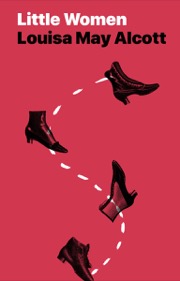
1. Little Women by Louisa May Alcott
Composite Score: 77.6 | Kid: 71 | Parent: 85 | Teacher: 79
The 150-year-old novel that still captures what it means to become yourself.
Four March sisters—Jo, Meg, Beth, Amy—navigate adolescence during the American Civil War. Their father is absent fighting in the war, their family is poor, yet their love is the richest thing they own. As they mature, each pursues her own path: Jo toward literature, Meg toward marriage, Beth toward music, Amy toward art. Each discovers that success isn’t measured in wealth but in meaningful relationships and living according to values.
Why 12-year-olds connect: Jo March is unforgettable—spirited, literary, wanting adventure more than marriage. Many 12-year-olds (especially girls, but not exclusively) see themselves in Jo’s struggle between ambition and love, between independence and belonging. The sisterhood feels real: rivalries, secrets, loyalty, tenderness.
The emotional sophistication: Alcott captures adolescent emotion with remarkable depth. Meg’s bittersweet joy at becoming a wife. Jo’s complex feelings about Laurie. Beth’s quiet wisdom. Amy’s growth from vanity to generosity. Each sister’s internal life is richly rendered without sentimentality.
For parents: This book is a conversation-starter across generations. Parents and their 12-year-olds can discuss what “success” means, what makes a good marriage, how to balance personal dreams with family duty. The book raises genuine questions without providing easy answers.
For teachers: Alcott demonstrates masterful prose, character development, and thematic sophistication. The Newbery Medal recognition reflects legitimate literary merit. Teachers use this as mentor text for studying craft, voice, and how to develop complex characters.
The challenge: It’s 480 pages with Victorian pacing. Best for readers comfortable with literary language and character-driven narratives.
Ages: Ideal for 12-18; emotionally mature 11-year-olds with reading stamina can engage with parent support.
2. Genesis Begins Again by Alicia D. Williams
Composite Score: 75.8 | Kid: 65 | Parent: 82 | Teacher: 84
A girl confronts internalized racism and discovers self-love as resistance.
Genesis is 13 years old and keeps a detailed list of 96 reasons she hates herself—starting with her dark skin. When her family is evicted repeatedly and settles in her grandmother’s house, Genesis attends a new school where she encounters real friendship, her own musical talent, and the slow, painful work of learning to love herself despite messages telling her she doesn’t deserve it.
Why this matters: This book courageously addresses internalized racism and colorism within Black families. Genesis’s father calls her dark; her grandmother uses skin color as a weapon; her community teaches her that darker skin is less beautiful. The book shows how these messages damage children while honoring the humanity of the people transmitting them.
For 12-year-olds: Genesis’s voice is distinctive, smart, and unmistakably adolescent. Her observations are funny and devastating. Readers immediately care about her and root for her self-acceptance journey.
For representation: Black readers see themselves reflected authentically without stereotypes or tokenism. The book validates their experiences while celebrating their worth. For non-Black readers, it builds empathy and understanding of systemic racism as experienced internally.
For parents and teachers: The book models emotional sophistication, authentic voice, and how to address serious topics (self-harm, parental addiction, family dysfunction) without melodrama. Discussion emerges naturally about beauty standards, family trauma, and self-acceptance.
Content note: The book directly addresses internalized racism, skin-lightening attempts, and self-harm ideation. Handle sensitively with children in vulnerable places emotionally.
Ages: Best for 13-16; mature 12-year-olds with emotional support can engage.
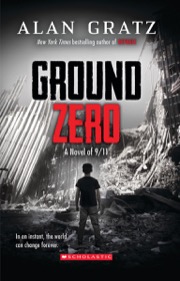
3. Ground Zero by Alan Gratz
Composite Score: 75.2 | Kid: 62 | Parent: 79 | Teacher: 89
A dual-timeline novel connecting 9/11 in New York to its aftermath in Afghanistan.
On September 11, 2001, nine-year-old Brandon Chavez rides into the World Trade Center with his father—and must navigate collapse, smoke, and chaos to escape. Eighteen years later in Afghanistan, eleven-year-old Reshmina lives under the shadow of the War on Terror, watching her village raided, her brother radicalized, and her own future constrained by forces beyond her control.
Why this resonates: Gratz reveals how terrorism and military response ripple across continents and decades, transforming childhood and forcing premature adulthood. Brandon and Reshmina never meet, but their stories are causally connected—9/11 led to the Afghan War that shaped Reshmina’s world.
For 12-year-olds: The dual-timeline structure teaches sophisticated thinking about cause and effect, global interconnection, and how individual lives intersect with historical events. The short chapters sustain engagement despite the serious subject matter.
For historical understanding: This is essential reading for understanding post-9/11 America. Without being didactic, it educates about terrorism, military occupation, radicalization, and the human cost of global conflict.
Why teachers champion it: The prose is exceptional, the structure is masterful, the emotional depth is genuine, and the thematic complexity invites rich discussion. Teachers consistently recommend this for high school curricula and for mature middle schoolers.
Content notes: The book respectfully addresses terrorism, war, death, and loss. It doesn’t glorify either terrorism or military action; instead, it shows both as destructive. Requires emotional maturity to process.
Ages: Best for 13-18; mature 12-year-olds can engage with significant adult support and discussion.
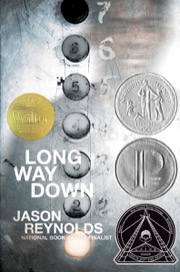
4. Long Way Down by Jason Reynolds
Composite Score: 73.7 | Kid: 65 | Parent: 82 | Teacher: 77
A verse novel about cycles of violence, grief-turned-rage, and impossible moral choices.
Fifteen-year-old Will’s older brother Shawn is killed by gunshot. Following The Rules learned from family and community—no crying, no snitching, always get revenge—Will takes his brother’s gun and steps into an elevator planning to kill the person responsible. As the elevator descends over nine minutes, ghostly figures appear: his dead father, uncles, and others connected to cycles of violence. Through their backstories, Will confronts the inherited nature of The Rules.
Why this shifts perspective: The book is essentially a moral exploration of violence cycles without preaching. It shows why The Rules exist (trauma, grief, protection) while showing their destructiveness. By the ending, readers understand Will’s rage without endorsing violence.
The verse form: Reynolds uses line breaks, fragmented language, and poetic technique to convey emotional intensity and psychological fracturing. The form demonstrates that poetry isn’t dead—it’s radical and relevant.
For 12-year-olds: This is emotionally sophisticated literature. Kids who read it often report genuine tears and lasting impact. The contemporary urban setting, authentic voice, and lack of moralizing respect reader intelligence.
Why teachers use it: Exceptional mentor text for teaching that form serves meaning, that voice carries narrative, and that contemporary literature can be literary literature. Discussion about violence, grief, justice, and systemic inequality happens naturally.
Content notes: The book directly addresses gun violence, murder, street codes, grief, and rage. It’s emotionally intense and without a comforting ending. Requires maturity and discussion.
Ages: Best for 15-18; mature 12-13 year olds with strong emotional support can engage.
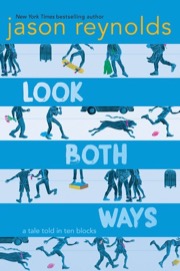
5. Look Both Ways by Jason Reynolds
Composite Score: 74.7 | Kid: 72 | Parent: 77 | Teacher: 76
Ten perspectives on the same walk home—a masterclass in empathy.
On the same afternoon, ten different 12-year-olds walk home from school. Each story is completely different based on what they’re experiencing: Lymere’s anxious thoughts, the Low Cuts stealing, Pia’s skateboard accident, Fatima’s checklist, Bryson’s bullying aftermath, Yolanda’s loneliness, Eli’s complicated feelings about identity, Javon’s neighborhood patrol, Christine’s mysterious mission, and Devon’s final connection. All happening in the same neighborhood, unaware of each other.
Why this structure matters: The organizing principle teaches a crucial lesson that 12-year-olds are developmentally ready to understand: everyone has a complex inner life usually invisible to others. Your best friend is managing something you don’t know about. The quiet kid is experiencing profound isolation. The confident kid is anxious.
For 12-year-olds: The book is immediately engaging. Ten chapters mean varied pacing. Multiple characters of different genders and backgrounds mean multiple entry points for identification. The contemporary urban setting is relatable.
Why parents love it: This teaches empathy through narrative rather than lecture. Children discover they should extend grace to others because they don’t know what others are carrying. The book models the perspective-taking and compassion that parents hope to cultivate.
Why teachers recommend it: Exceptional mentor text for teaching voice differentiation, perspective-shifting, and how structure conveys meaning. Classroom discussions about empathy, interconnection, and how perception shapes reality emerge naturally without feeling forced.
Ages: Perfect for 12-14; strong readers at 11 will engage.
6. Kick by Mitch Johnson
Composite Score: 76.0 | Kid: 73 | Parent: 71 | Teacher: 85
A boy’s football dreams collide with Jakarta factory reality.
Thirteen-year-old Budi dreams of becoming a professional footballer like his idol. Instead, he works in a Jakarta sweatshop making the very boots Kieran Wakefield wears. When a debt to a dangerous crime boss (the Dragon) emerges, Budi navigates impossible choices between survival and morality, friendship and selfishness, dreams and brutal reality.
Why this hooks 12-year-olds: The opening is irresistible—Budi imagining himself in a stadium while actually playing in Jakarta dust. The sports narrative keeps pages turning. As the story darkens, readers discover it’s really about moral complexity, systemic inequality, and what we’re willing to sacrifice.
The perspective shift: Budi’s story opens windows into Jakarta’s working-class reality, Indonesian culture, and the human cost of global fashion. Readers discover who makes their own boots and why. The book globalizes consciousness in a way that respects reader intelligence.
For parents: Johnson handles serious themes (child labor, exploitation, moral compromise, parental addiction) with respect rather than exploitation. It doesn’t offer false comfort or inspirational redemption narratives; instead, it teaches that choices have real consequences in real lives.
Why teachers value it: The prose is exceptional. The structure is expertly controlled. The emotional depth is genuine. Thematic complexity about labor, morality, and systemic inequality invites sophisticated discussion. The book demonstrates that young adult literature can address significant global issues without condescension.
Content notes: The book contains violence (police brutality), parental addiction, and moral ambiguity. It requires emotional maturity to process the lack of tidy resolution.
Ages: Best for 12-15; advanced readers engaged with global issues find full substance.
Comparison Table: Quick Reference
| Title | Kids Score | Parents Score | Teachers Score | Strength |
|---|---|---|---|---|
| Little Women | 71 | 85 | 79 | Coming-of-age, literary classics, sisterhood |
| Genesis Begins Again | 65 | 82 | 84 | Identity, representation, voice |
| Ground Zero | 62 | 79 | 89 | Global awareness, historical understanding |
| Long Way Down | 65 | 82 | 77 | Verse form, moral complexity, voice |
| Look Both Ways | 72 | 77 | 76 | Empathy, perspective-taking, structure |
| Kick | 73 | 71 | 85 | Sports, global inequality, moral choices |
What These Scores Reveal
Notice: Some books score significantly higher with teachers than with kids (Ground Zero, Long Way Down). These books prioritize serious subject matter, literary quality, and moral complexity over pure entertainment. Teachers recognize their excellence immediately; kids experience them as emotionally intense and sometimes challenging.
Other books score more evenly (Look Both Ways, Kick). These deliver both narrative engagement and literary quality—they work for everyone.
The insight: At 12, kids are capable of engaging with serious literature, but they need it to be well-written and emotionally authentic. They can’t forgive books that preach or simplify. But when a book respects their intelligence and addresses real issues honestly? They become passionate readers and thinkers.
Learn more about our 30-dimension rating system that evaluates every book from three perspectives.
See our complete analysis for detailed kid, parent, and teacher scores.
Frequently Asked Questions: Choosing the Right Book for Your 12-Year-Old
Q: My kid is reading above grade level. What should I suggest?
A: Little Women is genuinely challenging (480 pages, Victorian prose, emotional complexity). Ground Zero requires sophisticated thinking about causation and global interconnection. Genesis Begins Again addresses sophisticated themes about identity and internalized oppression. All three respect reader intelligence.
Q: My kid wants something that addresses social issues.
A:
- Racial justice/identity: Genesis Begins Again
- Global inequality: Kick
- Systemic violence: Long Way Down
- War and consequences: Ground Zero
- Empathy and perspective: Look Both Ways
Q: My kid loves sports. Where do I start?
A: Kick is the strongest sports narrative here, but it’s much more than sports—it’s about global economics, moral choice, and systemic inequality. The football hook draws readers in; the deeper themes keep them engaged.
Q: My kid needs something emotionally honest about hard topics.
A: Genesis Begins Again (self-hatred, family dysfunction), Long Way Down (grief, violence, morality), Ground Zero (terrorism, war, loss), and Kick (poverty, exploitation) all address hard topics without sentimentality or false comfort.
Q: Which book would work best for a classroom read?
A: Look Both Ways (engaging, quick chapters, multiple perspectives), Ground Zero (historical significance, classroom relevance), and Little Women (multi-year project, rich discussion). Long Way Down works beautifully read aloud in verse form.
Q: My kid is interested in poetry and literary form.
A: Long Way Down is written entirely in verse. Reynolds demonstrates how form serves meaning—line breaks carry emotional weight, fragmentation conveys psychological fracturing. This is contemporary poetry-as-narrative.
Q: Which book will make my kid think differently about the world?
A: Kick (global inequality, labor), Ground Zero (interconnection, consequences), Genesis Begins Again (internalized systems of oppression), and Long Way Down (violence cycles) all shift perspective and build systems-thinking.
Q: My kid is concerned about representation. Which books center diverse voices?
A: Genesis Begins Again centers a Black girl’s experience with depth and authenticity. Look Both Ways features multiple characters of different backgrounds. Ground Zero centers a Muslim boy and Afghan girl. Kick centers an Indonesian protagonist.
Q: Which book is best for reluctant readers?
A: Look Both Ways (fast-paced, short chapters, contemporary) and Kick (sports hook, narrative drive). Both move quickly and feature relatable characters without requiring sustained attention to dense prose.
Q: My 12-year-old is mature but sensitive. Which book might be too intense?
A: Long Way Down is emotionally devastating and without comforting resolution. Ground Zero requires processing terrorism and war. Genesis Begins Again addresses self-harm and parental addiction. All are appropriate for mature 12-year-olds but need adult support and discussion.
Resources for More Discovery
- Scholastic: Book Lists for Ages 11-13
- KidReading: 20 Best Books for 12 Year Olds (2026)
- Everyday Reading: Books for 11 & 12 Year Old Girls
- Goodreads: Books for Twelve-Year-Old Children
- Common Sense Media: 50 Books All Kids Should Read Before They’re 12
One Final Thought: Trust Your Reader
Every 12-year-old is different. Some want escape into fantasy; others want recognition of their real lives. Some are ready for serious literature; others are still building reading stamina. The best book is the one your 12-year-old actually reads—the one they can’t put down, the one they think about after finishing, the one that matters to them.
Take our KidsBookCheck Quiz to discover personalized recommendations based on what your 12-year-old actually loves to read. Our ratings from kids, parents, and teachers can guide you—but ultimately, your child’s reading life belongs to them.
Source attribution: This article synthesizes research from Scholastic, Everyday Reading, Common Sense Media, and Goodreads, combined with KidsBookCheck’s proprietary three-perspective rating system.
Shop these books: All titles linked throughout the article use our Amazon Associates tag (kidsbookcheck-20).
Explore our complete 30-dimension analysis for detailed kid, parent, and teacher scores with specific reasoning.